
What Evil Lurks In The Hearts Of Men?
Having recently revisited The Rocketeer and The Phantom, two 1990’s films set in the 1930’s, it’s only natural that I also take a look at 1994’s The Shadow, an Alec Baldwin vehicle that had high hopes just like those films did but ultimately fell flat at the theater. Of these three films, The Shadow is my least favorite. I liked it, but not as much as the other films. I’ll give my reasons below.


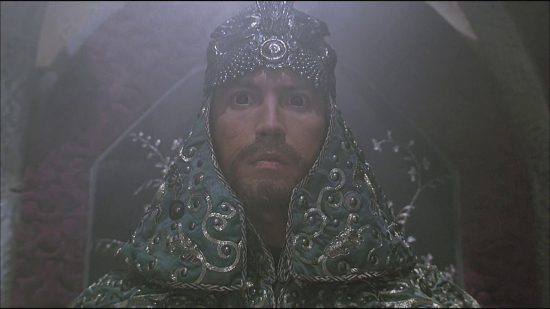
Based on the character made popular in pulp novels, a highly successful radio program narrated by the legendary Orson Welles, and classic serials, the film seemed to struggle to find its way. Lamont Cranston’s (The Shadow’s alias) background story was okay, but I felt that it was poorly explained in the film. I also felt that the villain, Shiwan Khan (John Lone), wasn’t impressive or consistent enough to be a real threat.
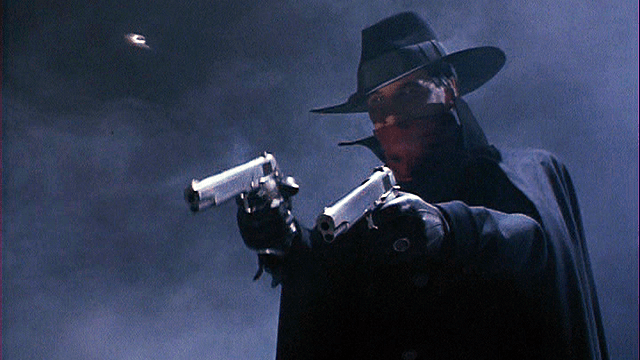
Jerry Goldsmith’s score also seemed a tad lazy. While the film had style for miles, the music felt a tad phoned in and the hero’s theme sound very similar to Danny Elfman’s 1989 Batman theme. Oddly enough, it was the success of Batman (who was created with partial inspiration from the original Shadow) that apparently triggered this short run of superhero films that also included Dick Tracy. I also wasn’t a fan of Original Sin, the end titles song performed by Taylor Dayne. Dayne did a great job vocally, but the song just seemed dull and uninspired.

The special effects were brilliant in almost every aspect. The look of New York in the 1930’s was brilliantly executed with both sets and matte backgrounds. That’s right, kids, even in the 90’s we were still using traditional paintings as part of the background. That, in my opinion, gave the movie an even more classic look and feel. The Shadow’s facial features were apparently prosthetic, and worked quite well. Animation (not CGI) appears to have been used for the Shadow’s shadow as well as the fight sequences (which featured the Shadow fading in and out of the scene), which were simply wonderful.

Where the effects failed was when Phurba, the knife of Tulku (Cranston’s trainer and mentor), appeared on screen. The effects were terrible for this knife and it jarred me out of the movie every time I saw it. Thankfully Phurba didn’t spend a lot of time on the screen.
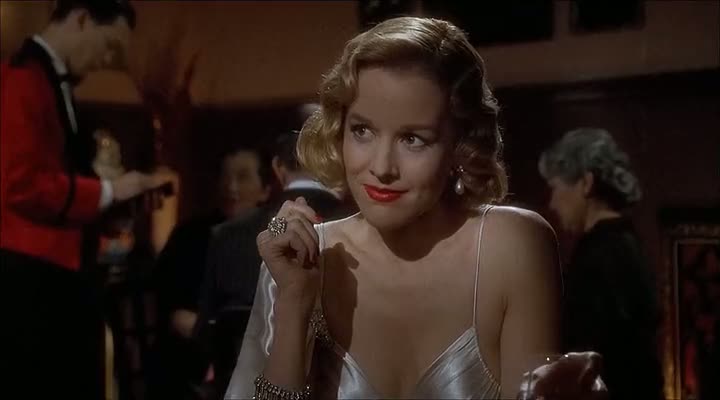
The film had a solid main cast that included Baldwin, Lone, Penelope Ann Miller, Tim Curry, and Ian McKellan. It also featured a stellar lineup of supporting actors that included Peter Boyle and Jonathan Winters (who had major supporting roles), and a whole smorgasbord of character actors that we’ve all seen on television or film over the years. Sharp-eyed viewers will recognize Max Wright, Joseph Maher, James Hong, Sab Shimono, Ethan Phillips, Abraham Benrubi, Steve Hytner, Wesley Mann, and Al Leong.
For a film that was a tad hit and miss, The Shadow is still worth a look. It’s got plenty of style and a great all around cast that gets bogged down in a script that can’t find its legs. I’d love to see The Shadow get another shot on the big screen in the near future, but I don’t know if it will happen any time soon.
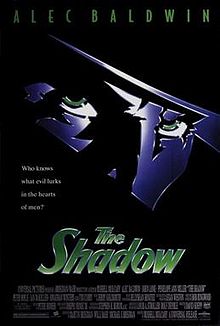
For now, fans will have to be content with the 1994 film and the classic serials and older films. Personally, I think I’ll stick to the pulp novels. The movie has plenty of things going for it, but it doesn’t hold my attention as well as The Phantom and The Rocketeer. Still, I highly recommend that you give it a look.
As always, thanks for reading. Let me know what you thought about the film in the comments section. I hope to have a review for Solo: A Star Wars Story in the very near future, so be on the lookout for that and other upcoming posts including another Focus On feature, and a look at collecting blind bag items.
 Ken's Alternate Universe!