

Seeing the unseen for the first time!
Being a huge Universal Monsters fanatic, it somewhat pains me to admit that until yesterday I had never viewed any of the films featuring The Invisible Man in their entirety. I have watched films influenced by these movies and read the book by H.G. Wells that started it all, but I never sat down and watched an entire film on its own.
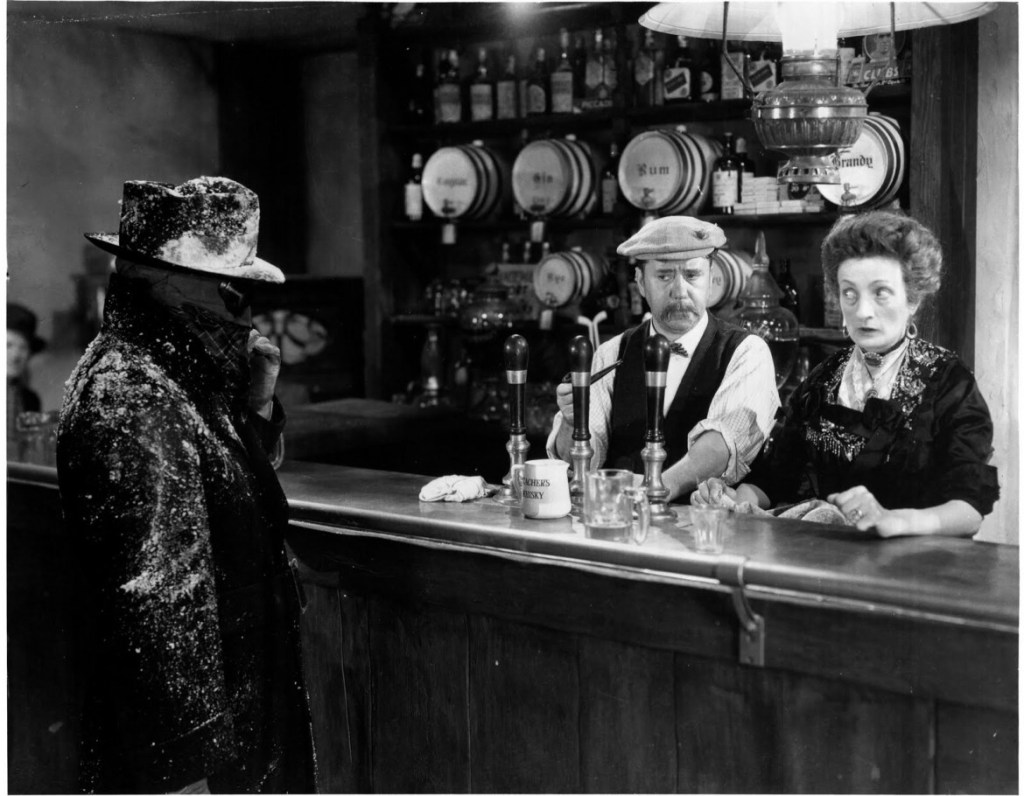
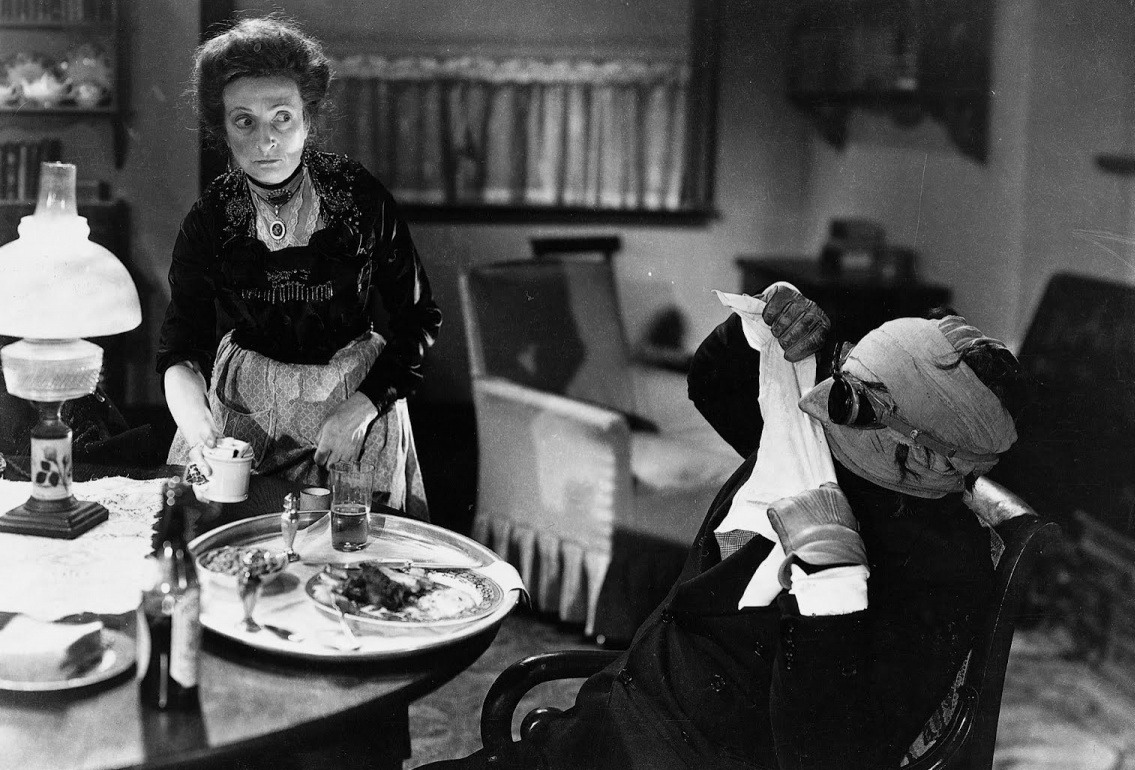
The movie opens with a mysterious man wrapped in bandages entering an inn and demanding a private room. Patrons at the inn begin to discuss why he’s wrapped in bandages. This includes a humorous quip about him bumping his head while escaping prison. As the story moves along, we learn that the man’s name is Dr. Griffin (Claude Rains) and he has gone missing from his friends and fiancee, Flora (Gloria Stuart).
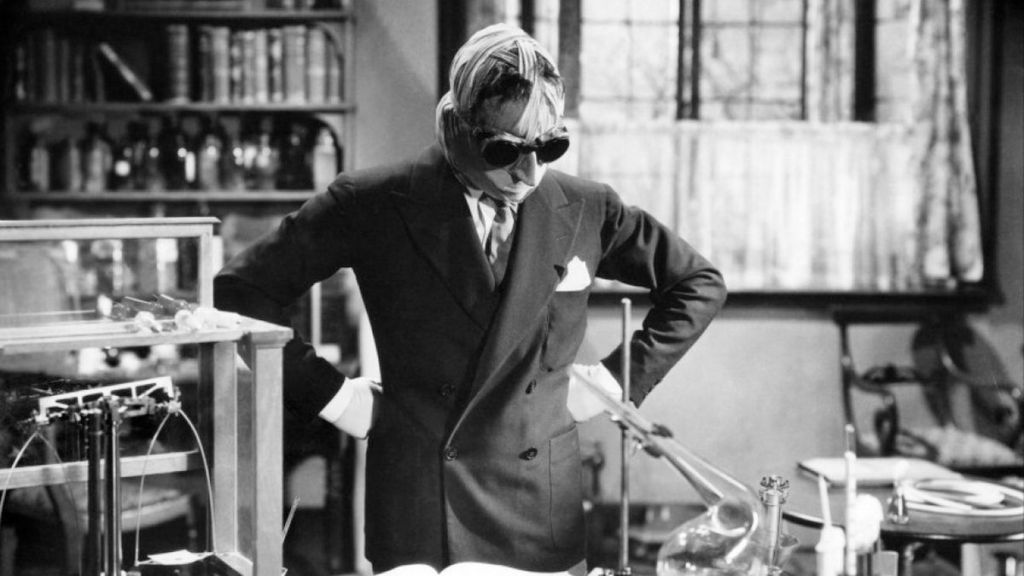
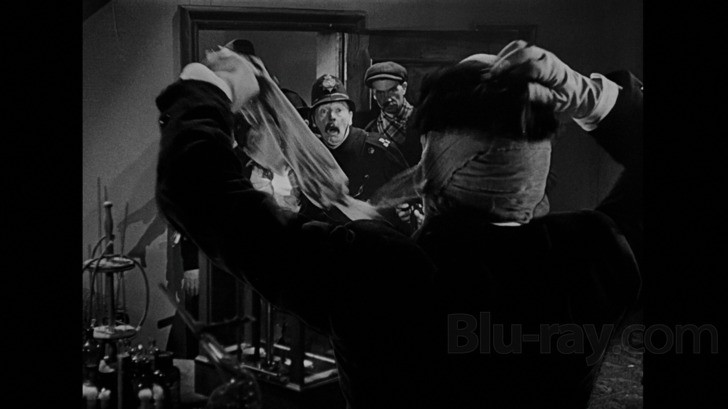
It is soon revealed that Griffin is completely invisible. He has gone into seclusion in order to find a way to return to a visible state. Unknown to Griffin, one of the items that he used in his original experiments is monocane, a drug that slowly draws him into madness. Soon enough, Griffin becomes enraged with the constant interruptions of the innkeeper and his wife (the rather humorous duo of Forrester Harvey and Una O’Connor) and he attacks them. This brings the local police into the picture and Griffin removes his clothing and bandages and rages through the town in order to escape.
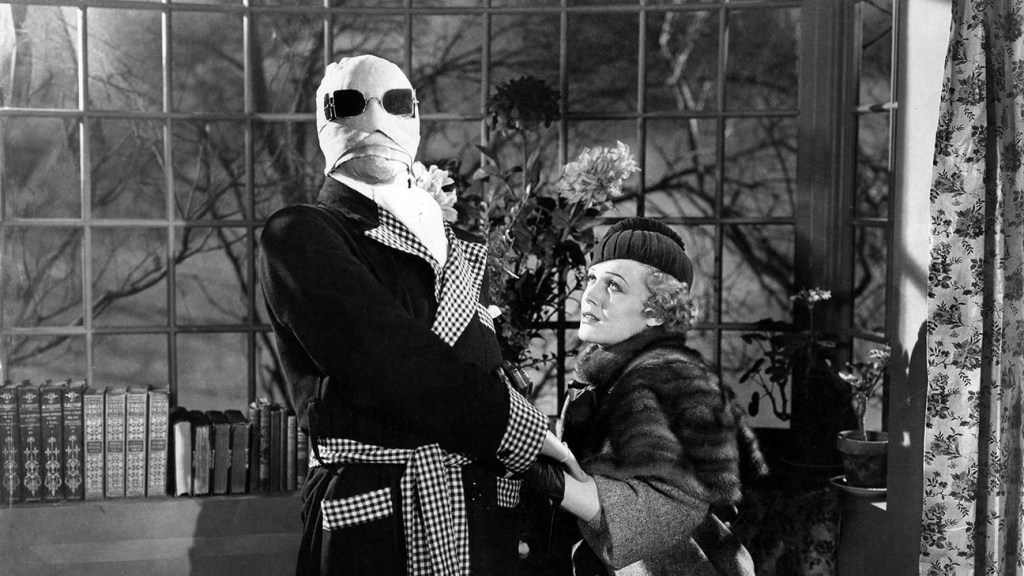
Griffin then goes on a killing spree, driven by madness and a wild plan to take over the world. He forces one of his former research partners, Dr. Kemp (William Harrigan), to aid him in his crimes. Chaos ensues and eventually a plan is devised to capture Griffin. You’ll have to watch the film to find out how and if the police actually manage to capture Griffin.
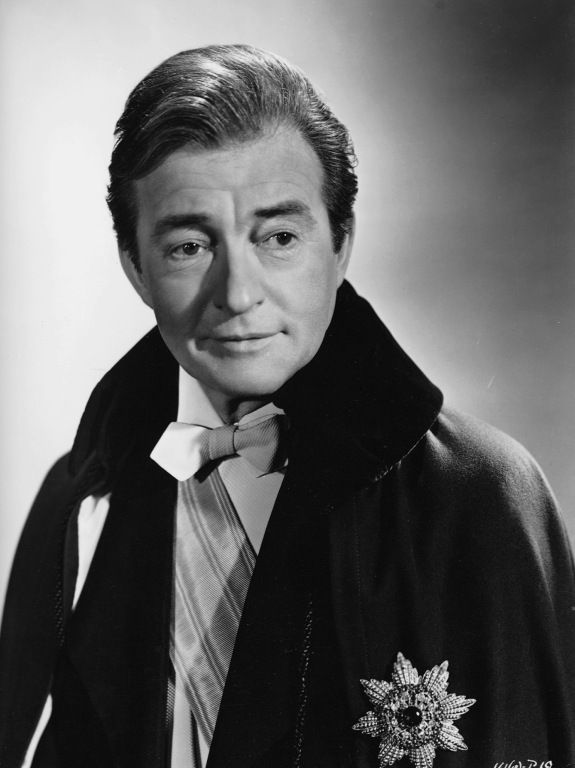
One of the primary reasons that I decided to pursue watching The Invisible Man was the performance of its star, Claude Rains, in other Universal Monster films. Rains had a very commanding screen presence as Sir John Talbot in The Wolf Man (1941) and was brilliantly over the top as Erique Claudin, the man better known as The Phantom of the Opera in 1943. These performances made me seek out more of his work. Rains’ career spanned sixty-five years and included roles in films such as Notorious (1946), Casablanca (1942), and Mr. Smith Goes To Washington (1939). He shared the screen with some of the biggest stars in film history including Bette Davis, Cary Grant, Lana Turner, and Rock Hudson, just to name a few. He won a Tony Award in 1951 and was a four-time Academy Award nominee. Rains passed away in 1967 and is buried in Laconia, New Hampshire.
Much like other Universal Horror films, The Invisible Man is noted for its special effects. The pioneering ways used to make Griffin’s invisible chaos come to life were the result of the work of John P. Fulton, John J. Mescall, and Frank D. Williams. Fulton was a trailblazing effects artist that worked on Frankenstein (1931), Rear Window (1954), The Mummy (1932) and many other major horror films. He was also nominated for eight Academy Awards, winning three of them: Wonder Man (1945), The Bridges At Toko-Ri (1955), and The Ten Commandments (1956). Mescall is best known for his camera work on films such as The Bride Of Frankenstein (1935) and Show Boat (1936). Williams worked with legendary performers such as Buster Keaton, Charlie Chaplin, and Fatty Arbuckle. He is also credited as the developer of the traveling matte shot. This technique opened the door for blue screen work in the 1970’s/80’s, and paved the way to modern CGI.
I really enjoyed this film. Claude Rains’ entire performance was both cocky and sinister. His over-the-top delivery was both scary and funny at times. The supporting cast provided quite a few laughs as well, making this one of the more humorous Universal Monster films in my opinion. When compared to other films of the day, the special effects in The Invisible Man are simply amazing. They still hold up quite well despite being nearly eighty years old, and their success would lead to even more brilliant effects in the future.
I won’t call it my favorite Universal Monsters film, but The Invisible Man is definitely one of the best films in the bunch. It has humor, terror, and an excellent conclusion that makes you feel sad not only for those affected by Dr. Griffin’s insanity, but for the doctor himself.
Thank you for reading my post. I’ll have another for you tomorrow!
 Ken's Alternate Universe!
One thought on “Days O’Horror #1: The Invisible Man (1933)”