
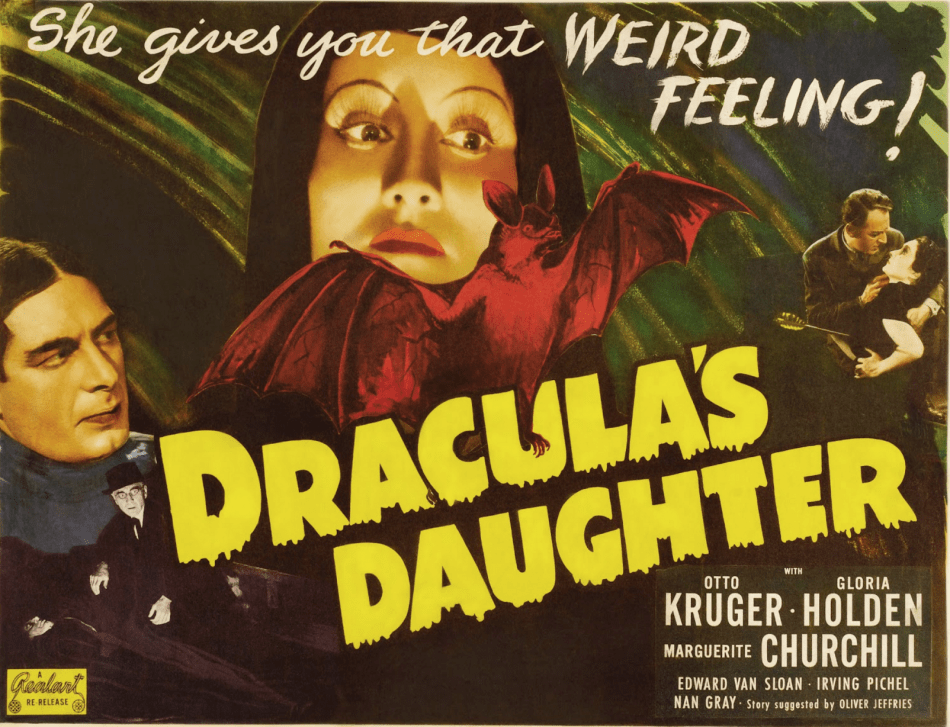
Keeping The Family Tradition Alive
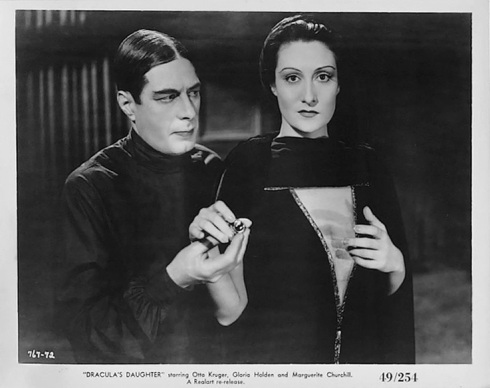
Dracula’s Daughter (1936) is a rather unique film. It doesn’t fit the mold of your standard vampire movie. Instead of a vampire intent on drinking the local citizenry dry, this film features a vampire that wants to break free of its curse (at least in the beginning of the film). Instead of a dashingly handsome male vampire that uses his hypnotic eyes to lure young ladies away from safety, we get a striking female vampire that hunts both men and women with the aid of an assistant who brings the victims to her. She then uses a ring on her wedding ring finger to enchant them before relieving them of their lives. Also, the traditional stake through the heart or exposure to sunlight isn’t the method used to kill the vampire. Both psychology and arrows are used instead.
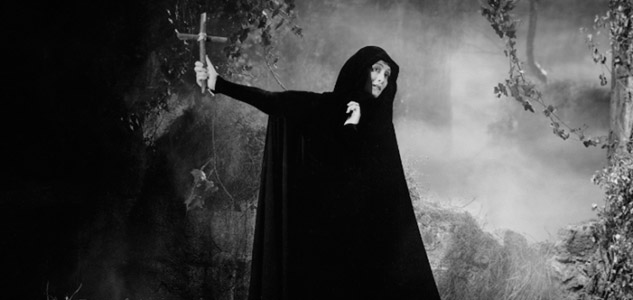
The film begins just minutes after the end of 1931’s Dracula. Policemen arrive on the scene to find Renfield dead at the bottom of the stairs and Count Dracula staked through the heart. They also find Von Helsing (Edward Van Sloan), who freely admits to murdering Dracula. The bodies are then taken to a local jailhouse and Von Helsing is arrested. Later, Countess Marya Zaleska (Gloria Holden) arrives, asking to see the body of Dracula. When she is denied, she uses a ring on her finger to hypnotize the jailer and proceeds to steal Dracula’s body.
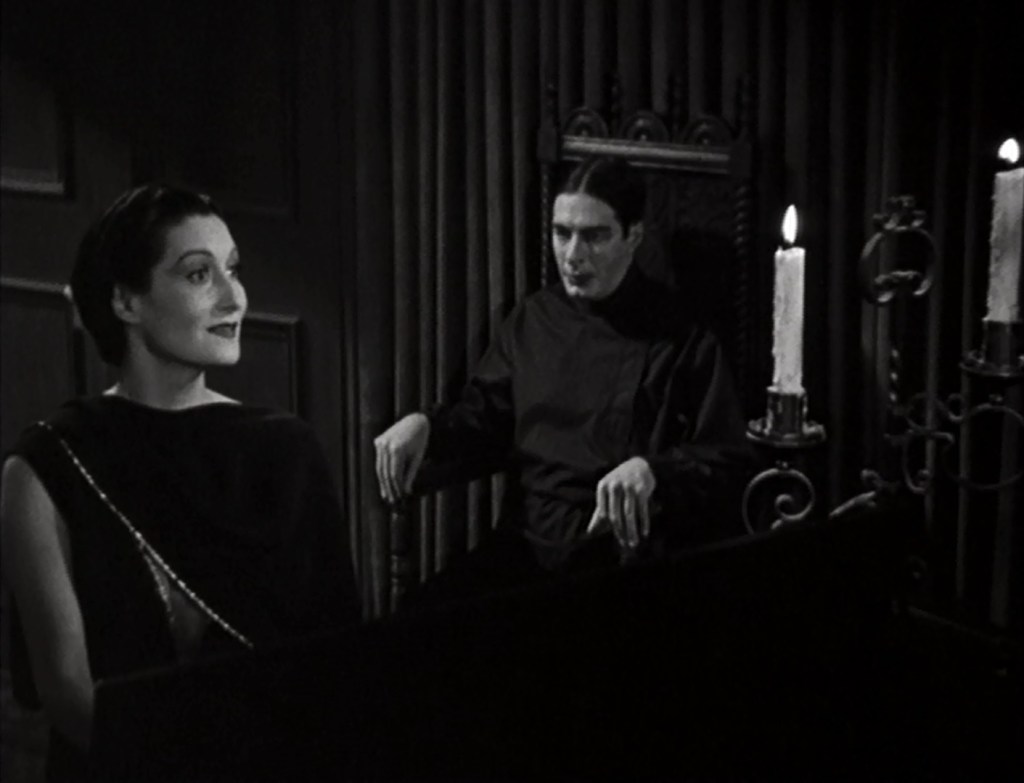
Marya burns Dracula’s body and says a prayer hoping to free herself of being a vampire. Her loyal assistant, Sandor (Irving Pichel), doesn’t believe this will work, and discourages Marya’s hope after the body is burned. Later in the evening, Marya gives in to her longings and murders a random man on the street.
Von Helsing calls on an old student to defend him in his murder trial. The former student, a psychiatrist named Jeffrey Garth (Otto Kruger), arrives on the scene just in time to meet Marya at a party. Marya requests to meet with Dr. Garth in private. He advises her that the best way to defeat her temptations is to face them head on. He tells her how alcoholics have been successfully cured of their alcoholism by placing them alone in a room with a bottle of liquor and suggests that she attempt a similar test on herself.
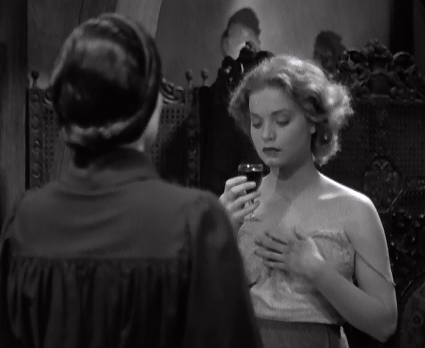
Believing that Dr. Garth’s advice will work, Marya has Sandor collect a young lady walking the streets of the city. Sandor tells the young woman, named Lili (Nan Grey), that Marya wishes to paint her. Once Lili is brought to Marya, the countess asks her to remove her blouse in order to expose her shoulders and neck. Initially Marya fights off the urge to drink the young lady’s blood, but she soon succumbs to temptation.
Lili survives the attack and is treated by Dr. Garth. Soon enough, Garth realizes that Marya is a vampire and he sets out to stop her. Unfortunately for Garth, his assistant, Janet Blake (Marguerite Churchill), becomes a pawn in a sick game between him and Marya. The chase leads back to Transylvania, where Garth confronts Marya and Von Helsing rushes to his aid. You’ll have to watch the film for yourself to find out what happens next.

Edward Van Sloan is the only cast member from the original film to return for this sequel. For some odd reason his character’s name is changed from Van Helsing to Von Helsing. No explanation is given for this change. Otto Kruger, Marguerite Churchill, and the rest of the cast provide solid performances. Churchill is especially funny in her role as Garth’s snappy assistant. Pichel’s Sandor is an odd duck in the film. It almost seems as if he wants Marya to fail in her search for a cure for her vampirism. Another bright spot in the film is the performance of Claud Allister as Sir Aubrey. His brief appearance in the film is wonderful.
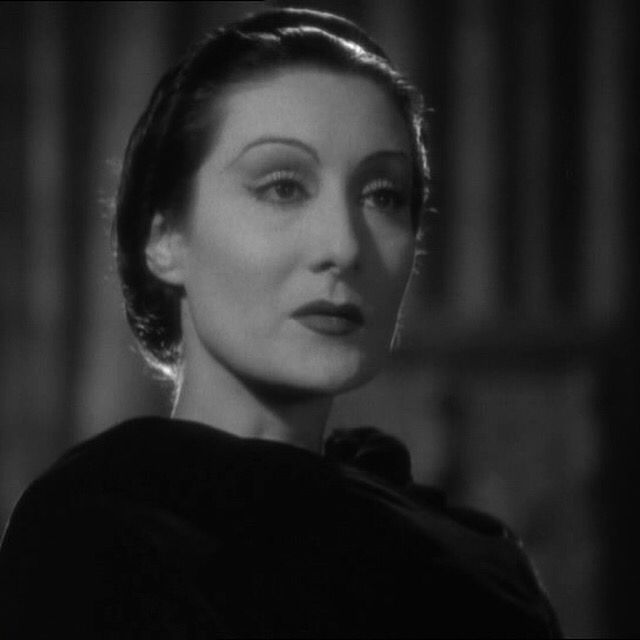
The strongest performance in the film belongs to Gloria Holden as Countess Marya. Her delivery is hard to describe. She looks both stoic and desperate at the same time. As the story moves along, there is a subtle shift from desperation to cold and calculated evil and selfishness. It’s a brilliant switch and was a joy to witness on the screen. Holden was supposedly hesitant to take on the role at first, fearing that she would be typecast like Bela Lugosi and Boris Karloff. She avoided being typecast and managed to have a sold film career that lasted nearly thirty years.

I really liked watching this movie. From the unique “look for a cure” angle to the callbacks to its predecessor (My favorite being Holden recite\ing the line, “I never drink wine.”), this film was quite a treat. While it isn’t exceptionally well known outside of horror circles, the film’s influence is felt to this day. Many writers and filmmakers list the film as an influence. Most notably, author Anne Rice has stated that Holden’s performance directly influenced the vampires in Rice’s Vampire Chronicles series of books.
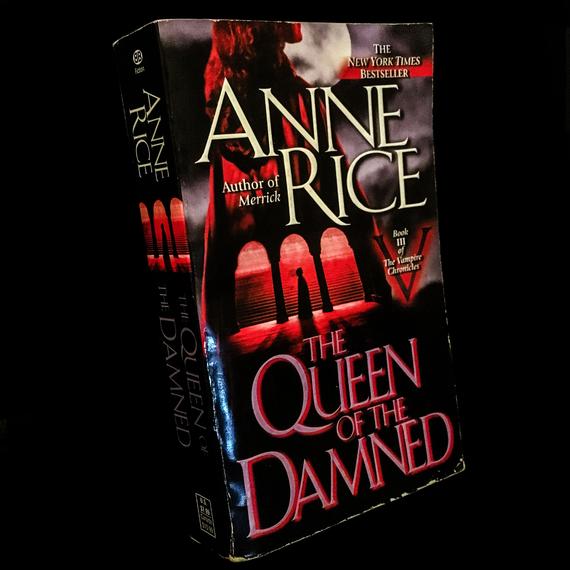
There have also been a number of historians and others (Anne Rice included) that have pointed out lesbian and/or erotic undertones throughout the film, a major shock for fans of cinema in the 1930’s. Personally, I can see where people would pick up on this, especially in some of the scenes where Marya is fighting temptation, but I can also see these particular scenes in other ways as well. I would love to have a panel at a convention where people from all walks of life discuss this film, especially the lesbian aspects and their influence. It would be great to hear how others view this movie.
That’s all for today. I appreciate you for reading this post. Tomorrow will bring yet another Universal Monsters film to my blog, and I hope that you’ll return to read about it as well.
If you’d be interested in a round table discussion or a panel about Dracula’s Daughter and its lesbian undertones, I’d love to work with you on the project. Just message me and we’ll see if we can make a panel happen!
 Ken's Alternate Universe!