

Alone: Bad. Friend: Good.
While Universal had plenty of successful horror films under their belt by 1935, they had yet to produce a sequel. Bride of Frankenstein changed all of that and set a precedent that almost no other sequel managed to achieve. Considered by many to be one of the best sequels ever made and also a triumph over its predecessor, 1931’s Frankenstein, Bride of Frankenstein featured an amazing story, key returning cast members from the original film, and a female monster that remains as one of the most iconic creatures ever to grace the screen.

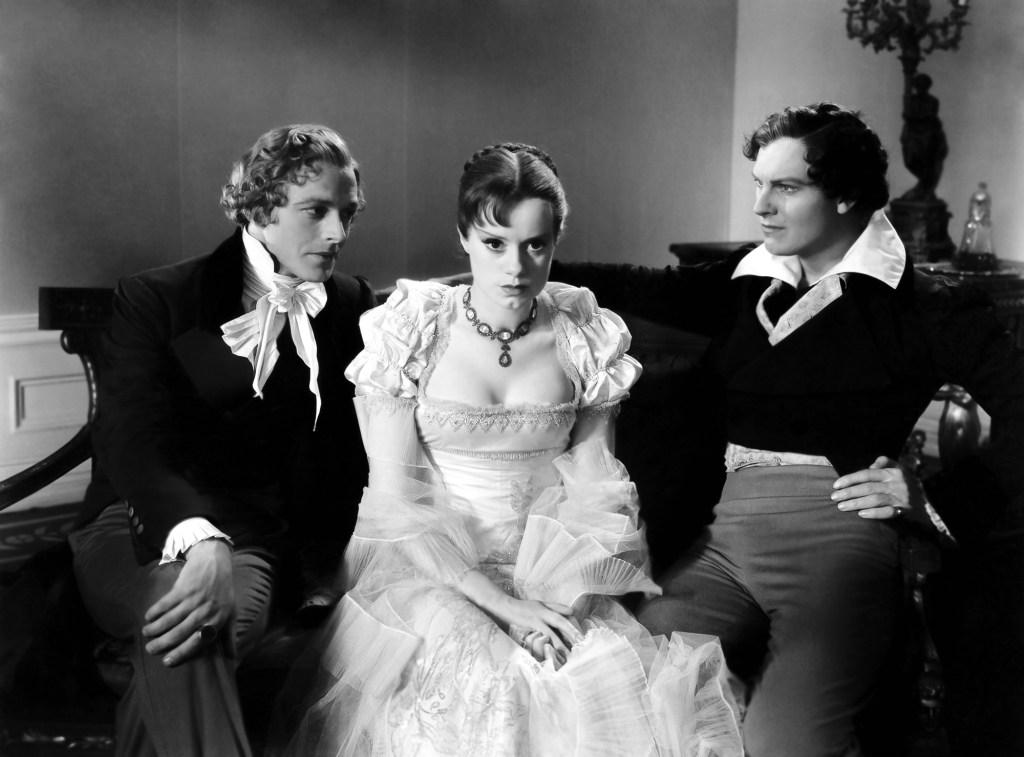
The film opens with Lord Byron (Gavin Gordon) waxing poetic about Mary Shelley’s (Elsa Lanchester) story of Frankenstein’s monster. Her husband, Percy Bysshe Shelley (Douglas Walton) echoes Byron’s sentiments about the tale. Both of them feel as if there’s more to the story, though, and Mary is quick to tell them that there is indeed more story to come.

The film then jumps directly into the ending of Frankenstein as the windmill is being destroyed. Villagers cheer as the windmill burns, but it is soon revealed that the creature (Boris Karloff, billed only as Karloff in the film) has survived whenever he murders both the father and mother of the young girl that he accidentally killed in the first film. The monster walks up on a villager (the brilliant Una O’Connor) and startles her. She races to the village to warn the others.
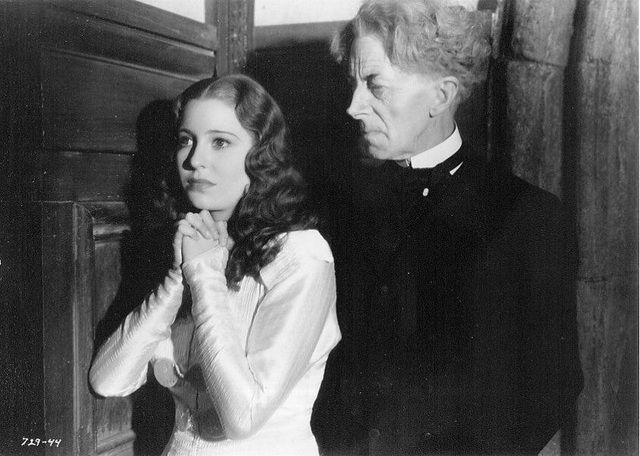
At the same time, it is discovered that Henry Frankenstein (Colin Clive) has also survived the fire and he is reunited with his fiancee, Elizabeth (Valerie Hobson). One of his old mentors, Dr. Septimus Pretorius (Ernest Thesiger), arrives on the scene and attempts to convince Frankenstein that the monster needs a partner. He wishes to work with Frankenstein to bring the female creature to life, but Frankenstein is hesitant to join him.
Meanwhile, the monster stalks the countryside looking for food, shelter, and, most importantly, acceptance. After encounters with locals, including yet another angry mob, leave him gunshot and burned, he stumbles onto the home of a blind hermit (O.P. Heggie) who takes him in, befriends him, and teaches him how to speak. Eventually a pair of hunters discovers the hermit and the creature and a fight ensues. The hermit’s cottage is destroyed and the creature runs out into the forest. Another mob is formed and the creature hides in a crypt where he has a run-in with Dr. Pretorius.
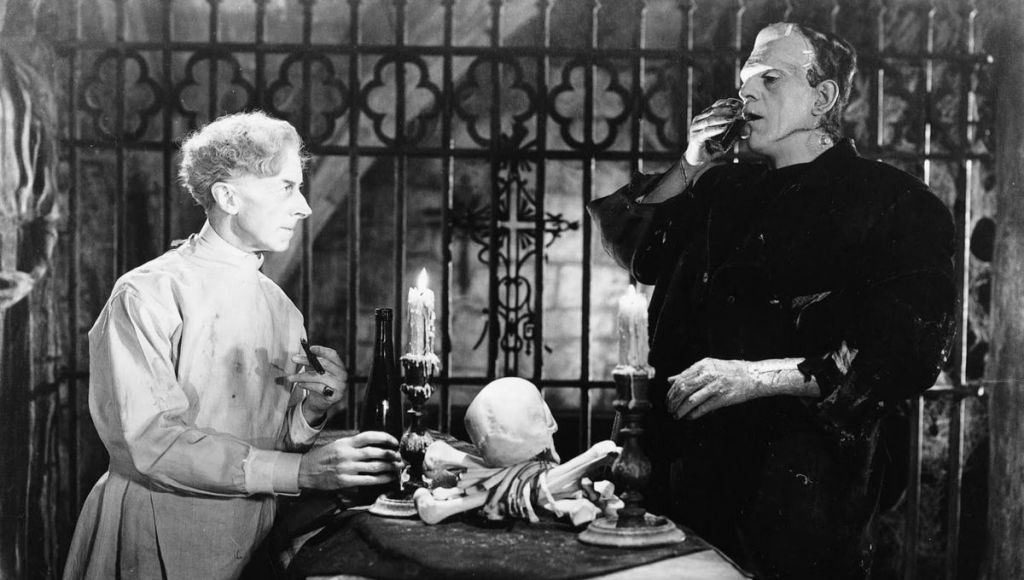
Using the creature as a pawn in his game by having him capture Elizabeth, Pretorius forces Frankenstein to help him create a female creature. The duo is successful in their creation, but much like the rest of society, the “bride” of Frankenstein rejects the creature. Dismayed by humanity and heartbroken over his rejection by the bride, the creature collapses the laboratory on himself, Pretorius, and the newly created bride. He allows Frankenstein and Elizabeth to escape, telling them to “Go! You live!”
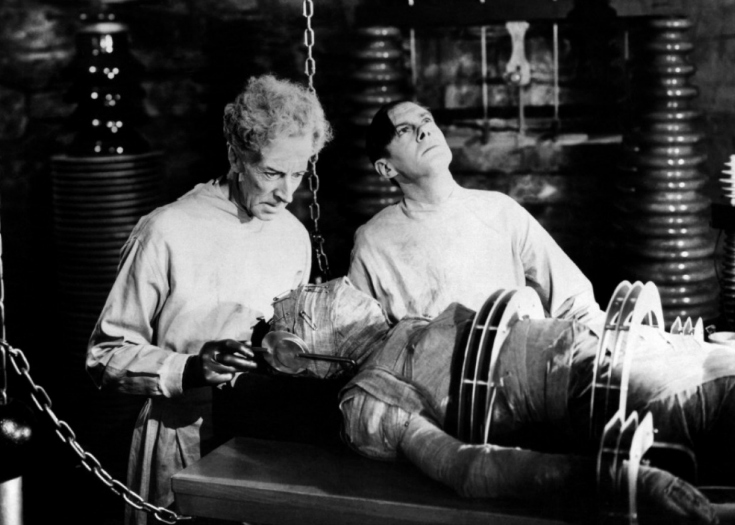
Colin Clive, Dwight Frye, and Boris Karloff all returned for this sequel to Frankenstein. Since his character Fritz was killed in the original film, Frye played Karl, the twisted assistant of Pretorius. Valerie Hobson, only seventeen years old at the time, was brought in to replace Mae Clarke as Elizabeth, as Clarke was too sick to reprise the role. Hobson also starred in Werewolf Of London (1935) and both Frye and Una O’Connor had roles in other Universal films, most notably Frye in Dracula (1931) and O’Connor in The Invisible Man (1933).
Elsa Lanchester portrayed two roles in the film. She bookended the story as Mary Shelley in the beginning and the Bride in the final moments. The Bride is on the screen for less than five minutes but the impact of Lanchester’s jerky movements, piercing scream, and ghastly hisses left their mark on audiences in the 1930’s and can still be felt today.

The Bride never officially made another appearance in a Universal film, but she has popped up in everything from cartoons to comics and has been hinted at, homaged, or featured in everything from Young Frankenstein (1974) to The Bride of Chucky (1998) and dozens of other films and television shows. There have been toys, model kits, posters, costumes, and other items created featuring her image as well.

Lanchester’s Bride is the only female Universal Monster to be featured prominently in any of their promotional material. Her closest competition, Countess Marya Zeleska (Gloria Holden, Dracula’s Daughter, 1936), was also influential but is treated as nothing more than a footnote in most documentaries about Universal Monsters.
While the film was definitely a thriller, it had a much deeper message of loneliness and its damaging effects. The creature wants acceptance and friendship, which he gains in the form of the hermit, but is ultimately rejected by the one person that he truly wants to love, the Bride. Near the end of the film, Karloff utters one of the most famous and powerful lines: “She hate me. Like others.” Those six syllables are brilliant and moving, as they give the audience major insight into the creature’s feelings of loneliness and rejection.

Bride of Frankenstein proves that a sequel can be better than its predecessor. It has a heartbreaking story, great music, and brilliant direction from James Whale. The emotional struggle of Karloff’s creature is powerful in this film and despite ton of Jack Pierce makeup, we all feel the creature’s pain when the Bride rejects him.
I definitely recommend watching this film. It’s one of the best Universal Monster films and one of the greatest films in cinematic history in my opinion. Thanks for reading this post. There are more to come!
 Ken's Alternate Universe!