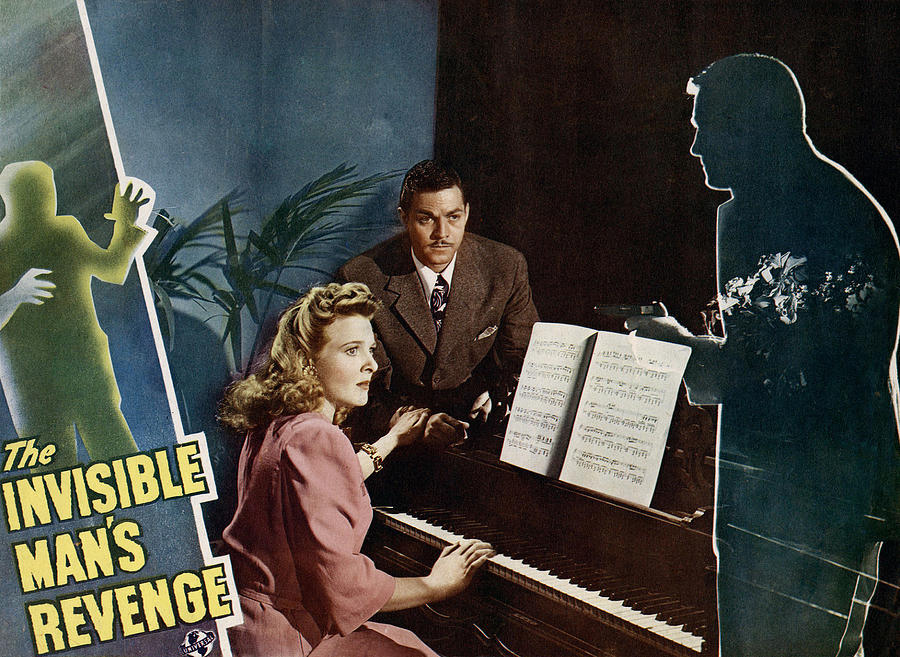
After three relatively unrelated sequels that bore little resemblance to the first The Invisible Man film, 1944’s The Invisible Man’s Revenge brings murder and power-hungry insanity back into the story. Jon Hall, who starred in The Invisible Agent two years prior, returns as a new character, Robert Griffin, who isn’t related to any of the Griffins that appeared in the first two films. Instead, he’s a murderous man intent on forcing a family to give him all of their wealth and their daughter’s hand in marriage.
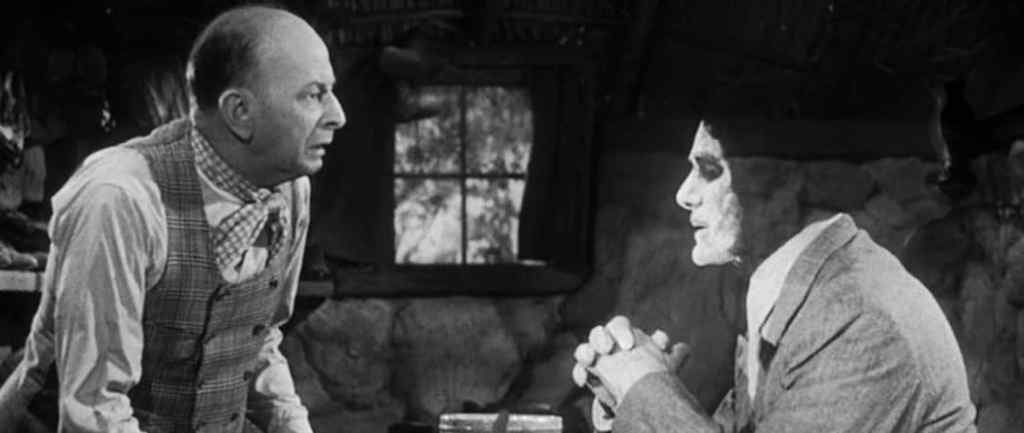
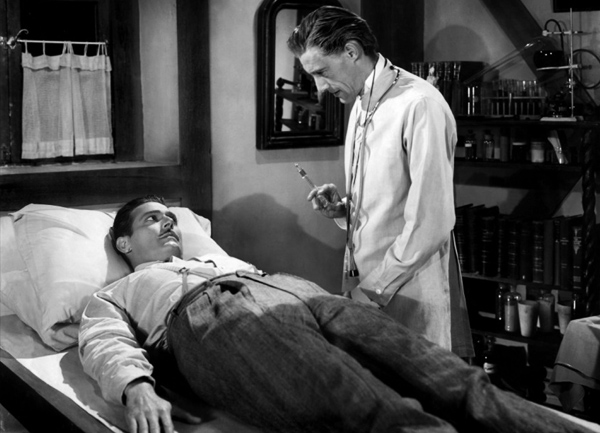
Griffin becomes invisible by tricking a scientist, Dr. Drury (John Carradine), into believing that he will help the doctor in his invisibility research. In reality, Griffin plans on using the invisibility to force the Herricks, Sir Jasper and Lady Irene (Lester Matthews and Gale Sondergaard), to give over a part of their estate and their daughter, Julie (Evelyn Ankers), in marriage. Now, the Herricks are far from innocent in this affair (you’ll have to watch the film to find out more about them), and their own deception drives Griffin even more insane.
Helping Griffin and adding some much needed humor to the story is Leon Errol as Herbert Higgins, an opportunistic cobbler who is low on money and sees his partnership with Griffin as a way to increase his cash flow. There is a hilarious sequence in the film where Griffin helps Higgins win a dart game in order to make rent for the month.
Griffin learns from Dr. Drury that he can become visible with a blood transfusion. The only problem with that is that the donor has to die because they must be drained of their blood. Drury proves this with a transfusion that he gives to his loyal dog, Brutus, who plays a key role later in the film.
In Griffin’s way stands a reporter named Mark Foster (Alan Curtis), who happens to be engaged to Julie. He quickly figures out who Griffin is and what he’s really up to, and the duo battle one another as Griffin attempts to take Foster’s blood in order to become visible once again.
It was refreshing to see a return to horror with The Invisible Man’s Revenge. Jon Hall, John Carradine, and the rest of the cast did excellent jobs. Despite Griffin being a clear cut villain in the film, the Herrick family wasn’t necessarily as pure as the driven snow, either. Dr. Drury appeared to mean well, but he gets caught up into Griffin’s terrible plan and may or may not pay a severe price.
I really liked this film. It is often seen as Universal’s last major attempt to bleed out a little more money from the The Invisible Man franchise, but it’s still a very good film in my opinion. Give the film a chance. You just might like it.
Thanks for reading. I’ll have something a little lighter for you all to check out in tomorrow’s Thirty-One Days O’Horror entry!
I have something special for my readers today. As I’ve been charging through the month of October by watching Universal Monster classic films and reviewing them, I noticed that a thirty-second film deserved a little bit of the spotlight as well. That film is 1931’s Spanish version of Dracula. Not wanting to ignore this film, I’ve decided to place it into a double feature with 1932’s The Mummy. Let’s go!
The Mummy (1932)
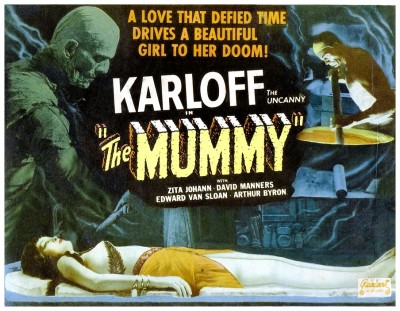
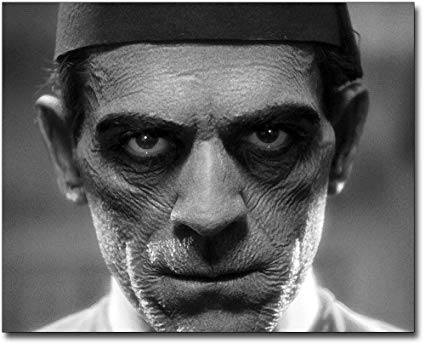
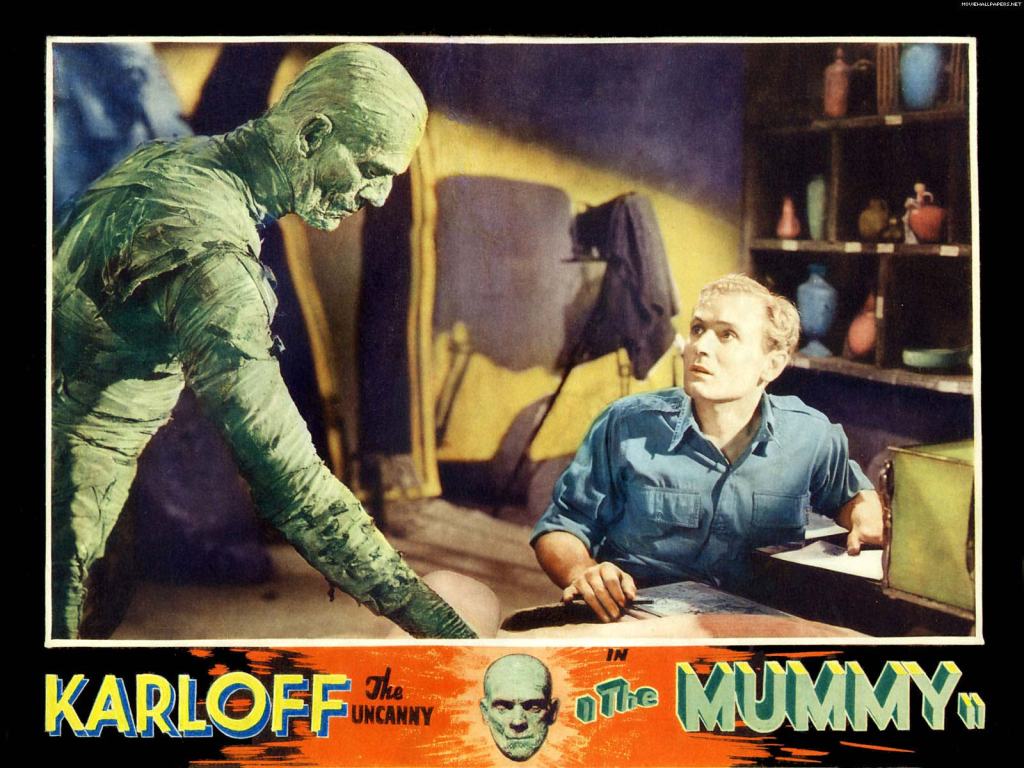
Having already established himself as an icon of horror with Frankenstein (1931), Boris Karloff was an easy choice to portray Imhotep in The Mummy. His slow pace, both physically on the screen and in line delivery, gave his performance an added touch of wickedness.
The film also starred the strikingly beautiful Zita Johann as Helen, a lady that Imhotep believes is the reincarnated form of his beloved Ankh-es-en-amon. Other members of the cast included Arthur Byron as Sir Joseph Whemple, David Manners as Frank Whemple, Helen’s suitor, and Bramwell Fletcher in the brief role of Ralph Norton, a man driven insane when he witnesses the rise of Imhotep from his sarcophagus.
In the film, Imhotep’s mummified body is discovered by Sir Joseph Whimple’s expedition. They also discover the Scroll of Thoth, a scroll that is believed to contain the secret to eternal life. After Norton reads the scroll, he unwittingly releases Imhotep from his mummified prison. Imhotep’s eyes opening has become one of the most iconic moments in film history.
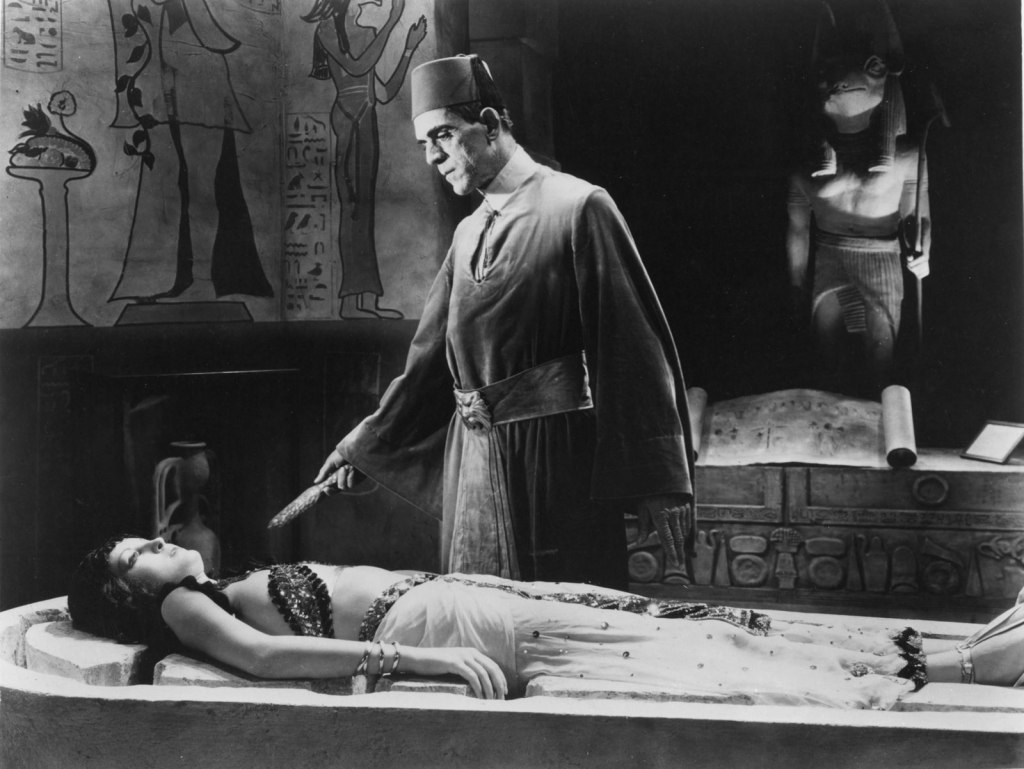
Later, Imhotep has taken on the alias of Ardath Bey and shows Frank Whemple where he can find the tomb of Ankh-es-en-amon. He then sets out to murder Helen, mummify her, and then resurrect her with the Scroll of Thoth so that they can be together for eternity.
Helen proves to be stronger than Imhotep believed and she ends up saving herself by praying to Isis for help. This was a great rarity in all early Hollywood films. In most cases, the “damsel-in-distress” is saved by the male hero, but in The Mummy, Helen does most of the work herself.
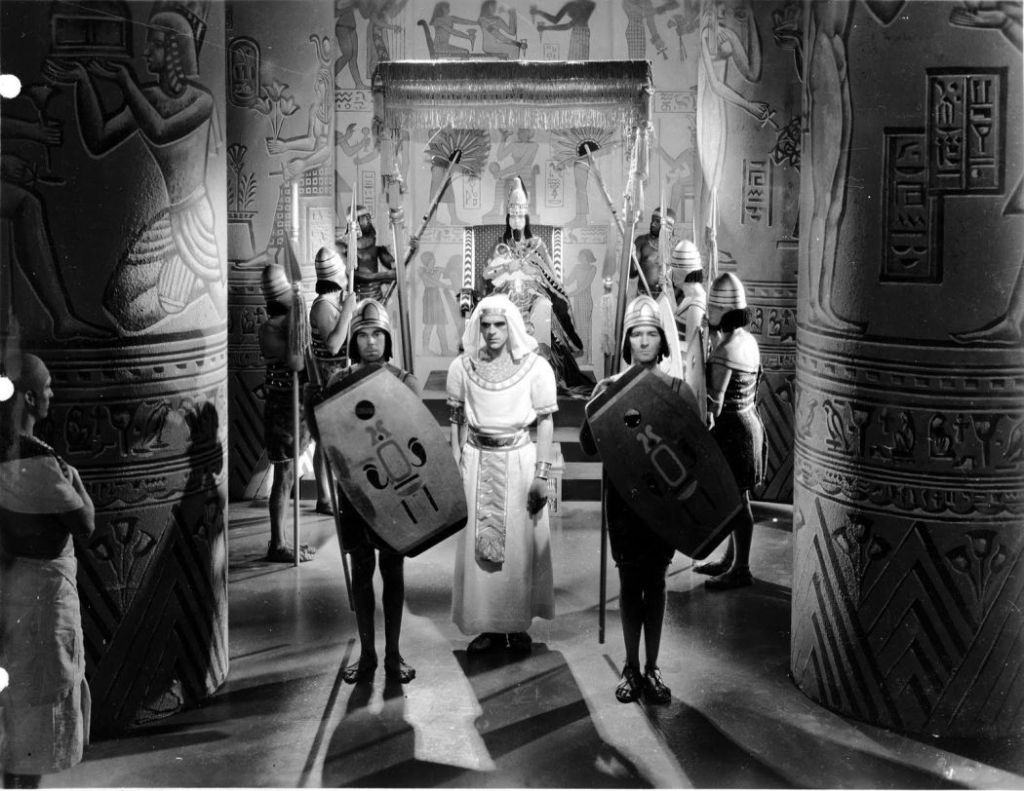
The film featured elaborate sets and wonderful visuals. Of all of the Universal Monster films, The Mummy was definitely one of the most beautiful to watch on the screen. As excellent as the film was, however, there was apparently a lot of turmoil behind the scenes between Zita Johann and the director, Karl Freund. The pair locked horns often, with Freund regularly attempting to have Johann removed from the film. One of his most famous attempts to have her leave the film was that he told her that she would have to perform the sacrifice scene nude from the waist up. He believed that she would balk at this and quit the film. Instead, she agreed to it, but only if Freund could get the scene okayed by the censors.
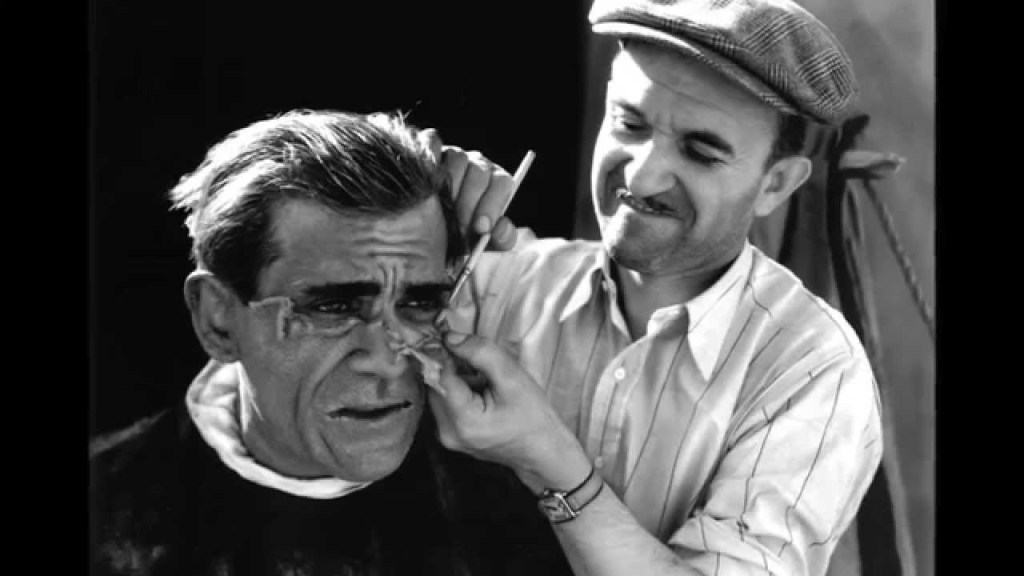
Jack Pierce handled the makeup on the film and, in true Pierce fashion, he did a great job. Karloff spent many hours in the makeup chair for the film. His most famous moment in the makeup, however, only lasted for a few minutes. He spends most of the film in a “living” form as Ardath Bey.
The Mummy is an excellent film. It’s beautiful, features solid acting, and is a real treat to watch. Karloff and Johann own the screen and it’s fun to see them perform.
Dracula (1931, Spanish Version)
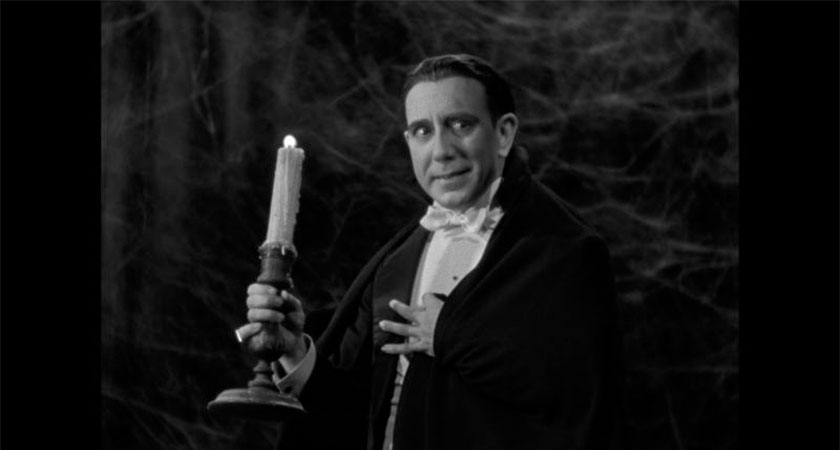
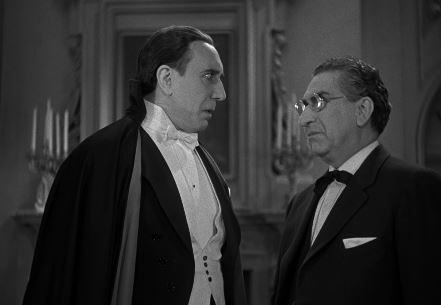
Filmed on the same sets as the better known Dracula featuring Bela Lugosi, 1931’s Spanish version of Dracula is just as worthy of viewing. The film features Carlos Villarias as Conde Dracula, Lupita Tovar as Eva Seward (Mina Seward in the English version), Barry Norton as Juan Harker, Eduardo Arozamena as Professor Van Helsing, and Pablo Alvarez Rubio as Renfield. It was directed by George Melford.
The film’s plot is exactly the same as the Lugosi version directed by Tod Browning with help from Freund, who was the English version’s cinematographer. The differences are found in the acting, cinematography, and overall atmosphere of the film.
Villarias’ Count was more animalistic than Lugosi’s smooth predator. Like Lugosi, Villarias’ eyes were heavily focused on throughout the film. While Lugosi seemed to be a constant gentleman, Villarias’ eyes led one to believe that he was a dignified man that could quickly turn into a beast. Villarias was quicker with his line delivery as well, which gave his Conde a different look and feel.
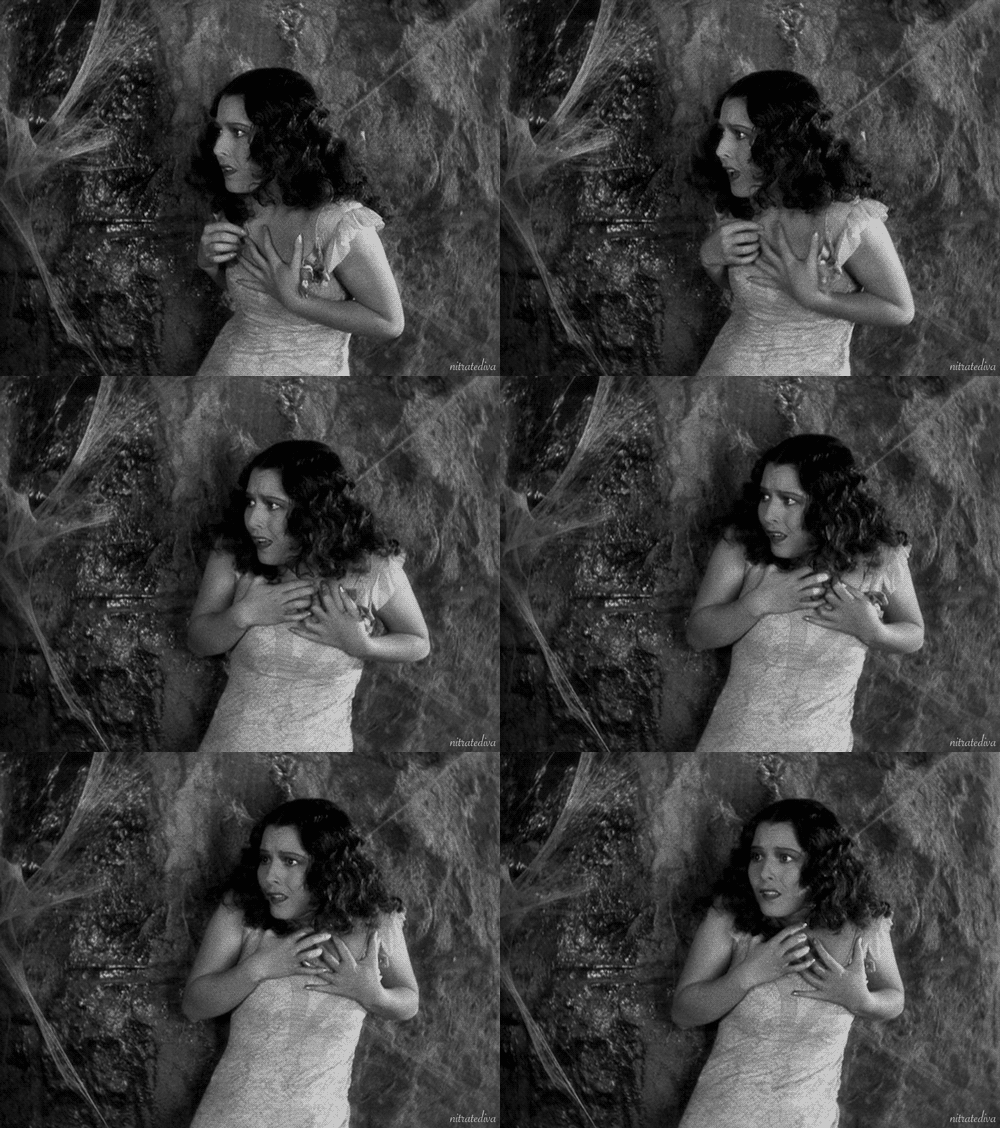
Tovar’s Eva Seward was much warmer than Helen Chandler’s Mina Seward in the English version of the film. She showed more emotion and, much like Villarias, was more animalistic and even seductive as Eva after she was attacked by Dracula. Tovar was dressed more scantily as well, pushing censorship limits for the time.
Norton’s Juan Harker was a tad bit cardboard at times. Though, to be honest, he and David Manners (Jonathan Harker in the English version), weren’t given a whole lot to do with their roles.
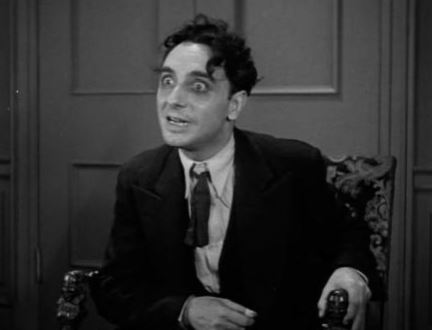
Rubio tore through his role as the psychotic Renfield. He proved to be just as effective as Dwight Frye in the English version. Frye is one of my favorite actors in all of Universal’s Monster films, but Rubio gave a more savage performance as Renfield. He appeared wilder, more aggressive, and, ultimately, more sympathetic. The rest of the cast was strong, but Arozamena wasn’t as solid as Edward Van Sloan was as Van Helsing.
Melford’s touch could be seen all over the film. It was a brighter film overall compared to the English version and Melford’s use of different angles, pans, and zooms gave the movie an entirely different feel compared to the English version. It’s as if Melford was allowed to take more risks and push more limits. This makes the film one of Universal’s best movies visually.
While it may never be remembered as fondly or as with as much admiration as the English Dracula, Melford’s Dracula is definitely just as amazing. The wilder nature of Dracula and Eva, the wonderful cinematography, and the added touches of atmosphere such as a few longer screams (specifically in the death of Dracula) and the smoke rising from the coffin with Dracula at the beginning of the film, give audiences plenty of reasons to watch the Spanish version of Dracula and its better known English counterpart.
Thanks for checking out my double feature! Another review is coming your way tomorrow. Also be on the lookout for a couple of reviews of items related to the Universal Monsters in the next couple of days!
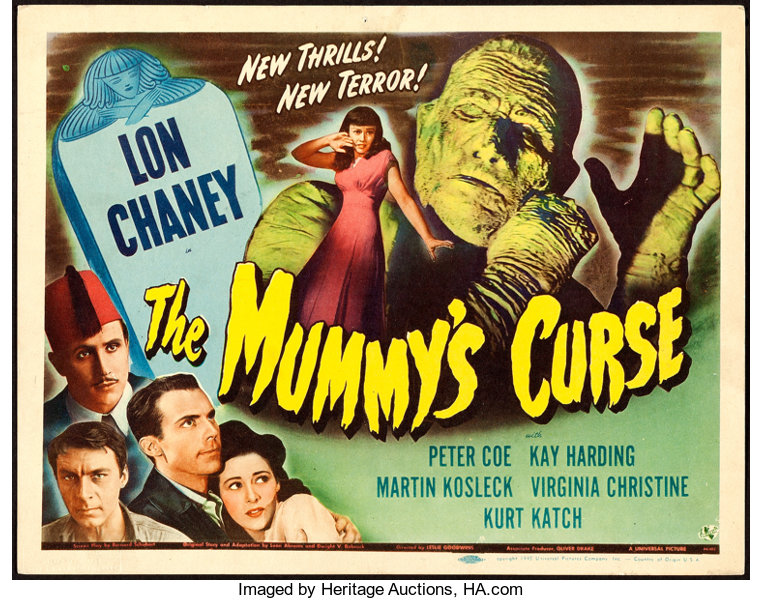
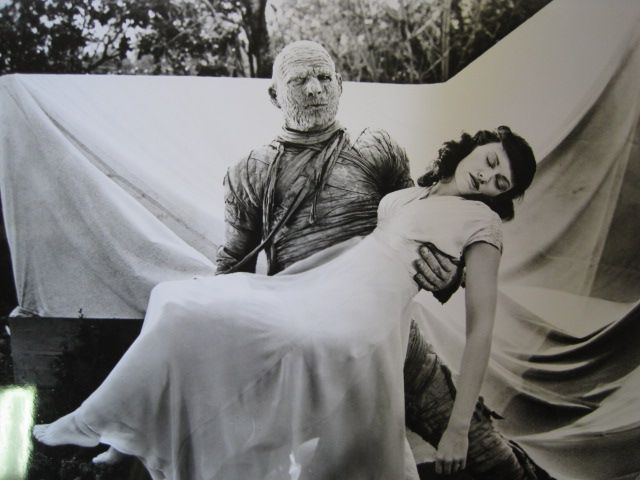
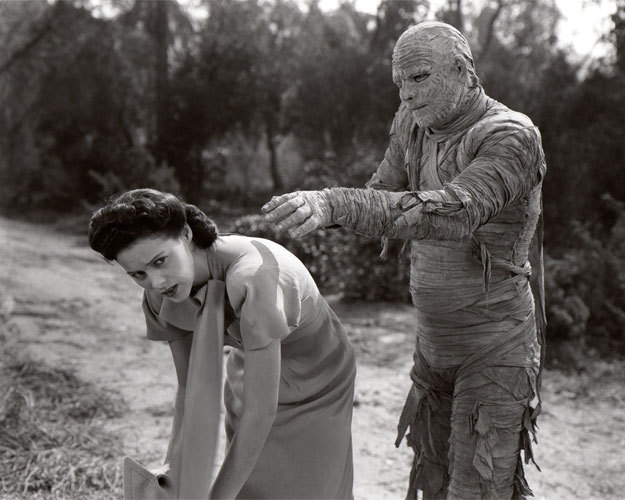
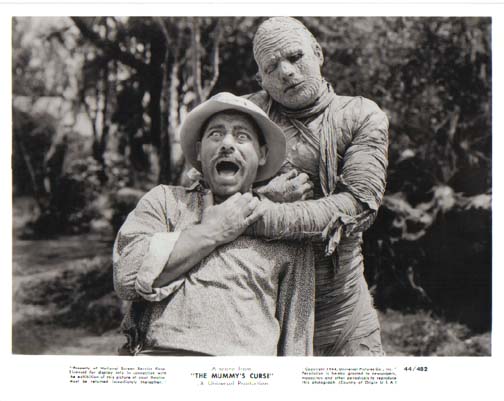
Released just a few month’s after The Mummy’s Ghost (July, 1944), The Mummy’s Curse (December, 1944) features Lon Chaney, Jr. once again as Kharis and he’s still after his beloved Ananka (Virginia Christine). The film has numerous continuity errors in it and uses footage from The Mummy (1932) and The Mummy’s Hand (1940). It goes so far as to include footage of Tom Tyler as Kharis before he is mummified. For these reasons, the film is considered the worst of all of the films in the Mummy franchise.
The plot of the film is basically the same as all of the other sequels to The Mummy’s Hand. A high priest of Arkam calls upon Kharis to find Ananka so that they can be returned to their proper burial site back in Egypt. While looking for Ananka, Kharis kills a few innocent people. Once he finds her and brings her back to the high priest, lust proves more powerful than duty and Kharis ends up deceived.
There are a couple of twists, however, that differ from the other films. In prior films, the high priest deceives Kharis and breaks his oath to protect both Kharis and Ananka. This time around, the high priest, named Zandaab (Peter Coe), is murdered in the final moments of the film by his disciple, Ragheb (Martin Kosleck), who falls for the local engineer’s niece, Betty Walsh (Kay Harding), and plans to do some very bad things to her.
Also, Ananka doesn’t want to be found in this film. Instead, she comes to enjoy being alive (but who wouldn’t?) and runs away from Kharis every time he catches up to her. As a result, a lot of innocent folks die trying to protect her. This made me dislike her a little bit. I also started to feel sorry for poor Kharis, who has spent a lot of time doing what others have told him to do.
The film’s continuity is out of whack as well. If you’ve seen the other Mummy sequels, you know that all of them take place in Massachusetts except for a few sequences that take place in Egypt. Somehow, The Mummy’s Curse magically whisks our mummies to the swamps of Louisiana AND takes place about twenty-five years after The Mummy’s Ghost despite everything looking pretty 1940’s contemporary.
The accents of the cast are all over the place as well. Cajun Joe (Kurt Katch) sounds more like he is of Mexican descent and Tante Berthe (Ann Codee) sounds like she was ripped right off of the streets of Paris. The other cast members sound like they are from pretty much any place but southern Louisiana. I’m from Louisiana, so I know what our accents sound like. These people aren’t from Louisiana!
Despite all of the goofs and questionable accents, I still enjoyed watching this film. I actually felt for many of the characters in this story, particularly Kharis, Cajun Joe, and Tante Berthe. Cajun Joe initially came off as a hustler, but proved to be a nice guy that tried his best to help Ananka. Tante Berthe took Ananka into her home. What did she and Joe get in return? They got choked to death by Kharis.
I also loved the sequence where Ananka rises out of her grave in the swamp. Her hand slowly rises from the dirt and then she slowly pulls herself out of the muck. During this particular scene, the film speed was quickened slightly, resulting in jerky, inhuman movements by Virginia Christine as she rose from the dead. This is one of the coolest sequences that I’ve ever scene. It’s a bright moment in an otherwise formulaic flick.
Yes, The Mummy’s Curse could have been a much better film. It comes across a tad lazy with brief moments of brilliance. The cast did fine jobs except for the bad accents, but this was still a decent movie. Give it a chance. Many people like it despite its multiple errors.
There are a few interesting tidbits about this film that I discovered in my research for this review. The last existing makeup piece by Jack Pierce, known for his legendary creation of Boris Karloff’s Frankenstein makeup and Conrad Veidt’s The Man Who Laughs, is from this film. The mask that Pierce made for Chaney in this film is on display at the Experience Music Project Museum in Seattle, WA. Also, Virginia Christine, who portrayed Ananka, would go on to become Mrs. Olson in multiple Folgers Coffee commercials. The film is often erroneously listed as being released in 1945, but it was actually released on December 22nd, 1944 per IMDb.
Thanks for reading. We’ve got less than a week left until Thirty-One Days O’Horror comes to completion! Look for my double feature review tomorrow!
“People Who Live In Transparent Bodies Shouldn’t Be So Suspicious”
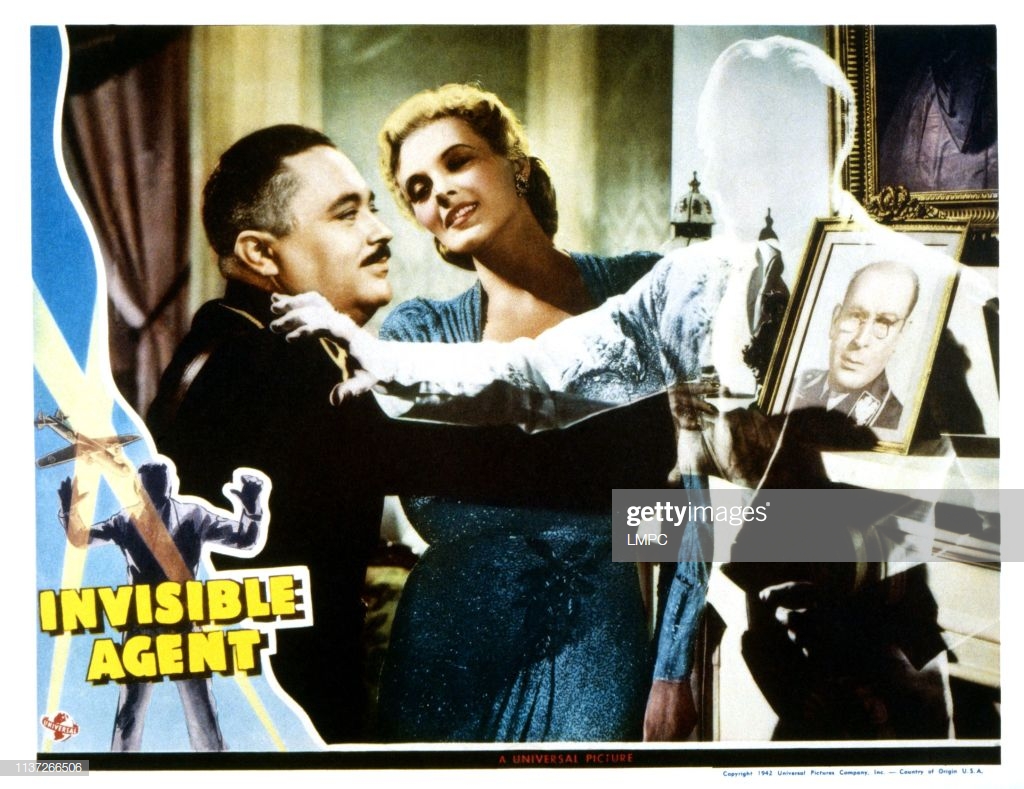
With the attack on Pearl Harbor less than a year earlier, 1942’s Invisible Agent provided some much needed patriotic propaganda for the United States. Like the film The Invisible Woman (1940) before it, Invisible Agent abandons the horror elements of most of Universal’s Monster films and takes the Invisible series in a different direction. While The Invisible Woman was basically a science fiction comedy, Agent was an espionage film with a little comedy tossed in for good measure.
In the film, German and Japanese agents attempt to acquire the invisibility formula created by Dr. Jack Griffin, the first Invisible Man, from his grandson, Frank Raymond (John Hall), who works in a print shop. When their attempt to buy the formula fails, they try to force Raymond to give it to them. Raymond escapes and makes a deal with the United States and the Allied Powers to help them battle the Axis Powers, but only if he is the only person allowed to use the formula.
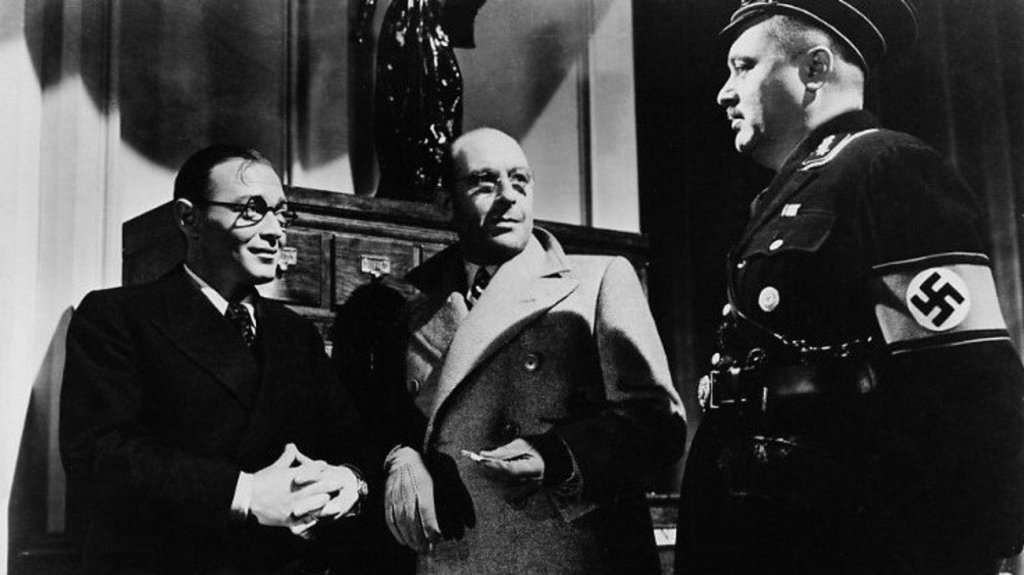
Raymond soon finds himself in Germany working with trusted spies against the Nazis. His mission is to find a list of Axis spies working in the United States. Assisting him are Arnold Schmidt (Albert Basserman), an Allied sympathizer who makes coffins in a small German town, and Maria Sorenson (Ilona Massey), an agent that is deep within the S.S. fold.
While at Sorenson’s home, Raymond eavesdrops on a conversation between her and Gestapo Standartenfuhrer Karl Heiser (J. Edward Bromberg), the jealous second-in-command of Gestapo Gruppenfuhrer Conrad Stauffer. Heiser wants to take over Stauffer’s command and he is also interested in Sorenson. There’s a hilarious sequence involving Raymond and Heiser at a dinner table that ends in Raymond damaging Sorenson’s plans to gain information from Heiser.
Eventually a trap is set for Raymond by Stauffer, who fails to capture him and also manages to lose the list of Axis spies. The uneasy peace between the Gestapo and Japanese agents in the area falls apart, and things go sideways quickly.
As more events unfold, Raymond begins to doubt where Sorenson’s loyalties lie. He reluctantly brings her with him in order to escape to England. The Japanese forces, led by the sinister Baron Ikito (Peter Lorre), and Stauffer’s forces (now led by Heiser, watch the film to see how he takes control) attempt to stop Raymond and Sorenson from escaping. Not only does the pair of spies have the Axis agent list, they also have information about a Nazi strike against New York City. Do they escape Germany? Are Raymond’s doubts about Sorenson true? Watch Invisible Agent to find out!
This is actually a very good film. Raymond’s invisibility is played up for humor a little bit too much at times, but audiences are quickly jarred out of the funny moments by some rather serious and deadly sequences. The movie portrays Nazis as idiots and they draw a lot of laughs from viewers, especially Heiser, but viewers are quickly reminded of just how sinister the Nazis really were during WWII. It’s the grounded moments in this film that make it not only a unique Universal Monsters film, but a solid espionage movie as well.
Many members of the cast have appeared in other Universal Monster films. Massey, Bromberg, Hall, Hardwicke, and Holmes Herbert, who portrayed Sir Alfred Spencer in the film, all had roles in at least one other Universal Monster film. Peter Lorre probably had the most prolific career of the entire cast, having appeared in multiple popular films including M (1931), Casablanca (1942), and 20,000 Leagues Under The Sea (1954). He was also the star of seven Mr. Moto films released between 1937 and 1939. I highly recommend checking out Lorre’s work, even films in which he had smaller roles. The man was brilliant.
Also of note is a brief appearance by Key Luke as a Japanese surgeon. You might remember him from the Green Hornet serial from the 1940’s or the 1970’s series Kung Fu. Younger folks like myself probably known him best as Mr. Wing from the Gremlins films.
Check out Invisible Agent. It’s a really good film with a decent mixture of humor, action, suspense, and drama.
Thanks for reading. More horror will be headed your way tomorrow!
1942 saw Lon Chaney, Jr. hook up to the bolts as Frankenstein’s Monster in The Ghost of Frankenstein. The film also starred Bela Lugosi as Ygor, Cedric Hardwicke as Dr. Ludwig Frankenstein, Lionel Atwill as Dr. Bohmer, and Evelyn Ankers as Elsa Frankenstein.
The film begins with a good ol’ Universal angry mob burning down Castle Frankenstein and Ygor and the monster escaping to Visaria in the hopes of finding Dr. Ludwig Frankenstein, the second son of Dr. Henry Frankenstein. Ygor has plans to rebuild the monster’s strength and make it whole again.
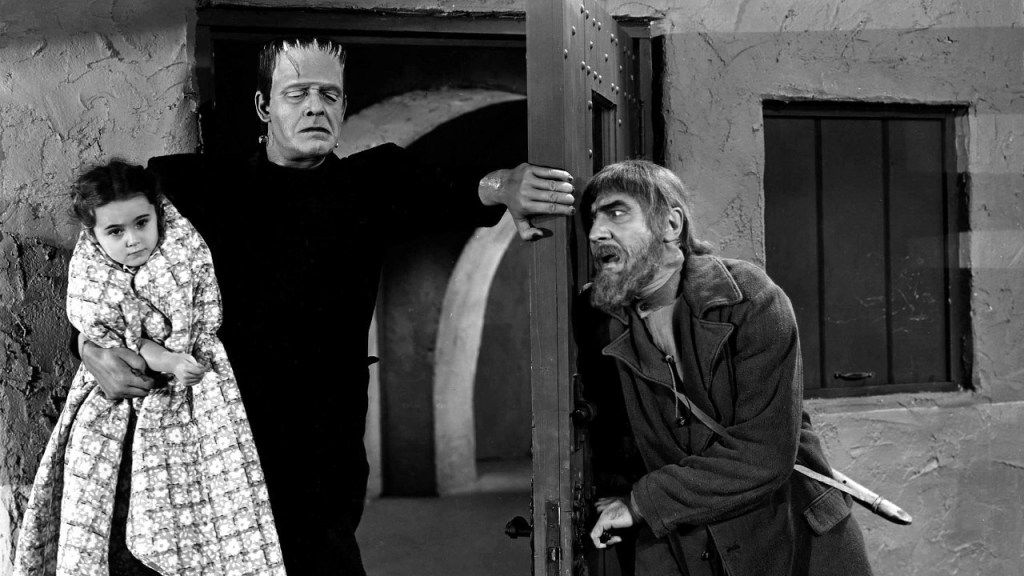
As soon as the pair arrive in Visaria, however, a series of misunderstandings leads to the creature murdering two villagers while trying to help a young girl, Cloestine (Janet Ann Gallow). The monster is arrested and put on trial, but Ygor tracks down Ludwig and tells him to help the monster. Ludwig refuses at first, but Ygor threatens to reveal Ludwig’s family secret if he doesn’t help the creature.
Ludwig appears before the court and denies that he recognizes the creature. This sends the creature into a fit of rage and it escapes with Ygor. The duo end up at Ludwig’s home and attack his daughter, Elsa, who has just found her father’s secret family records and Ludwig’s assistant, Dr. Kettering (Barton Yarborough). Kettering is murdered, but Elsa is saved by her father. Ludwig is then visited by his father’s ghost and he is convinced that he will replace the monster’s existing brain with Dr. Kettering’s brain. Ygor demands that his brain be used instead, but Ludwig refuses.
When the police arrive to investigate the missing Dr. Kettering’s whereabouts, Ygor and the creature escape from the lower levels of Ludwig’s laboratory. The monster kidnaps Cloestine, brings her back to Ludwig, and demands that he use the little girls brain instead of Kettering’s. Ygor has plans of his own, using Dr. Bohmer’s jealousy of Ludwig to convince him to swap Kettering’s brain with Ygor’s.
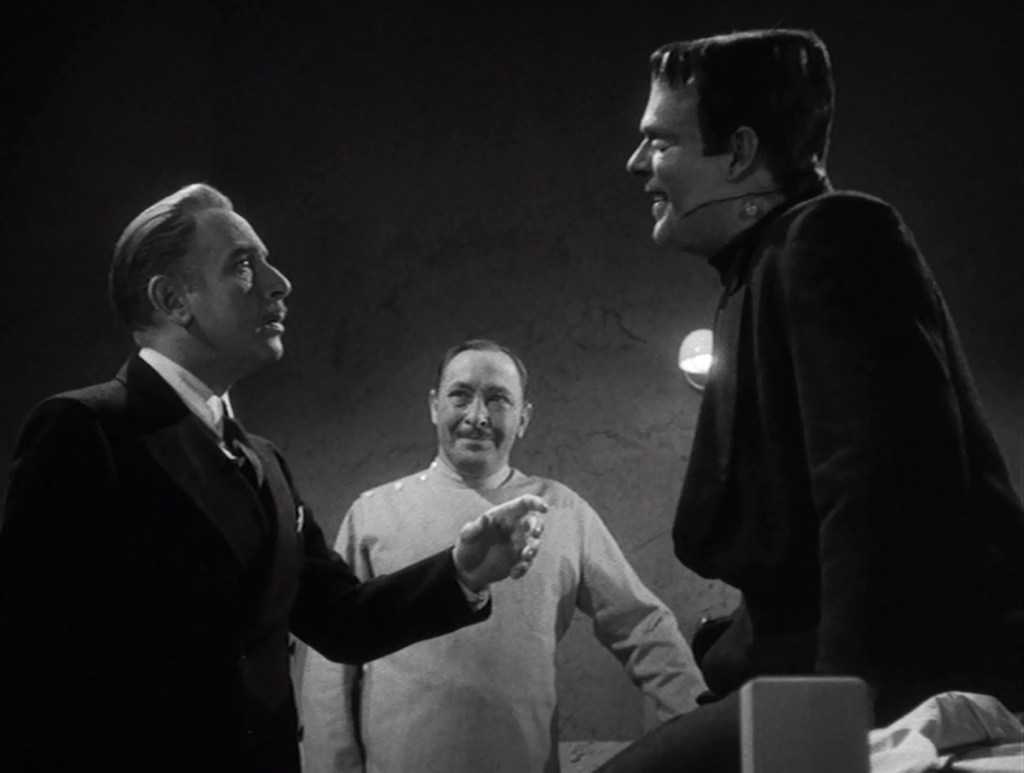
Elsa convinces the monster to let Cloestine go and Ludwig and Bohmer replace the monster’s brain with Kettering’s. Bohmer, however, swapped the brain for Ygor’s and whenever the monster awakens, Ludwig is horrified.
A battle ensues and the monster murders Bohmer and sets the laboratory on fire. The monster goes blind due to the fact, according to Ludwig, that its blood type does not match Ygor’s. A mob shows up in order to save Cloestine and the monster gets even angrier. He knocks over equipment and other items, spreading the fire.. Elsa manages to escape with her suitor, Erik (Ralph Bellamy), while the others apparently die in the fire.
I really liked this film. It doesn’t have a very good reputation as a whole and is often considered the first of a series of cheaper, less inspired films. Evelyn Ankers teams up with Lon Chaney, Jr. once again, as did Ralph Bellamy. Both appeared with Chaney in The Wolf Man (1941). Other actors in this film had appeared in other Universal Monster films as well, most notably Lionel Atwill, who portrayed Inspector Krogh in the previous sequel, Son of Frankenstein (1939). Barton Yarborough would go on to appear in the highly popular Dragnet television series until his untimely death at the age of fifty-one.
This definitely is not the best Frankenstein film, but it’s still pretty good. I enjoyed the overall story, the music, and even the less-than-stellar special effects. The cast did a good job and at just over an hour long, it’s a nice little flick to check out when it’s raining outside.
Thanks for reading and I apologize for the late hour. Work completely derailed my plans today. Tomorrow will bring another chapter in my Thirty-One Days O’Horror saga!
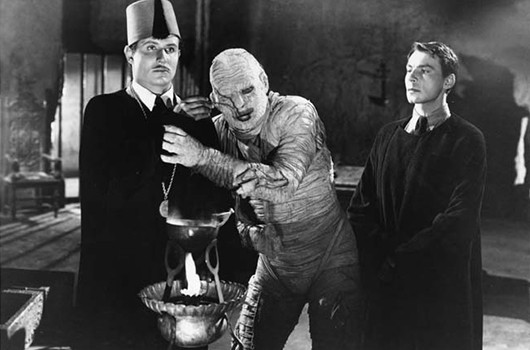
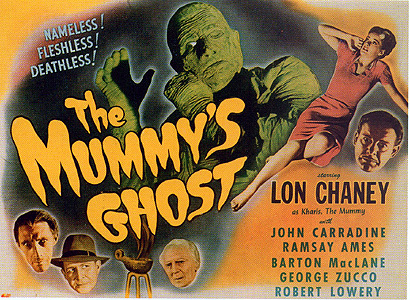
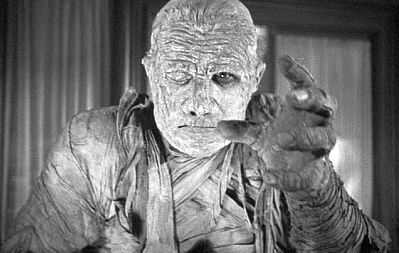
Lon Chaney, Jr. goes under the wraps for a second time in 1944’s The Mummy’s Ghost. A sequel to The Mummy’s Tomb (1942) and The Mummy’s Hand (1940), Ghost finds Chaney’s Kharis back on the hunt for tana leaves and the love of his life, Ananka.
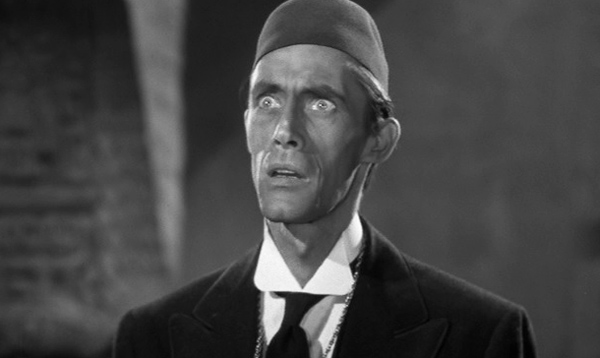
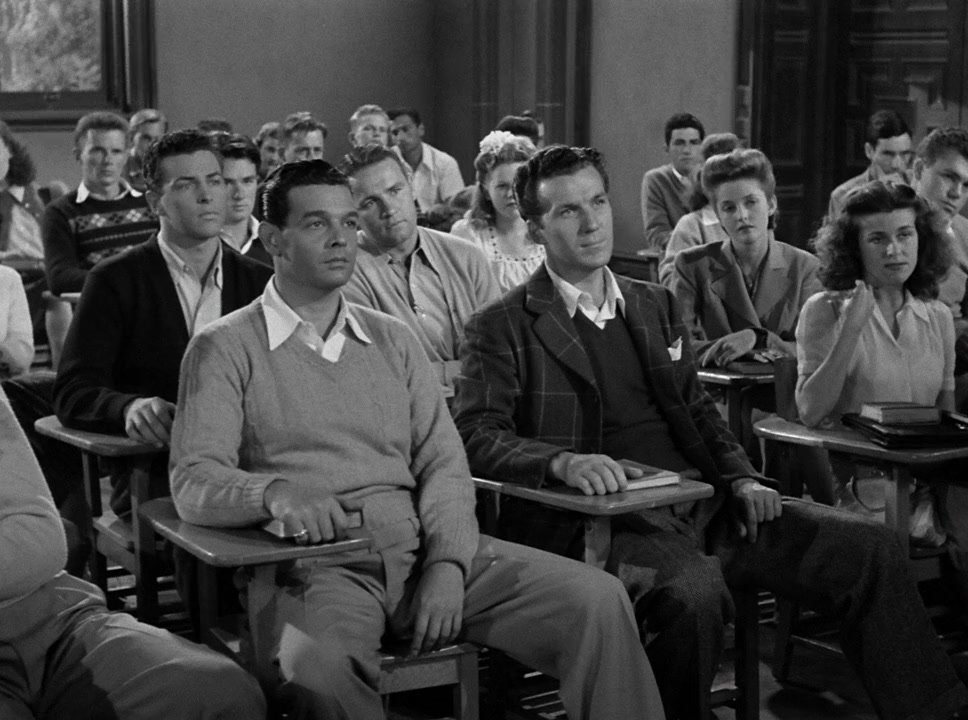
In the film, students are being taught about Kharis, his murder of most of the Banning family, and his supposed death in a fire at the Banning home in Mapleton, MA by Professor Norman (Frank Reicher, reprising his role from the previous film). In Egypt, the thought-to-be-dead Andoheb (George Zucco, returning for a third time) has given his newest replacement, Yousef Bey (John Carradine), the duty of bringing Kharis and Ananka back to their final resting place.
One of Professor Norman’s students, Tom Hervey (Robert Lowery), happens to be dating a beautiful Egyptian student named Amina (Ramsay Ames), who drifts into daydreams whenever someone mentions Egypt around her. That evening, she becomes entranced and follows Kharis to Professor Norman’s home where he has unwittingly revived the mummy by brewing tana leaves.
Kharis murders the professor and Amina faints when she sees him leaving the Norman home. She is then found by the police and becomes the prime suspect in Professor Norman’s murder. Soon enough, Yousef Bey arrives in town and calls on Kharis to help him locate Ananka. When they find her tomb, however, they discover that her soul has been transferred into a new body. That body belongs to Amina!
Kharis kidnaps Amina and brings her to Yousef Bey. When Bey sees her, he becomes enamored with her and plans to give her eternal life and share an immortal love with her (just like Mehemet Bey and Andoheb in the prior films). Enraged, Kharis kills Yousef Bey and heads out on his own with a rapidly aging Amina in his arms.
As with most Universal horror films, a mob shows up just in time to witness Kharis kick poor Tom Hervey’s rear and then make a break for the nearby swamp. The mob, along with a recovering Tom, give chase to Kharis. As Kharis moves deeper and deeper into the swamp, it becomes more difficult for the mob to follow. Only Tom, Sheriff Elwood (Harry Shannon), and a few others are able to keep up with him.
When they finally do catch up to Kharis, he is sinking into the swamp water with Amina in his arms. She has aged dramatically and no longer looks like the beautiful young woman that she once was. The duo go beneath the water and Tom breaks down and cries.
The film is one of the lowest rated Universal Horror films according to a number of review websites. I’m not exactly sure why that is, though, as this film is pretty decent in my book. It definitely isn’t a great film, but it is enjoyable to watch. The actors all do very good jobs in their roles and the special effects are decent as well. The music is solid and the story, albeit brief, held my attention throughout.
Ramsay Ames has the honor of being one of the few female leads in a Universal Horror film that doesn’t survive. The other ladies that didn’t make it out of the film alive include Zaleska (Gloria Holden, Dracula’s Daughter), Aunt Martha (Sara Haden, She-Wolf of London), Sandra Mornay (Leonore Aubert, Abbott and Costello Meet Frankenstein), and possibly the Bride (Elsa Lanchester, Bride of Frankenstein). I say possibly for the Bride because A) we never find out of she survived the fire like Frankenstein’s monster did and B) one could argue that she isn’t a lead actress because she has so little on screen time. Also, Ames’ Amina is technically a good person and not a villain like the others since Ananka transfers her soul into Amina’s body. One thing is for sure, however, and that is the fact that in my book, Ramsay Ames is definitely one of the most beautiful actresses to appear in a Universal Horror film.
Well, that’s all I have for now. Thank you for reading my post. I have plans to do a double feature this weekend and a brief review of the board game Horrified, based on Universal’s classic monsters. I also hope to blog about a few collectibles featuring the monsters as well.
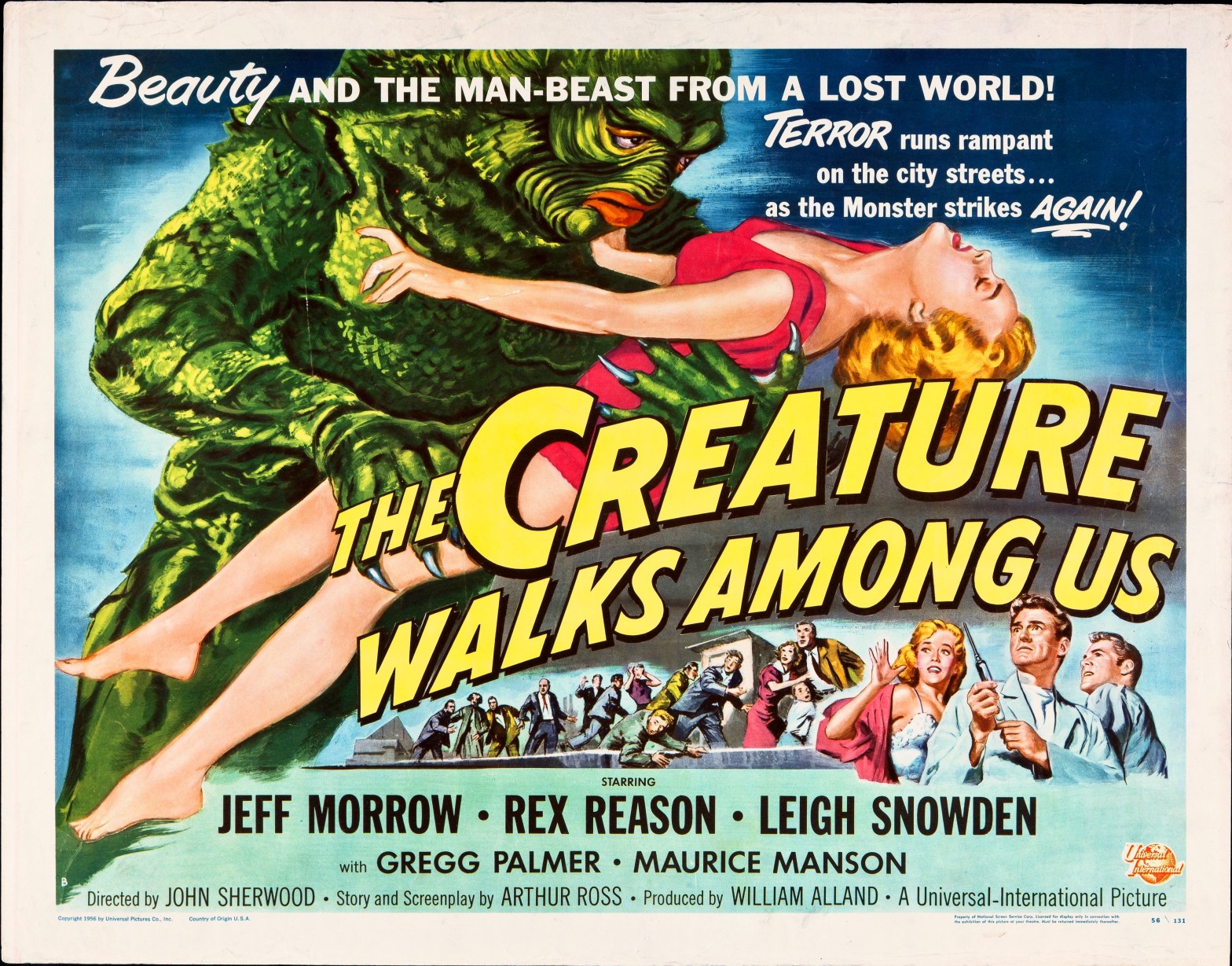
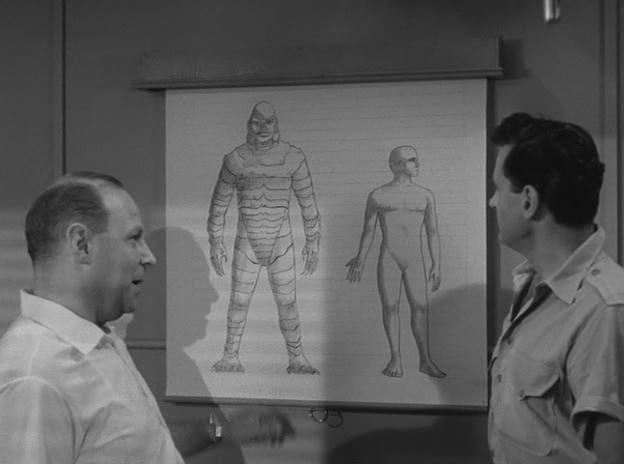
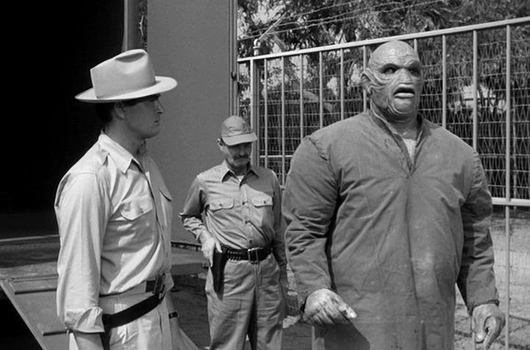
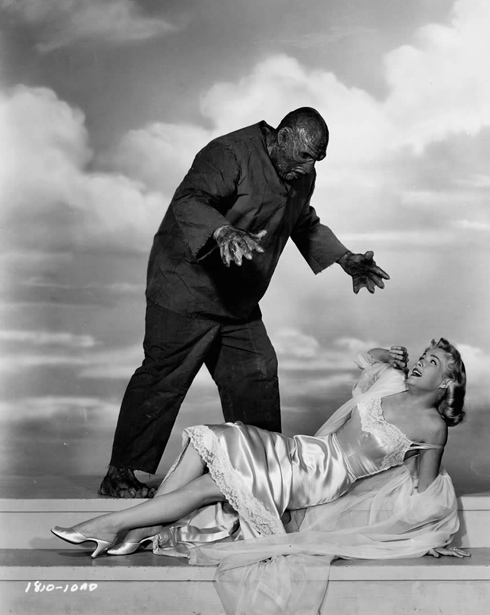
Despite addressing a number of serious issues, 1956’s The Creature Walks Among Us falls short of being an excellent film. Considered to be the final core entry in Universal’s Classic Monsters line, the movie features a more than capable cast, but ultimately fails to impress.
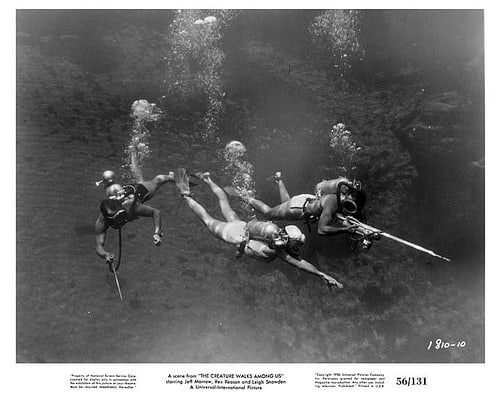
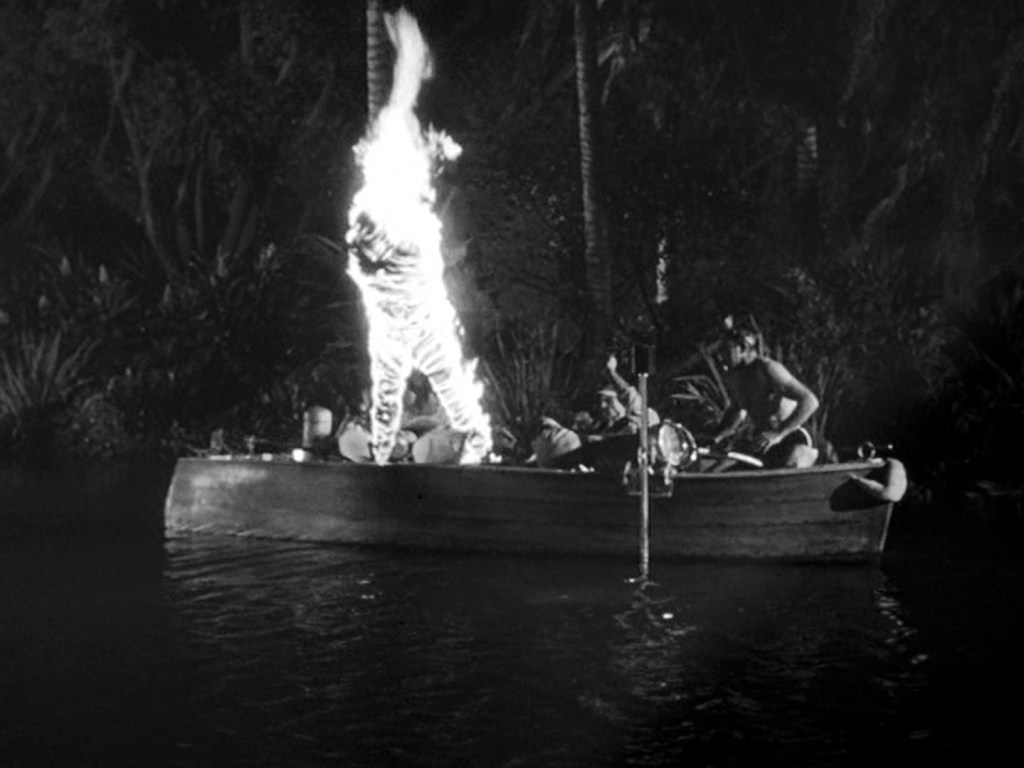
The film’s plot seems pretty simple on the surface: A mad scientist heads into the Florida Everglades to capture the Creature in order to study it and, possibly, make it a better, more human-like being. The Creature is captured but is severely burned during the battle, damaging its gills beyond repair. Luckily for the Creature, it is revealed to have a more human-like layer of flesh beneath the scales and the mad scientist manages to save the Creature by opening up its human lungs a bit. Then the Creature is unleashed on the scientist’s compound in California and chaos ensues.
Seems pretty standard, right? Well, there are a few underlying stories thrown into the mix that address everything from jealousy and paranoia to rape, failing marriages, and whether or not humans are more of a monster than the Creature. As important as some of these topics are (and a tad scandalous and/or taboo in the 1950’s), the film never really does more with them than toss them into the mix in order to get Gill-Man angry.
The film stars Jeff Morrow as the jealous Dr. William Barton. He’s the mad scientist that I mentioned earlier. He’s a distant but overly protective husband to Marcia Barton (Leigh Snowden), a lovely and adventurous woman who draws unwanted and excessively aggressive attention from Jed Grant (Gregg Palmer). William believes that Jed is just the latest in a long line of men that Marcia has been having affairs with behind his back.
Along for the ride are Rex Reason as Dr. Thomas Morgan, Maurice Manson as Dr. Borg, and James Rawley as Dr. Johnson. This trio assists Dr. Barton in saving Gill-Man from death, but they aren’t too sure about Barton’s behavior after the surgery proves to be successful. They believe that the Creature is actually becoming more docile and that it only displays violent behavior when it is provoked whereas Barton thinks that the monster is regressing to a more animalistic nature.
The other doctors are right, of course, but a series of events ends up leaving the Creature as the prime suspect in the death of Jed Grant. Initially the Creature does attack Grant, but only in order to prevent him from raping Marcia. Later on, Dr. Barton murders Grant in a fit of rage and frames Gill-Man for the crime.
This results in a final confrontation with Dr. Barton and the Creature making a run for the ocean. He ultimately just wants to be alone, but those meddling humans keep attempting to make him a better…..person.
The film never really finds its footing and the potential for a great story dies with rushed conclusions, a weird evolution issue, and disjointed writing. I wanted the Creature to escape and I actually felt sorry for him. I quickly figured out that it is the humans that are the actual monsters in this film (which is the blatant and obvious point of the movie overall) and poor Gill just wants to go home.
I don’t understand how the otherwise slender Gill-Man (portrayed in a few brief underwater sequences by Ricou Browning once again) is severely burned and then evolves into this thicker and bulkier land version of himself (portrayed by Don Megowan). Did he drink a protein shake and hit the gym after he left the water?
I also don’t see the point of bringing Grant back to California with the rest of the gang, especially since Dr. Barton didn’t trust him around his wife. Why didn’t they just leave him in Florida to hunt gators or something? Nope, instead they had him hang out at the Barton compound and watch the Creature recover from his wounds AND made sure that Marcia was left alone in order to give Jed an opportunity to rape her.
This movie could have been something special. It wanted to make the audience look at itself and failed to do so by opting for a monster fight at the end instead of getting a tad more philosophical. It was a missed opportunity for Universal, who would follow up this film with a string of less-than-memorable horror flicks like The Mole People (1956) and The Leech Woman (1960) to close out Universal’s successful run of classic horror films.
I wanted to like this film. I hoped that it would end Universal’s legacy of horror on a high note, but instead it just sort of sits there, enjoyable enough but ultimately all wet. Watch it if you want to close out the Creature movie trilogy, but don’t expect too much from it.
Thanks for reading. I’ve got eleven movies left to review (I’m doing a double feature on Saturday) and you don’t want to miss it!
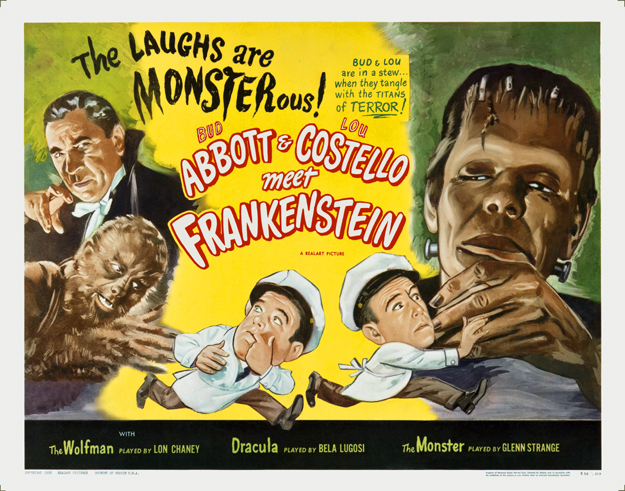
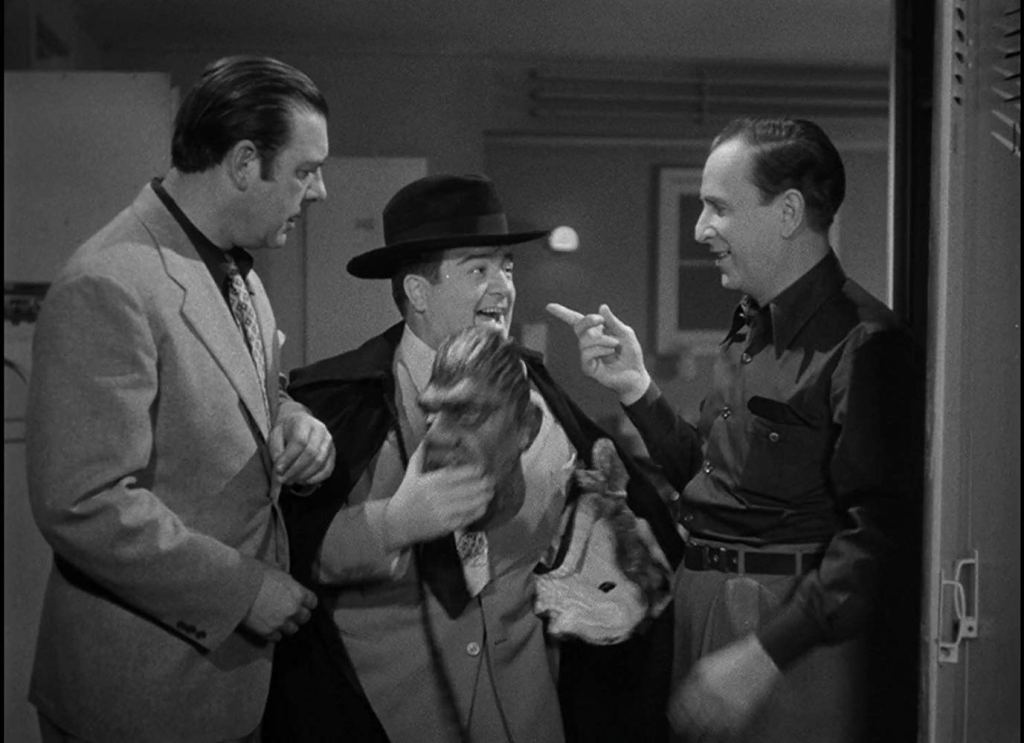
1948’s Abbott And Costello Meet Frankenstein would be the final time that Universal’s biggest classic horror icons would share the screen. It would also be the first of a number of Abbott And Costello Meet… films.
The film’s plot involves Dracula (Bela Lugosi) arriving in Florida to join forces with Dr. Mornay (Lenore Aubert) to replace the brain residing in Frankenstein’s monster (Glenn Strange) in order to make him both stronger and more obedient and thus, a better servant for Dracula. The brain that Mornay has chosen resides in the simple head of Wilbur (Lou Costello), who believes that she is in love with him.
Hoping to intercept both Dracula and the monster, Larry Talbot (Lon Chaney, Jr.) frantically calls the train station where crates that contain Dracula and the monster’s bodies are being shipped. He wants to prevent them from being opened so that Dracula can’t build a bigger, better monster. Before he can reason with Wilbur, though, he transforms into the Wolf Man and Wilbur hangs up. He believes that Talbot has placed his dog on the phone.
Wilbur and his partner, Chick (Bud Abbott), deliver the crates to McDougal’s House of Horrors. While opening the crates, Wilbur witnesses both Dracula and Frankenstein’s monster revive. Chick doesn’t believe him and whenever McDougal (Frank Ferguson) arrives and finds both crates empty, he has Chick and Wilbur arrested for theft.
The duo are later bailed out of jail by a mysterious woman named Joan (Jane Randolph) who claims that she is also in love with Wilbur. Eventually Chick, Wilbur, Joan, and Dr. Mornay attend a masquerade ball where Dracula, the Wolf Man, and Mr. McDougal all show up. A series of chases and confrontations occur and things eventually come to a head at Dr. Mornay’s laboratory.
Wilbur is captured and then is freed by Chick. Dr. Mornay’s clueless but well-meaning assistant, Professor Stevens (Charles Bradstreet), finds out the truth about Mornay and Dracula and helps Chick, Wilbur, and the Wolf Man battle them. Frankenstein’s monster squares off with Chick and Wilbur while the Wolf Man battles Dracula. You’ll have to watch the film to find out what happens next.
The slapstick comedy proved to be extremely popular. It also revived the careers of Abbott and Costello. In the mid 1940’s, everything from family tragedies to illnesses and internal arguments limited the pair’s number of film appearances. It also brought Universal’s most popular monsters back to the screen.
According to the documentary Bud Abbott and Lou Costello Meet the Monsters! (included on the Frankenstein Legacy Collection DVD and Blu-Ray), Abbott and Costello kept the atmosphere light on the set. This was apparently something that they did on all of their movies. Always the professional, Bela Lugosi supposedly got angry with the pair at times and stormed off of the set, but eventually began to enjoy some of the schemes the duo would play. The documentary also mentions how makeup techniques were used that reduced the amount of time that Lugosi, Chaney, and Strange spent in the makeup chair.
The film is a fine entry in the Universal Horror collection. While it isn’t scary, there is one pretty shocking death that occurs late in the film. Otherwise this is a straight comedy that happens to feature some of the most iconic monsters in film history.
Thanks for reading my post. We’re getting closer to Halloween and on that day, I’ll be blogging about my favorite Universal Horror film!
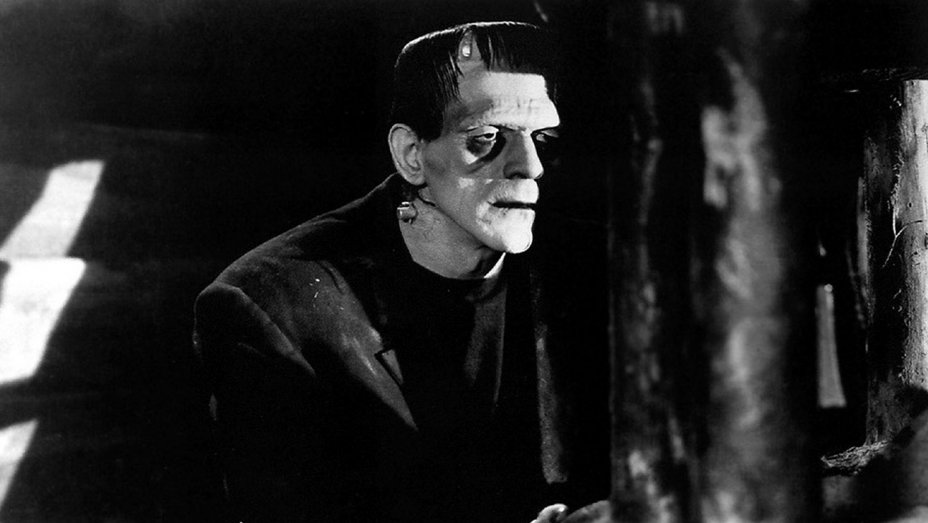
Universal, struggling with financial losses from 1930, found massive success with Dracula (February, 1931) and decided to stick with a formula that worked. Enter Frankenstein (November, 1931), a huge box office success that launched the career of Boris Karloff and became the second in a string of successful horror films for Universal.
Along with Bela Lugosi’s Dracula and Lon Chaney, Jr.’s Wolf Man, Karloff’s Frankstein’s Monster is quite possibly the most iconic horror creation ever made. Everybody knows Karloff’s monster. Everybody quotes the film even though it is nearing the century mark. Without the success of Frankenstein, there might not be a Universal Horror legacy to speak of today.
For those of you that have been under a rock since the 1930’s, Frankenstein is based on a play by Peggy Webling. The play is loosely based on the famous story by Mary Shelley called Frankenstein; Or, The Modern Prometheus.
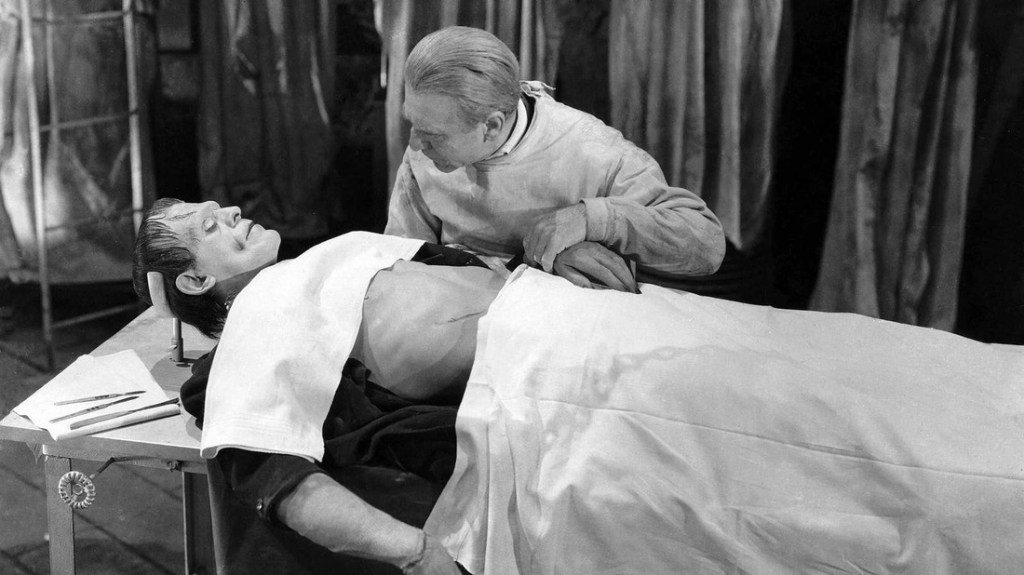
In the film, Henry Frankenstein (Colin Clive) hides himself away in his laboratory in a watchtower with his assistant, Fritz (Dwight Frye). Together they have stolen body parts and stitched them together to create a lifeless body. Fritz is sent to find a suitable brain. He finds the perfect brain but drops in when he is startled by a loud noise in Dr. Waldman’s (Edward Van Sloan) lab. Desperate, he grabs another brain labeled “abnormal.” He doesn’t tell Henry about which brain he has acquired.
Henry’s fiancee, Elizabeth (Mae Clarke), becomes nervous when their wedding day approaches but Henry has distanced himself from everyone. Together with her friend, Victor (John Boles), and Dr. Waldman, Elizabeth confronts Henry. She and the others arrive at the watchtower in time to witness the creature’s rise from the dead.
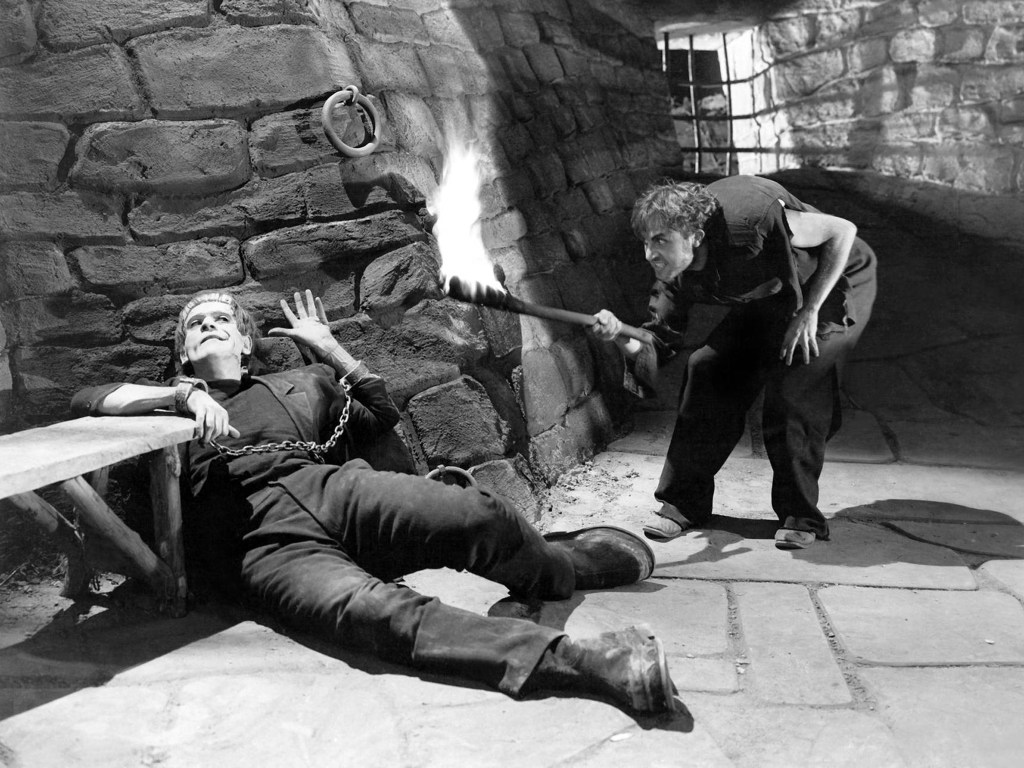
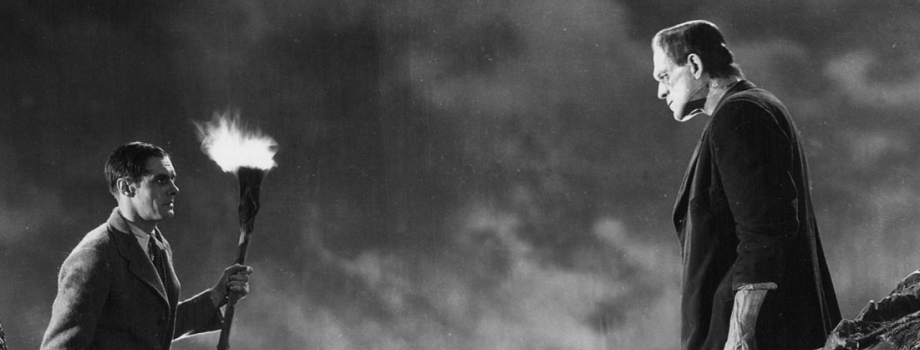
The creature obeys commands and appears to be docile, but a mistake with a torch carried by Fritz triggers fear in Dr. Frankenstein and he chains the creature up. Fritz terrorizes and taunts the creature with fire and whips, and eventually it murders Fritz.
Henry plans to put the creature out of its misery but during a long battle with the creature, he passes out from exhaustion. Henry is brought home to recover and to prepare for his wedding with Elizabeth. Dr. Waldman promises to end the creature.
Instead, the creature murders Dr. Waldman and breaks out of the watchtower. Longing for acceptance and friendship, the creature accidentally murders a young girl and the local villagers become scared.
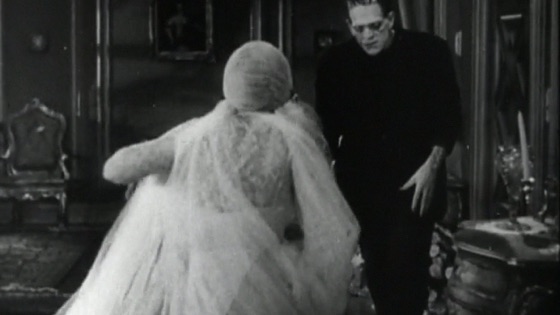
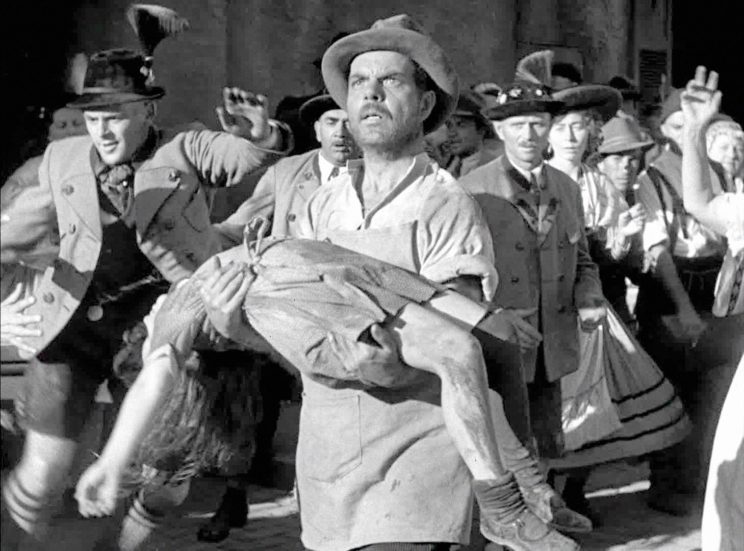
On the day of the wedding, the creature terrorizes Elizabeth. The father of the young girl murdered by the creature arrives in town, carrying her lifeless body. Fear takes over the village and three mobs are formed to find the creature and end it. From there the film continues on to the iconic scene where the monster, Dr. Frankenstein, and the mob face off in a windmill. You’ll have to watch the film for yourself in order to find out what happens next.
This film might be even more important than Dracula when it comes to the legacy of Universal Horror. Without its success, Universal might have fallen back into financial trouble. We might not have any of the other iconic monsters or films that Universal gave us, either. In short, while Dracula put Universal back on the map, Frankenstein kept it there.
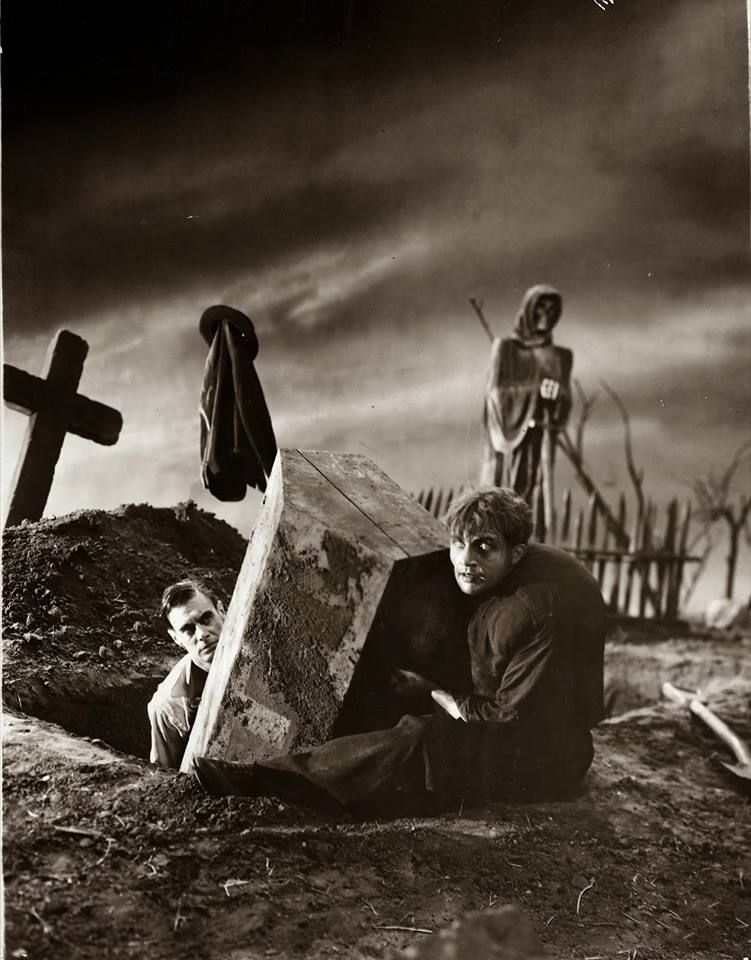
The movie featured a number of iconic scenes including the grave scene early in the film, the father carrying his lifeless daughter, and the windmill scene at the end of the film. It also featured amazing performances from most of the cast, especially Karloff and Dwight Frye.
I could recommend this film for a ton of reasons, but the primary one is the fact that the villain in this film isn’t necessarily a villain….or a monster. He’s looking for acceptance and because he’s different, he is feared.
Watch this movie. You won’t regret it. Thank you for reading this post.


































 Ken's Alternate Universe!