

“I have something to say…..”
Have you ever thought of presenting a panel at a pop culture, comic, or anime convention? I’ve presented panels since 2009 and have only increased the amount of panels I’ve presented at conventions as the years have passed. For the last few years, I’ve usually presented a minimum of two panels at most of the conventions that I’ve attended. I’ve also presented panels at festivals and online as well and have been invited to sit in on panels with other hosts. Attendance for my panels has varied from one person to over thirty and no matter how many people show up, I always give them my full presentation.

Most of the conventions that I have presented panels at have been in the small to mid-size level. A few examples include Louisiana Comic Con, CoastCon, Wizard World NOLA (now Fan Expo), CyPhaCon, Calcasieu SerialFest, a number of library-based conventions, and the defunct BayouCon. The largest convention that I ever presented a panel at was Wizard World NOLA.
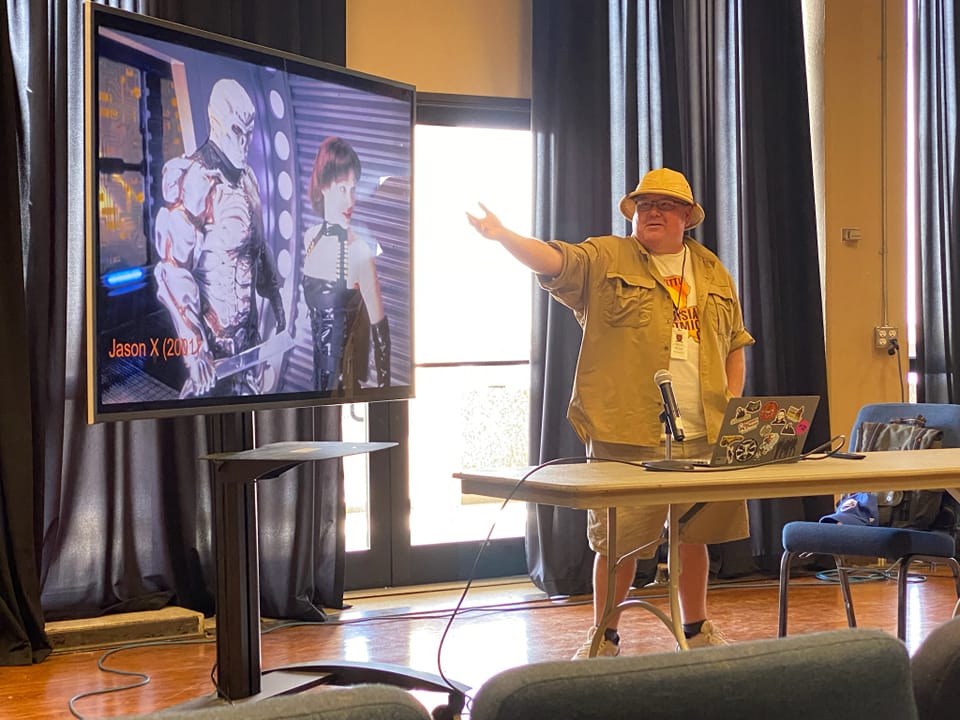
So, after saying all of that, I thought that it might be cool to give folks a few tips on how to present and/or host a panel at a convention. I hope that these steps will help you on your way to becoming a regular panelist at events. Let me know if you’re ever giving a presentation and if I’m at the event, I’ll do my best to attend your panel!
- Pick your topic: This is the most important step in the process. There are a ton of ways to approach picking a topic to talk about in your panel. You can choose to talk about something that you love, research a topic that you are unfamiliar with and want to know more about, take the “dangerous” route of discussing a topic that involves politics or religion, or create a simple and fun trivia panel to entertain your audience.
- Decide on your presentation form: In most cases, panels will either be one person discussing a topic (similar to a lecture) or a panel of multiple people discussing a topic with a host guiding the conversation. You can also have a basic Q&A panel where you or a guest answer questions from the audience. Once you’ve decided on your form, the fun begins!
- Research, research, research: Research your panel topic. Cover all of your bases. Have references handy if needed (I’ve never used them, but I always have them). When presenting a panel, you may run across gatekeepers for whatever topic that you are discussing. Some of them may attempt to trip you up. It’s rare, but it does happen. The good thing is that if someone like this attends your panel, other audience members will usually come to your aid if you run into a roadblock. You want the information that you give to be factual unless your panel is opinion-based or just for fun.
- Set your time frame: Most conventions will request that you keep your panel under an hour in duration. Shoot for forty-five minutes and you should be fine.
- Summarize: Once you’ve got your panel drawn up, make sure to write a brief, one paragraph summary of your panel. Why? Because when you submit panel requests to conventions, they will most likely ask for a brief description of your panel to determine if it is a good fit for their programming and so that they can use the description in the schedule if they select panel.
- Submit your panel: The easiest way to submit panels is to go to the convention website and locate the panel request form. Of course, this varies by convention, but most of them follow a simple form that includes your name, your organization’s name, your panel title, a brief description of the panel, and the times that you will be available for the convention. Even if you are the best friend of the convention’s director of programming, you will need to fill out the official panel submission form. Sure, you might email the director (if you know them) and let them know that you’ve submitted your panel, but it’s best to just fill out the form and wait for a response.
- Wait for panel approval or denial: It may take a few weeks before you get a response from some conventions about the status of your panel submission. Don’t bug the convention for a response. Just wait a few weeks and, if you hear nothing, try emailing the programming director about the status of your panel. If your panel is denied, simply accept the denial and move on to the next convention.
- Make needed preparations for your panel: This step is crucial and probably the most involved. Make sure to secure a hotel room and/or transportation if you’re traveling for a convention. Don’t wait until the last minute to book a room. Be sure to have any supplies that you need for your panel at least a week ahead of time. If other people will be assisting you in your panel, make sure that they also have a hotel room and/or transportation, and, like Batman, have a contingency plan if anybody skips out on your panel.
- Get your pass for the event: Almost all of the conventions that I have presented panels at offer you a free single-day pass for the event if you provide programming for them. It’s their way of saying “Thank you” for providing them with content for their event. In one case, a convention required me to purchase a pass for their event. I managed to get around this by acquiring a press pass. I’ve also attended this particular event as a member of a fan group. In most cases, fan groups are given two passes to an event and other passes can be purchased for a discounted fee. I’ll be blunt and say that I am not a fan of having to pay admission to provide content for an event. The way that I see it, if I’m presenting panels at an event, I should at least be given a day pass since I’m providing content. That twenty, thirty, forty, or more dollars that I have to pay for a pass could go to a deserving artist, vendor, concessions, or a celebrity autograph or photo op.
- Advertise: Tell people about your upcoming panel. Create an event on social media. Engage your followers on social media and ask them to attend your panel. If you have the means or manage to get a sponsor, have a giveaway at your panel. Advertise the giveaway to increase the size of your audience! Be sure to bring stickers and business cards as well, as you will want folks to seek out your social media accounts and your website if you have one.
- Present your panel: When the big time finally arrives, do your best while presenting your panel. If the crowd loves you, you may be asked to provide more panels at the event in the future. If a convention gives you a day pass for the event, show them how much you appreciate it by putting on an excellent panel. Support vendors, artists, photographers, celebrity guests, and more by mentioning them in your panel and buy something from them yourself.
When it’s all over, be sure to thank your audience and the convention staff for allowing you to present your panel!!!!!
I hope that this post proves to be helpful to anyone that is interested in presenting a panel. If you have any questions, send me a DM or hit me up on social media.
Thanks for checking out my post!
 Ken's Alternate Universe!