Days O’Horror #8: The Invisible Man Returns (1940)

A Murderer Unseen

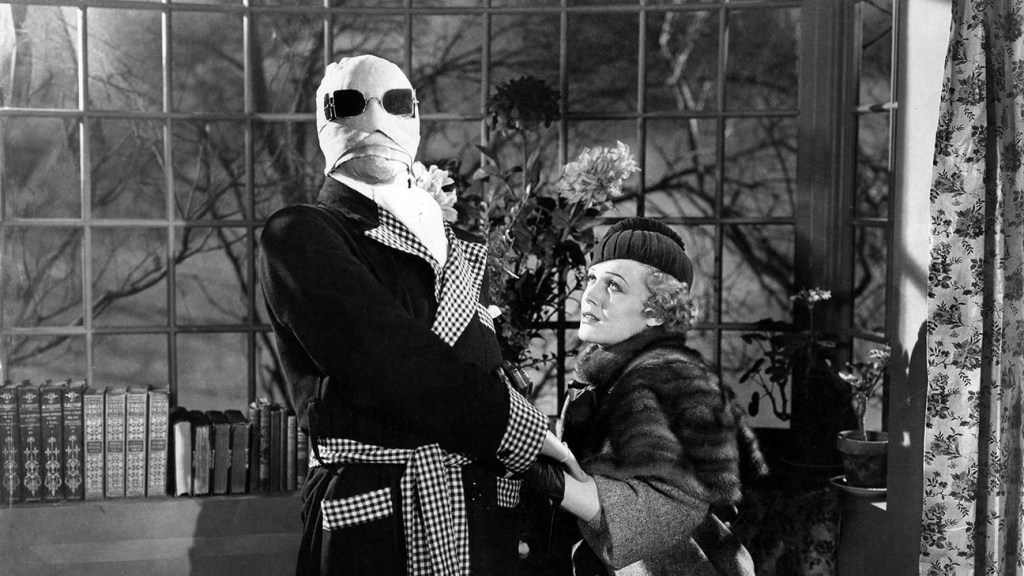
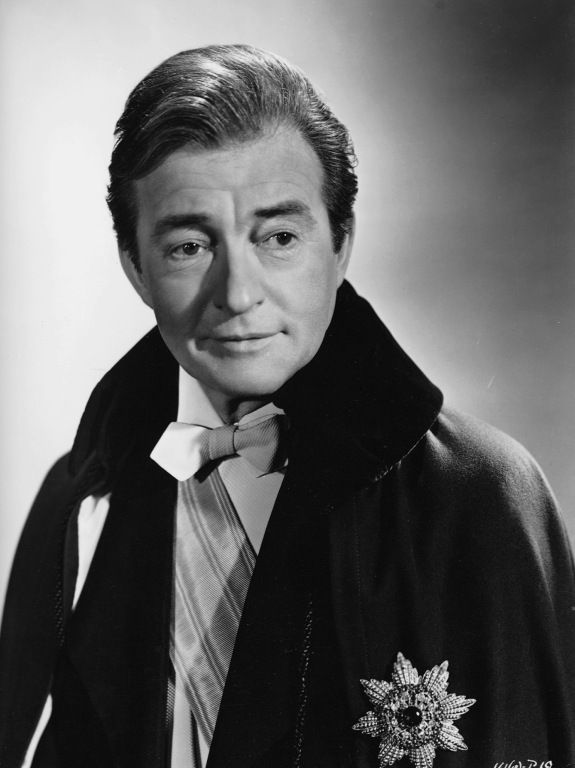
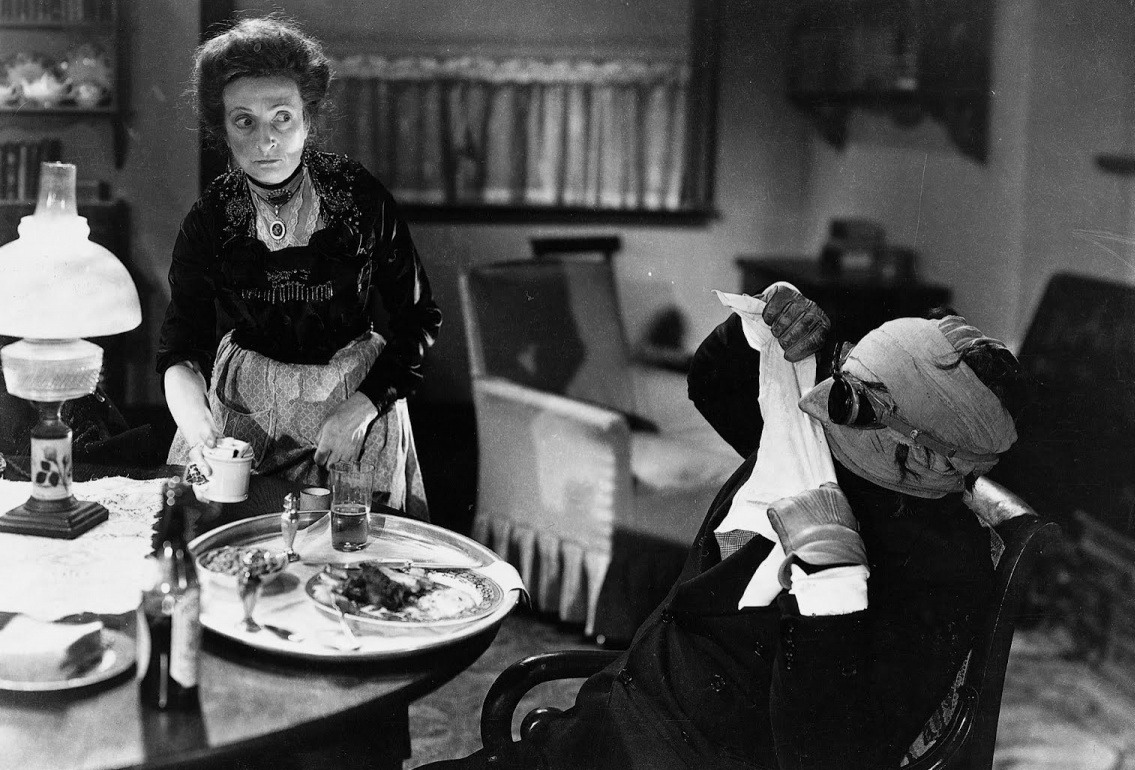
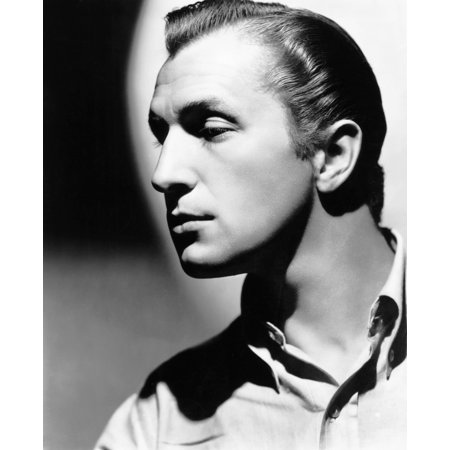
More murder mystery than horror film, 1940’s The Invisible Man Returns is an excellent sequel to 1933’s The Invisible Man. It features Vincent Price in his second horror film role (the first being in 1939’s Tower of London) and a number of actors who would appear in multiple Universal Monster films and one gentleman who would go on to help a certain caped crusader. I’ll get to that particular detail later.

Although Claude Rains’ enigmatic character passed away in the original film, his formula for invisibility was still very much alive and protected by his brother, Dr. Frank Griffin (John Sutton) in The Invisible Man Returns. When his friend and coal mine owner, Sir Geoffrey Radcliffe (Vincent Price), is wrongly sentenced to death for the murder of his own brother, Griffin agrees to help him escape from prison. At the beckoning of Radcliffe’s fiancee, Helen (Nan Grey), Griffin visits Radcliffe in prison just hours before his death. He injects him with the invisibility drug in order to allow him to sneak out of the prison and go into hiding until proof of his innocence can be discovered.

Griffin warns both Helen and Radcliffe that the drug will drive Radcliffe mad if he isn’t restored to visibility soon. Griffin races to find a way to reverse the effects of the drug while dodging questions from Inspector Sampson (Cecil Kellaway), a Scotland Yard detective that is familiar with the original case of the Invisible Man.
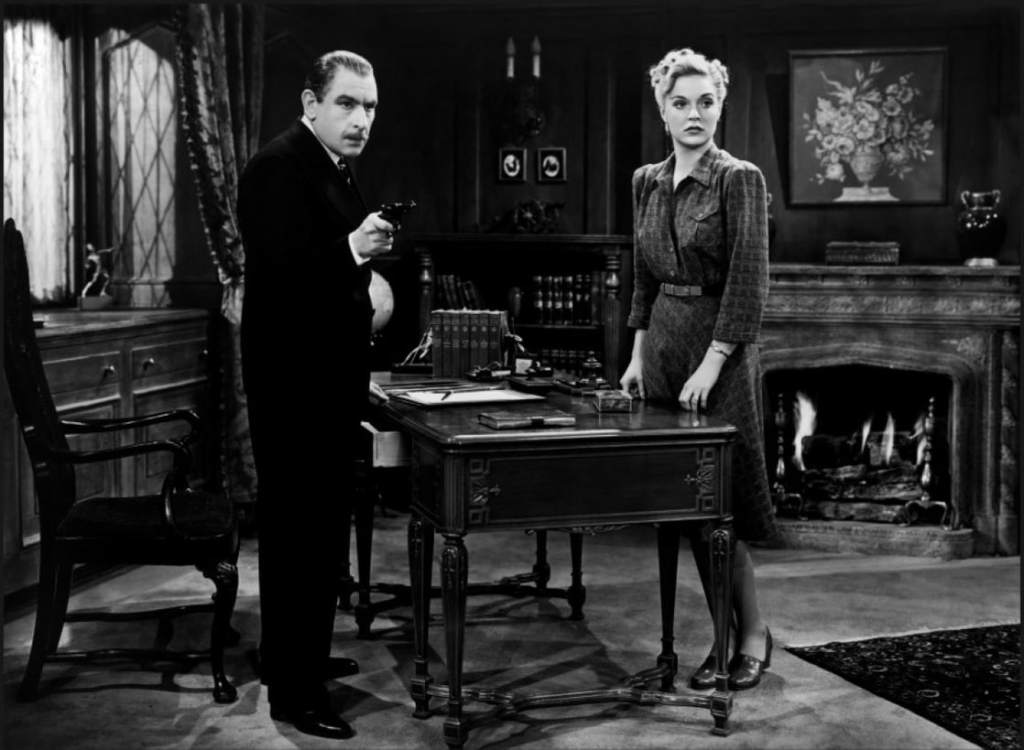
In the meantime, Helen hides Radcliffe in a country home. Risking discovery and driven by the maddening effects of the invisibility drug, Radcliffe seeks out the true murderer of his brother by returning to the coal mine and forcing one of his former employees, Willie Spears (Alan Napier), to reveal the true murderer’s name: Richard Cobbe (Sir Cedric Hardwicke).
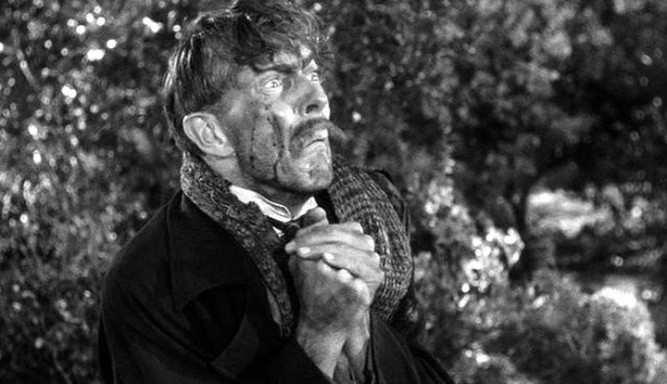
With Sampson hot on his heels and Griffin struggling to find an antidote, Radcliffe’s desires for justice turn into a longing for vengeance. He hunts down Cobbe and reveals to him that he knows the truth. The two fight and Griffin chases Cobbe into the coal mine where Cobbe is mortally wounded. Just prior to his death, however, he confesses to the murder of Radcliffe’s brother, proving Radcliffe’s innocence.
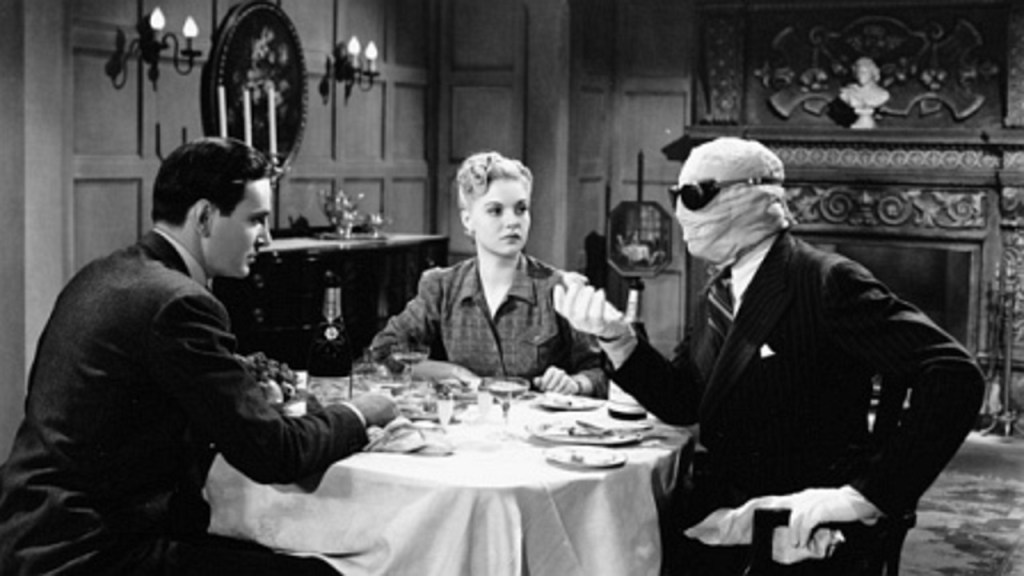
Gunshot by Sampson, Radcliffe is slowly dying. Unable to operate on him because of his invisiblity, Dr. Griffin decides to use an antidote that had unsuccessful results in his lab in desperation. Before doing this, however, he gives Radcliffe a blood transfusion. The transfusion proves to be the cure for Radcliffe’s invisibility and he is saved from death.

This film was very captivating. It held my attention the entire time and featured excellent acting, music, and special effects. Despite barely being on the screen, Vincent Price gives an amazing performance as Radcliffe. The rest of the cast was great as well.
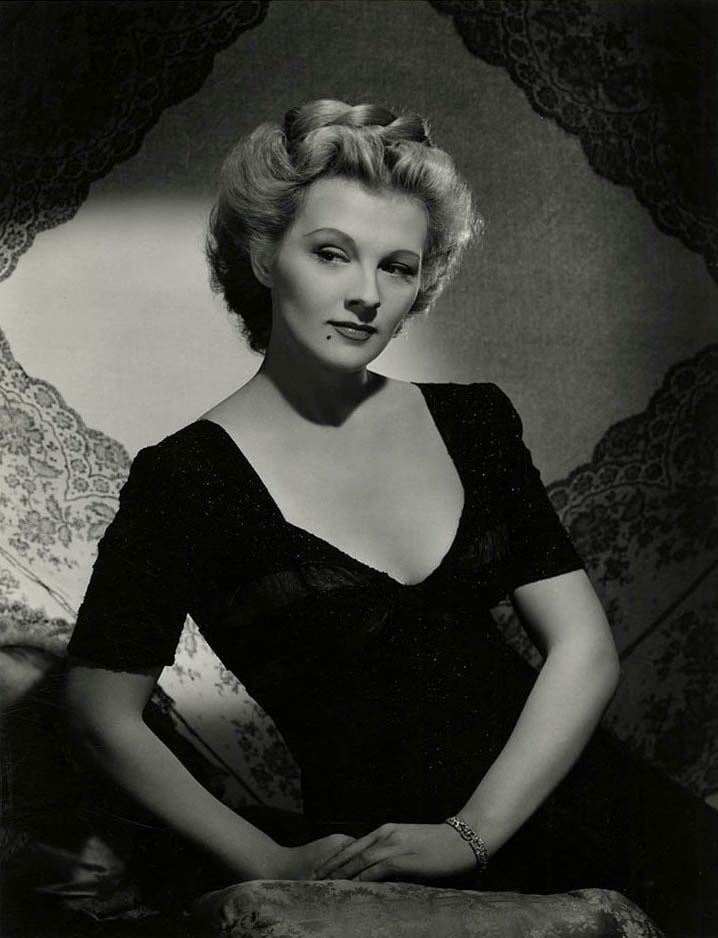
Not only did the film feature Vincent Price, a horror icon in his own right, but it also featured a number of other notable actors. Cecil Kellaway appeared in The Mummy’s Hand (1940) and The House of the Seven Gables (1940) and was nominated for the Academy Award For Best Supporting Actor in two films. Cedric Hardwicke appeared in 1942’s The Ghost of Frankenstein and was a prolific stage and screen actor. Some of his other roles include Jean Frollo in The Hunchback of Notre Dame (1939), Pharoah Sethi in The Ten Commandments (1956), and Bishop Myriel in 1935’s Les Miserables. Nan Grey starred alongside Kellaway in The House of the Seven Gables, with Price in Tower of London, and played the scandalous role of Lili in Dracula’s Daughter (1936).
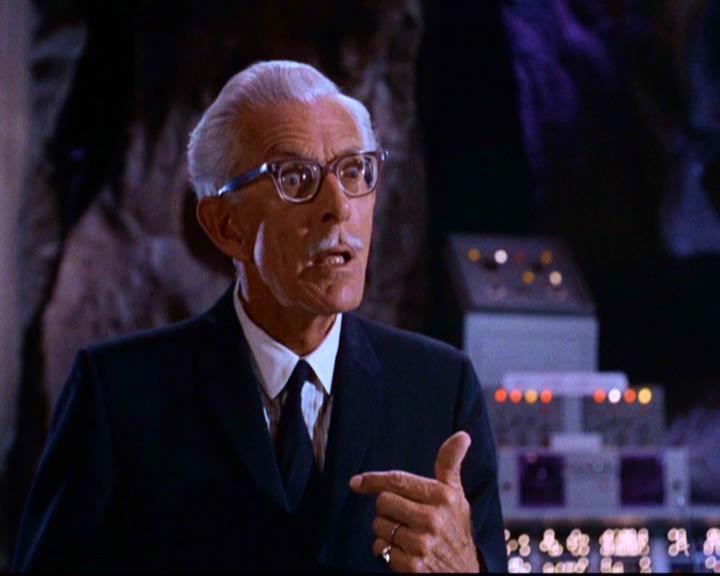
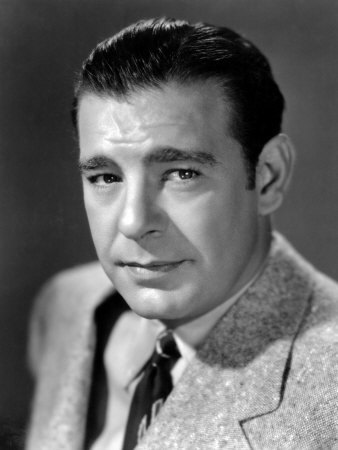
Despite having a career that spanned just over fifty years and featured roles in films as varied as Joan of Arc (1948) and The Song of Bernadette (1943), Alan Napier is perhaps best known for his role as Alfred Pennyworth, the loyal butler of Adam West’s Bruce Wayne/Batman in the 1960’s television series and film, Batman. Napier also starred in episodes of The Beverly Hillbillies and The Twilight Zone.

John P. Fulton returned to provide the film’s special effects. His effort, along with that of Bernard B. Brown and William Hedgcock, resulted in an Oscar nomination. Fulton won three Oscars for Special Photographic Effects and was nominated a total of eight times in that category. Brown won an Oscar for Best Sound in When Tomorrow Comes (1939) and was nominated a total of eight times in that category. He was also nominated three times in the Visual Effects category.

The Invisible Man Returns is an excellent film. It’s one of the best sequels in any of the Universal Monsters franchises. It was loaded with talented and award-winning actors and crew members and the horror legend that is Vincent Price. It’s definitely worth checking out and I recommend it.

Thanks for reading this post. Tune in tomorrow for another exciting Thirty-One Days O’Horror entry!

Days O’Horror #7: Bride of Frankenstein (1935)

Alone: Bad. Friend: Good.

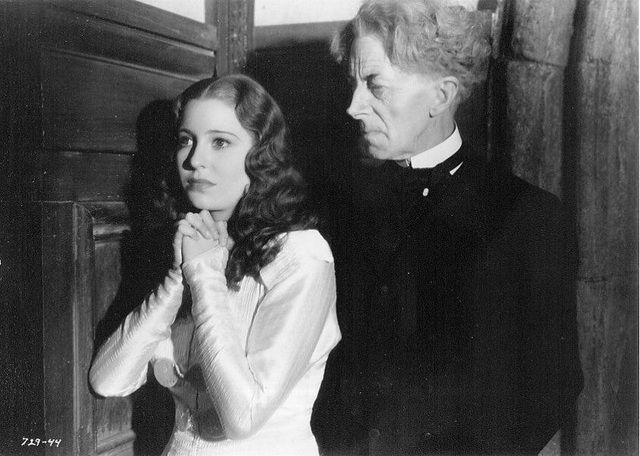
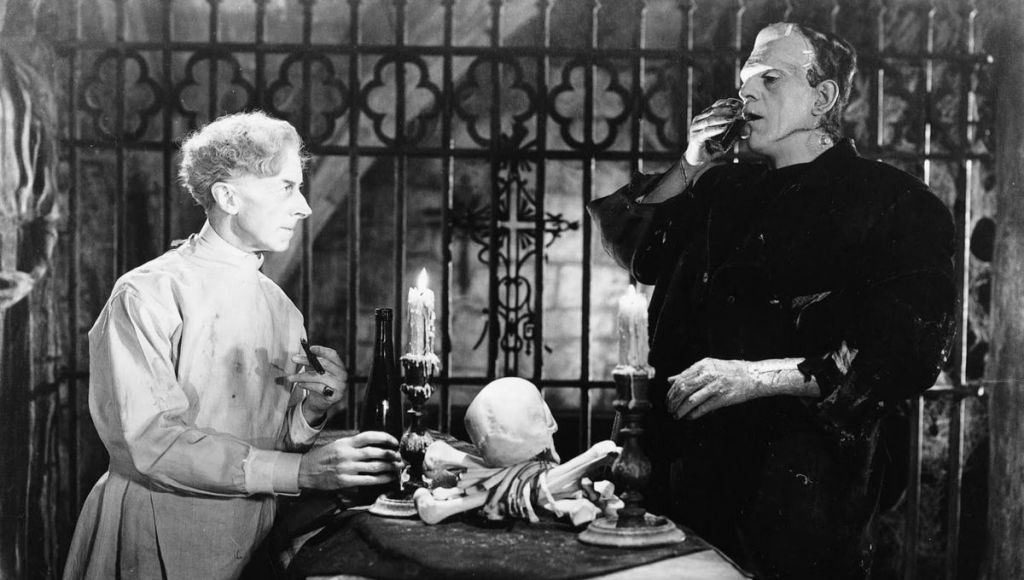
While Universal had plenty of successful horror films under their belt by 1935, they had yet to produce a sequel. Bride of Frankenstein changed all of that and set a precedent that almost no other sequel managed to achieve. Considered by many to be one of the best sequels ever made and also a triumph over its predecessor, 1931’s Frankenstein, Bride of Frankenstein featured an amazing story, key returning cast members from the original film, and a female monster that remains as one of the most iconic creatures ever to grace the screen.

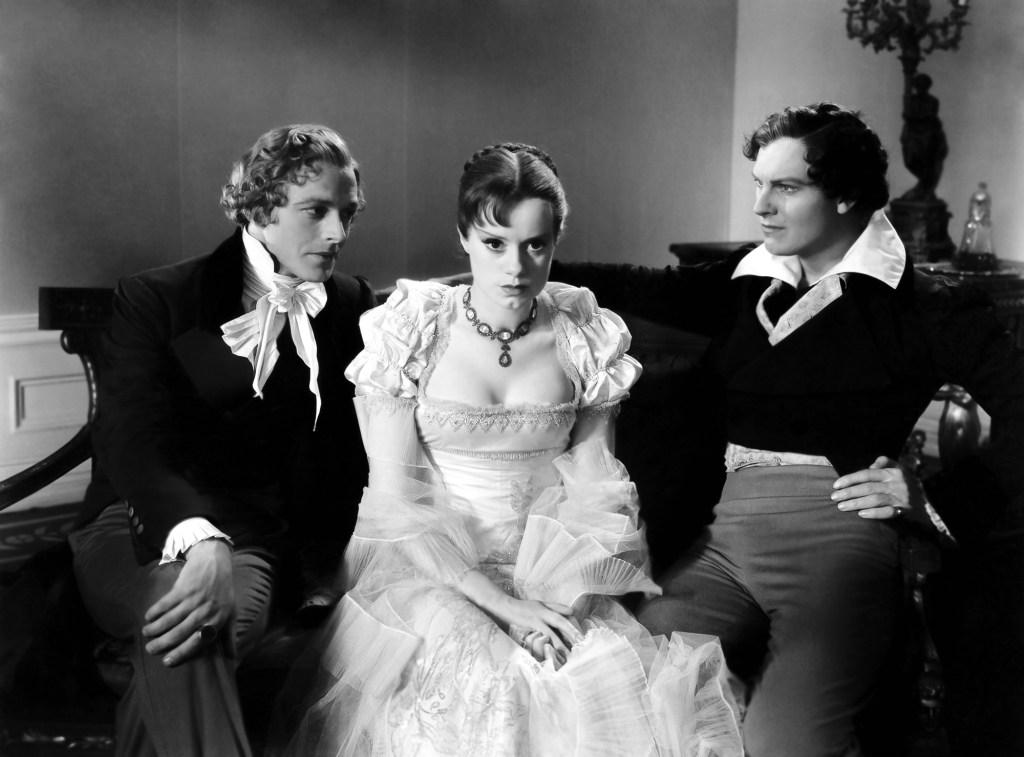
The film opens with Lord Byron (Gavin Gordon) waxing poetic about Mary Shelley’s (Elsa Lanchester) story of Frankenstein’s monster. Her husband, Percy Bysshe Shelley (Douglas Walton) echoes Byron’s sentiments about the tale. Both of them feel as if there’s more to the story, though, and Mary is quick to tell them that there is indeed more story to come.

The film then jumps directly into the ending of Frankenstein as the windmill is being destroyed. Villagers cheer as the windmill burns, but it is soon revealed that the creature (Boris Karloff, billed only as Karloff in the film) has survived whenever he murders both the father and mother of the young girl that he accidentally killed in the first film. The monster walks up on a villager (the brilliant Una O’Connor) and startles her. She races to the village to warn the others.

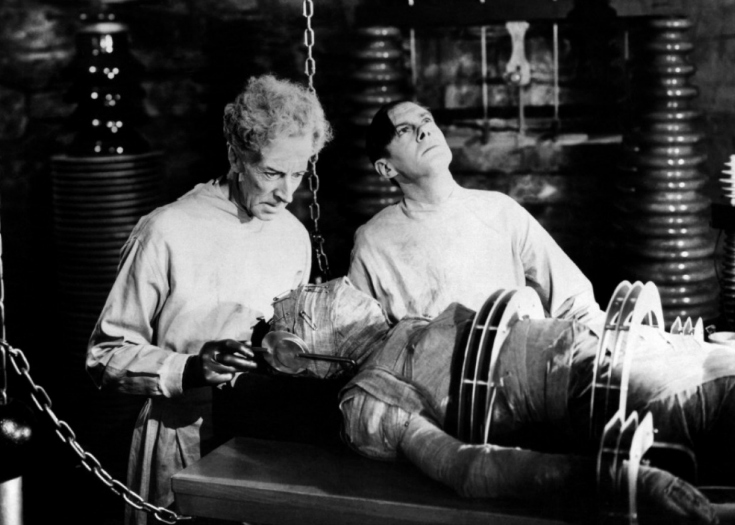
At the same time, it is discovered that Henry Frankenstein (Colin Clive) has also survived the fire and he is reunited with his fiancee, Elizabeth (Valerie Hobson). One of his old mentors, Dr. Septimus Pretorius (Ernest Thesiger), arrives on the scene and attempts to convince Frankenstein that the monster needs a partner. He wishes to work with Frankenstein to bring the female creature to life, but Frankenstein is hesitant to join him.

Meanwhile, the monster stalks the countryside looking for food, shelter, and, most importantly, acceptance. After encounters with locals, including yet another angry mob, leave him gunshot and burned, he stumbles onto the home of a blind hermit (O.P. Heggie) who takes him in, befriends him, and teaches him how to speak. Eventually a pair of hunters discovers the hermit and the creature and a fight ensues. The hermit’s cottage is destroyed and the creature runs out into the forest. Another mob is formed and the creature hides in a crypt where he has a run-in with Dr. Pretorius.

Using the creature as a pawn in his game by having him capture Elizabeth, Pretorius forces Frankenstein to help him create a female creature. The duo is successful in their creation, but much like the rest of society, the “bride” of Frankenstein rejects the creature. Dismayed by humanity and heartbroken over his rejection by the bride, the creature collapses the laboratory on himself, Pretorius, and the newly created bride. He allows Frankenstein and Elizabeth to escape, telling them to “Go! You live!”

Colin Clive, Dwight Frye, and Boris Karloff all returned for this sequel to Frankenstein. Since his character Fritz was killed in the original film, Frye played Karl, the twisted assistant of Pretorius. Valerie Hobson, only seventeen years old at the time, was brought in to replace Mae Clarke as Elizabeth, as Clarke was too sick to reprise the role. Hobson also starred in Werewolf Of London (1935) and both Frye and Una O’Connor had roles in other Universal films, most notably Frye in Dracula (1931) and O’Connor in The Invisible Man (1933).

Elsa Lanchester portrayed two roles in the film. She bookended the story as Mary Shelley in the beginning and the Bride in the final moments. The Bride is on the screen for less than five minutes but the impact of Lanchester’s jerky movements, piercing scream, and ghastly hisses left their mark on audiences in the 1930’s and can still be felt today.

The Bride never officially made another appearance in a Universal film, but she has popped up in everything from cartoons to comics and has been hinted at, homaged, or featured in everything from Young Frankenstein (1974) to The Bride of Chucky (1998) and dozens of other films and television shows. There have been toys, model kits, posters, costumes, and other items created featuring her image as well.

Lanchester’s Bride is the only female Universal Monster to be featured prominently in any of their promotional material. Her closest competition, Countess Marya Zeleska (Gloria Holden, Dracula’s Daughter, 1936), was also influential but is treated as nothing more than a footnote in most documentaries about Universal Monsters.

While the film was definitely a thriller, it had a much deeper message of loneliness and its damaging effects. The creature wants acceptance and friendship, which he gains in the form of the hermit, but is ultimately rejected by the one person that he truly wants to love, the Bride. Near the end of the film, Karloff utters one of the most famous and powerful lines: “She hate me. Like others.” Those six syllables are brilliant and moving, as they give the audience major insight into the creature’s feelings of loneliness and rejection.

Bride of Frankenstein proves that a sequel can be better than its predecessor. It has a heartbreaking story, great music, and brilliant direction from James Whale. The emotional struggle of Karloff’s creature is powerful in this film and despite ton of Jack Pierce makeup, we all feel the creature’s pain when the Bride rejects him.

I definitely recommend watching this film. It’s one of the best Universal Monster films and one of the greatest films in cinematic history in my opinion. Thanks for reading this post. There are more to come!

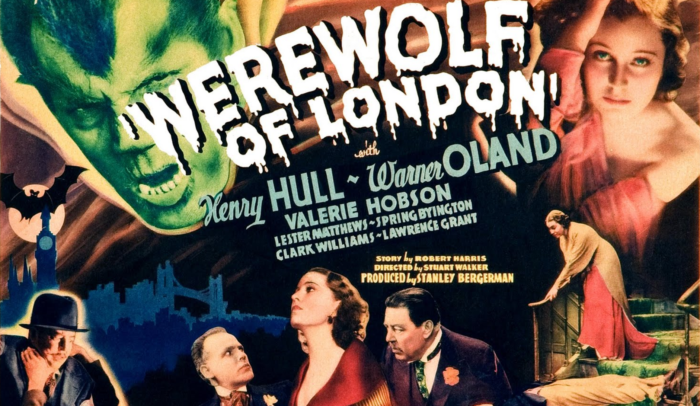
Days O’Horror #6: Werewolf of London (1935)

Driven By Desire

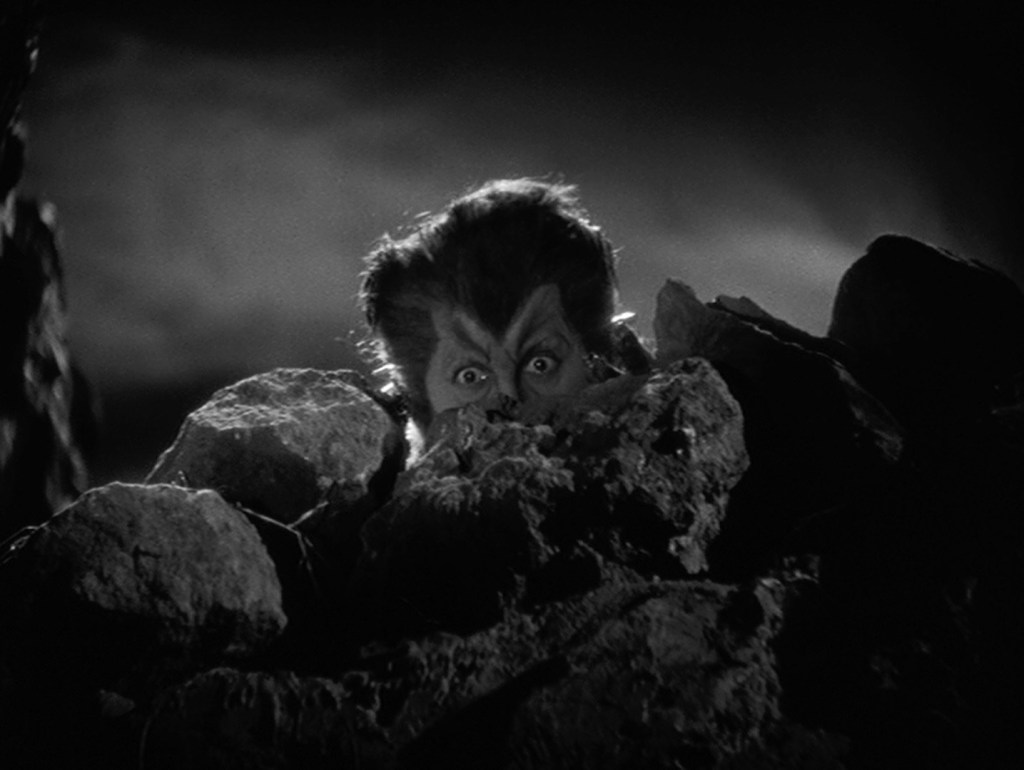
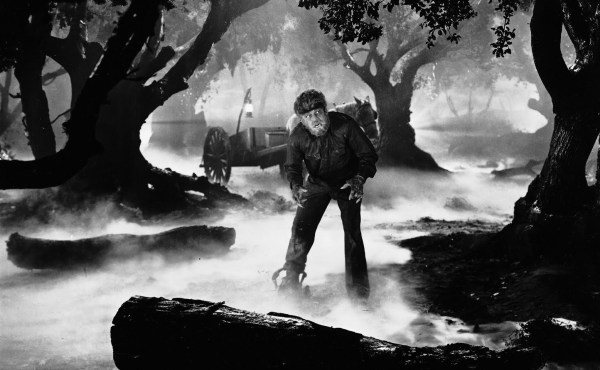
Six years prior to the popular Lon Chaney, Jr. film, The Wolf Man, Universal bared its claws with 1935’s Werewolf Of London. The film starred Henry Hull as Dr. Wilfred Glendon, a man that struggles with the terrible truth that he has become a werewolf and wants nothing more than to murder the one that he loves.

The film is considered to be the first werewolf film released by a major studio. The Werewolf, a silent film released in 1913, is recognized as the first werewolf film ever made.

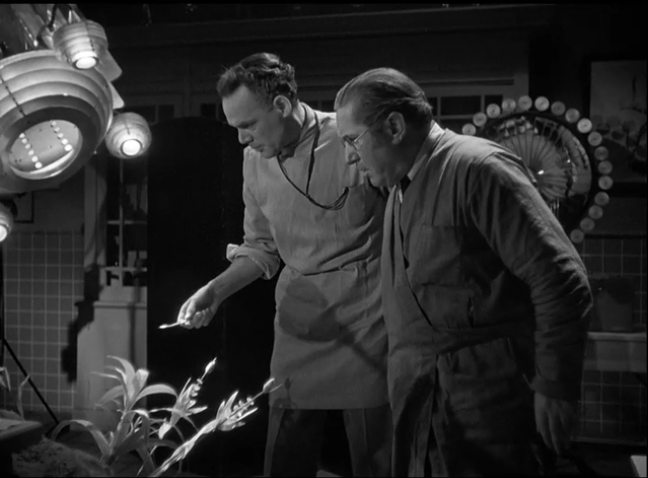
As is the case with many Universal Monsters films, Werewolf of London begins with an expedition. This time around, the expedition is of a botanical variety and it takes place in Tibet. Glendon and a colleague enter a forbidden area looking for the mariphasa plant, a plant that only blooms by moonlight. While searching for the plant, Glendon is attacked by a creature. He manages to survive, but after returning home he begins to have a craving for blood.

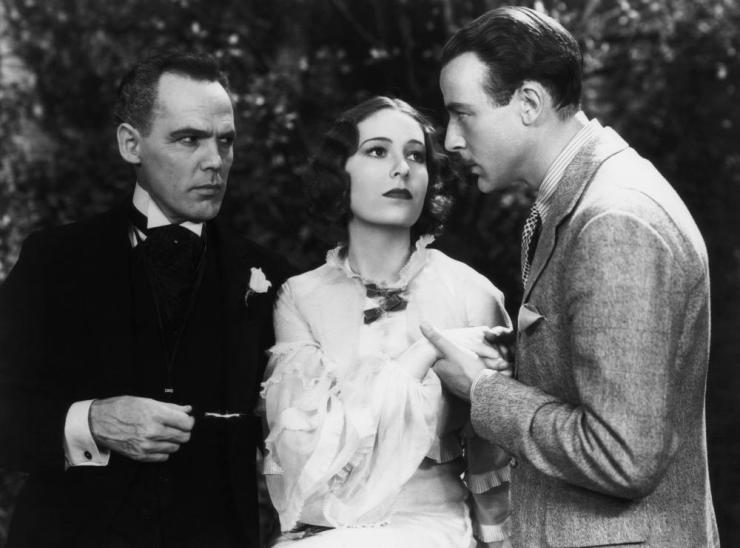
Glendon becomes extremely secretive about his discovery and research and alienates his wife, Lisa (Valerie Hobson), and neglects his social duties. On one particular evening, Lisa manages to pry Glendon away from his laboratory for a gathering. At the party, he meets one of Lisa’s old flames, Paul Ames (Lester Matthews), and there’s tension between the trio almost instantly. Paul doesn’t hide the fact that he still has feelings for Lisa and Glendon becomes very protective of her.

Glendon also meets Dr. Yogami (Warner Oland), a botanist that claims that he and Glendon had an encounter in Tibet. Glendon doesn’t remember their meeting, but Yogami’s knowledge of the mariphasa plant intrigues him. Yogami tells Glendon that the mariphasa plant has properties that can prevent one from transforming into a werewolf, but Glendon brushes him off. Yogami also warns Glendon that a werewolf is driven by a desire to kill the one that he loves the most.

Dr. Glendon soon realizes that he is affected by moonlight. Before he can try using the mariphasa plant to save himself, the two opened blooms are stolen from his laboratory. Unable to resist the transformation, Glendon turns into a werewolf and murders a young woman. Desperate, he isolates himself from the rest of the world. Lisa and Paul become closer, the body count rises, and a second werewolf enters the fray. Can Dr. Glendon discover the identity of the other werewolf? Will he save his marriage? Can he stop his inner cravings to kill? You’ll have to check out Werewolf of London in order to find out!

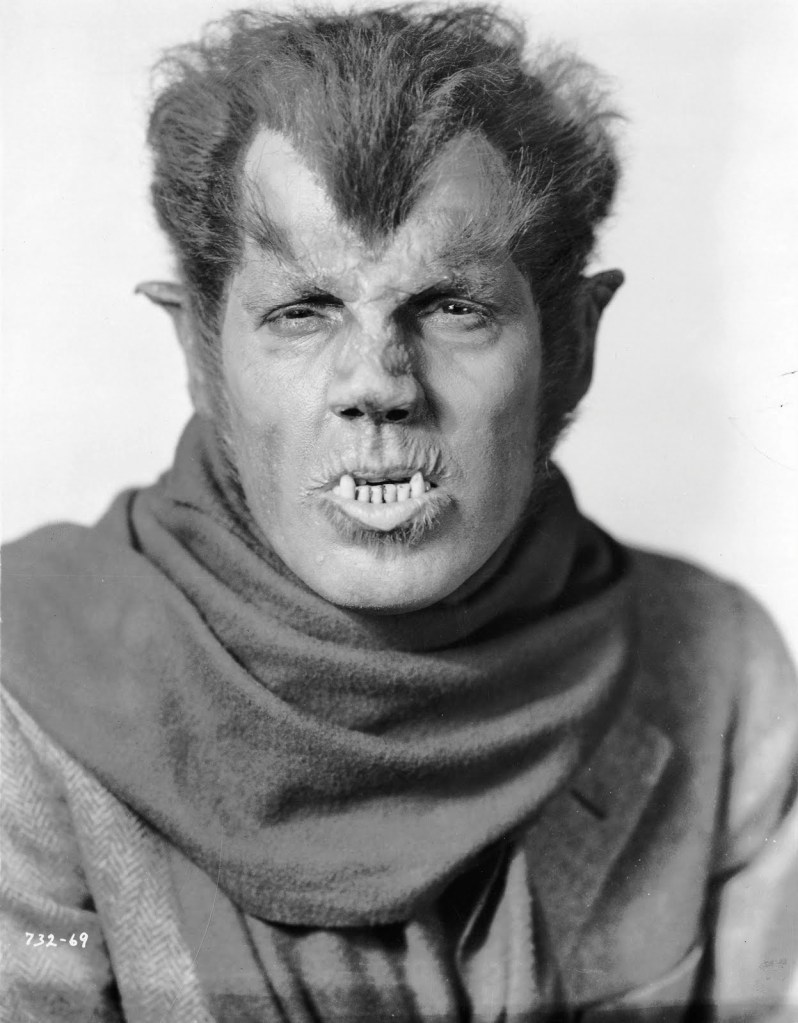
Glendon’s werewolf and its story are unique in many ways. For starters, Glendon appears to be somewhat aware of what is going on while he’s a werewolf. His transformation is more like Dr. Jekyll and Mr. Hyde than that of a traditional werewolf. He’s aware enough to put on a coat and hat before going out to hunt and it isn’t until he sees Lisa that he seems to become blinded by the desire for her blood. Silver bullets are not necessary to stop him and there appears to be a scientific way of treating his lycanthropy. The film also features a love triangle and a secondary werewolf that manipulates the story as it goes along, two elements that don’t always appear in a werewolf film.

The stars of this film do great jobs. Hull is particularly solid as Dr. Glendon. Viewers can easily see the internal struggle raging inside of Glendon as he attempts to save himself and others. Jack Pierce, best known for his makeup work on The Wolf Man, also did the makeup for Werewolf Of London, and Hull’s wolf looks a lot more dapper than Lon Chaney, Jr.’s wolf man.

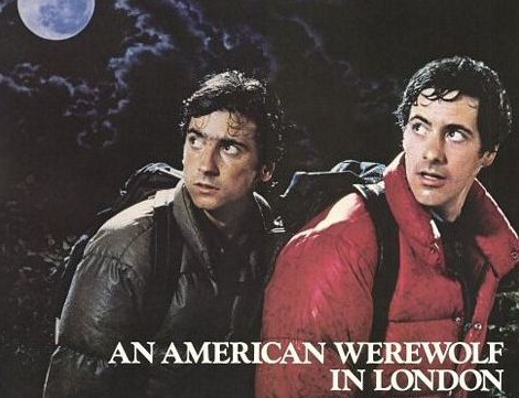
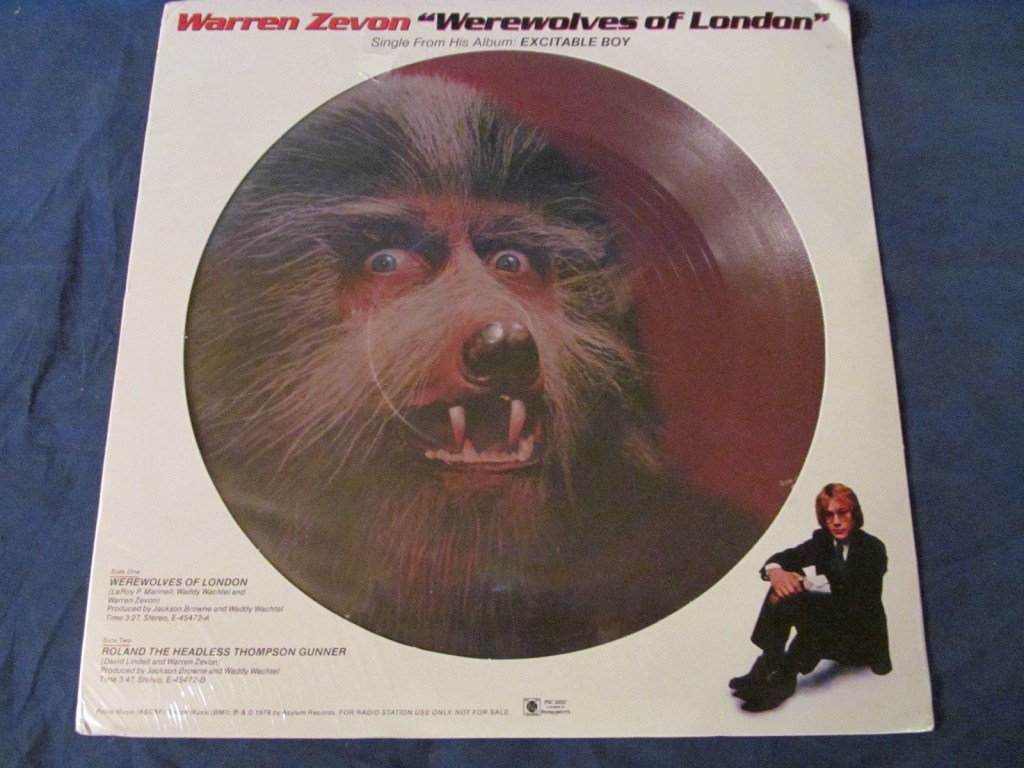
The film isn’t as well known as other werewolf movies, but its influence can be seen in films such as An American Werewolf In London and heard in the popular song Werewolves of London by Warren Zevon.

I really liked this film. A strained relationshiip made even more so by a man’s need for isolation mixed together with a second werewolf intent on saving itself makes for a great tale. Watching Hull spiral out of control was excellent as well.

If you haven’t seen this oft forgotten gem, give it a chance. You’ll be pleasantly surprised.

Thank you for reading my post. I’ll have another one tomorrow and will also be posting about the Lake Charles Film Festival very soon!

Days O’Horror #5: Creature From The Black Lagoon (1954)

Don’t Go In The Water!

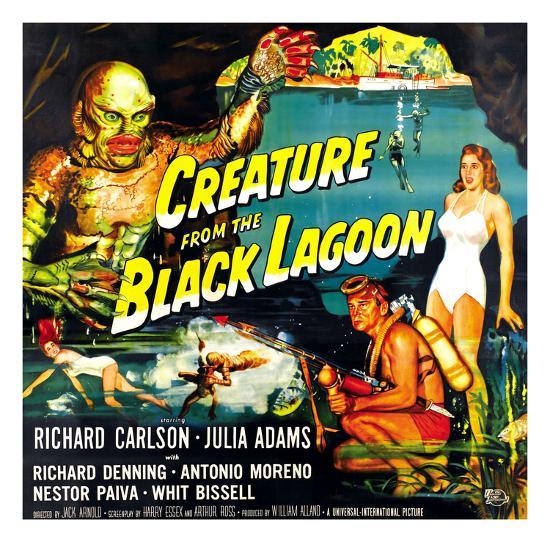
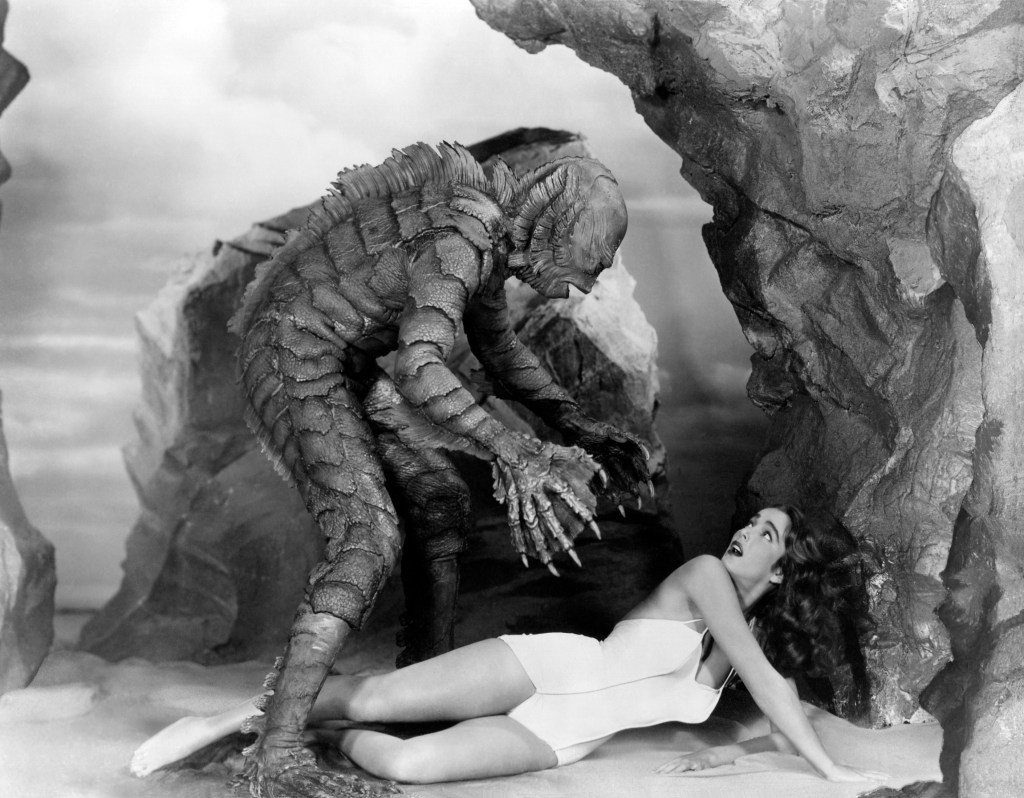
1954’s Creature From The Black Lagoon features one of the most iconic monsters in all of film history. The film was released in 3D, a dying format at the time, but was viewed in 2D as well. The film and its two sequels are considered the final installments in Universal’s classic monster films.

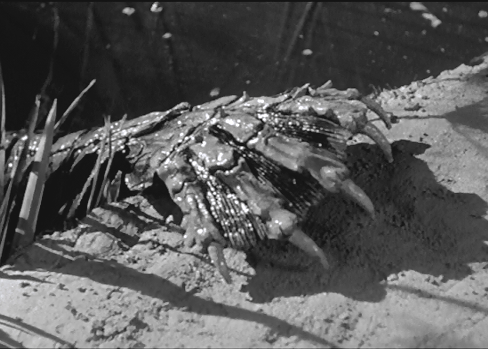
The film’s plot is rather simple. An expedition in the Amazon discovers a fossilized hand that might prove to be a link between sea creatures and land animals. The hand is webbed for swimming and has claws for digging into or tearing things apart. The expedition’s lead scientist, Dr. Maia (Antonio Moreno), heads back to Brazil to show his findings to his colleagues. There he runs into one of his best students, Dr. David Reed (Richard Carlson), and his girlfriend and fellow researcher, Kay Lawrence (Julia Adams, sometimes listed as Julie Adams).

The duo join Dr. Maia’s expedition along with Dr. Reed’s boss, Dr. Mark Willams (Richard Denning), another scientist named Dr. Edwin Thompson (Whit Bissell), and the crew of the Ria, captained by Lucas (Nestor Paiva). When the group arrives at Maia’s camp, they discover that his assistants have been murdered by some type of beast. This doesn’t stop the group for continuing to look for more fossils of the creature, and they eventually end up in the Black Lagoon.

The creature attacks the crew of the ship and expedition. It becomes fond of Kay and stalks her as she swims. Eventually the crew captures the creature but it escapes and causes more chaos. It blocks the entrance to the lagoon so that no one can escape its clutches and a great battle between the creature and the surviving members of the expedition takes place. Who lives? Who dies? You’ll have to check out Creature From The Black Lagoon in order to find out!

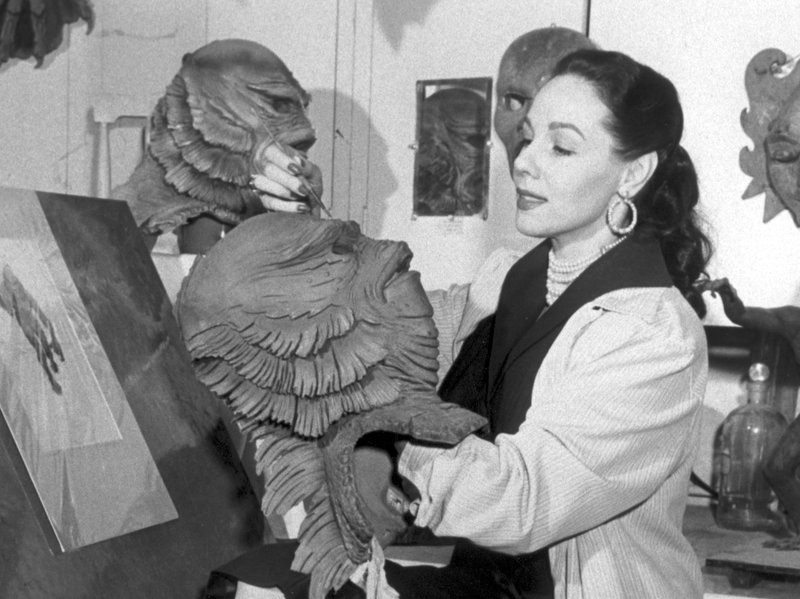
This film has quickly become one of my favorite Universal Monster films. The simplicity of the story, the wonderful Gillman designed by Milicent Patrick, the excellent performances by the actors, and the solid cinematography (especially the underwater shots) all make for a great film. This film also has the best music of all of the Universal Monsters films in my opinion.

Milicent Patrick, designer of the Creature.

Two men donned the suit of the Gillman. Ben Chapman did all of the land-based sequences and Ricou Browning was filmed in the underwater scenes. Browning is still alive as of this writing and is one of the final living cast members of any of the classic Universal films. Sadly, Julia Adams passed away in February of this year. Ginger Stanley, Julia Adams’ stunt double in the film, is also still alive.

Ricou Browning.
Ginger Stanley, Julia Adams’ stunt double.

The story of Milicent Patrick, the designer of the Gillman, is an amazing one. If you have the chance, pick up The Lady From The Black Lagoon by Mallory O’Meara. It’s a wonderful book about the struggles of Mrs. Patrick as she made her way in a world and industry dominated by men.

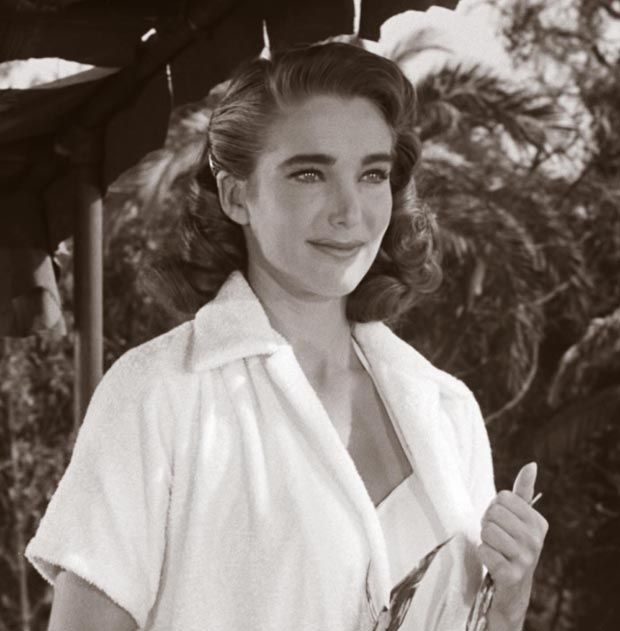
Julia Adams

I was fortunate enough to get an autographed photo from Julie Adams just prior to her death. It is my one and only Universal Monsters autograph and it has quickly become one of my most cherished possessions. She wasn’t just a great actress, but a wonderful person as well.

Every time that I watch Creature, I fall more and more in love with it. While I doubt that it will ever dethrone The Wolf Man as my favorite Universal Monster film, it will always be one of the best ones in my heart.

Thank you for reading my post. It’s a tad late, but it highlights a great film. I’ll be posting Day O’Horror #6 very soon!

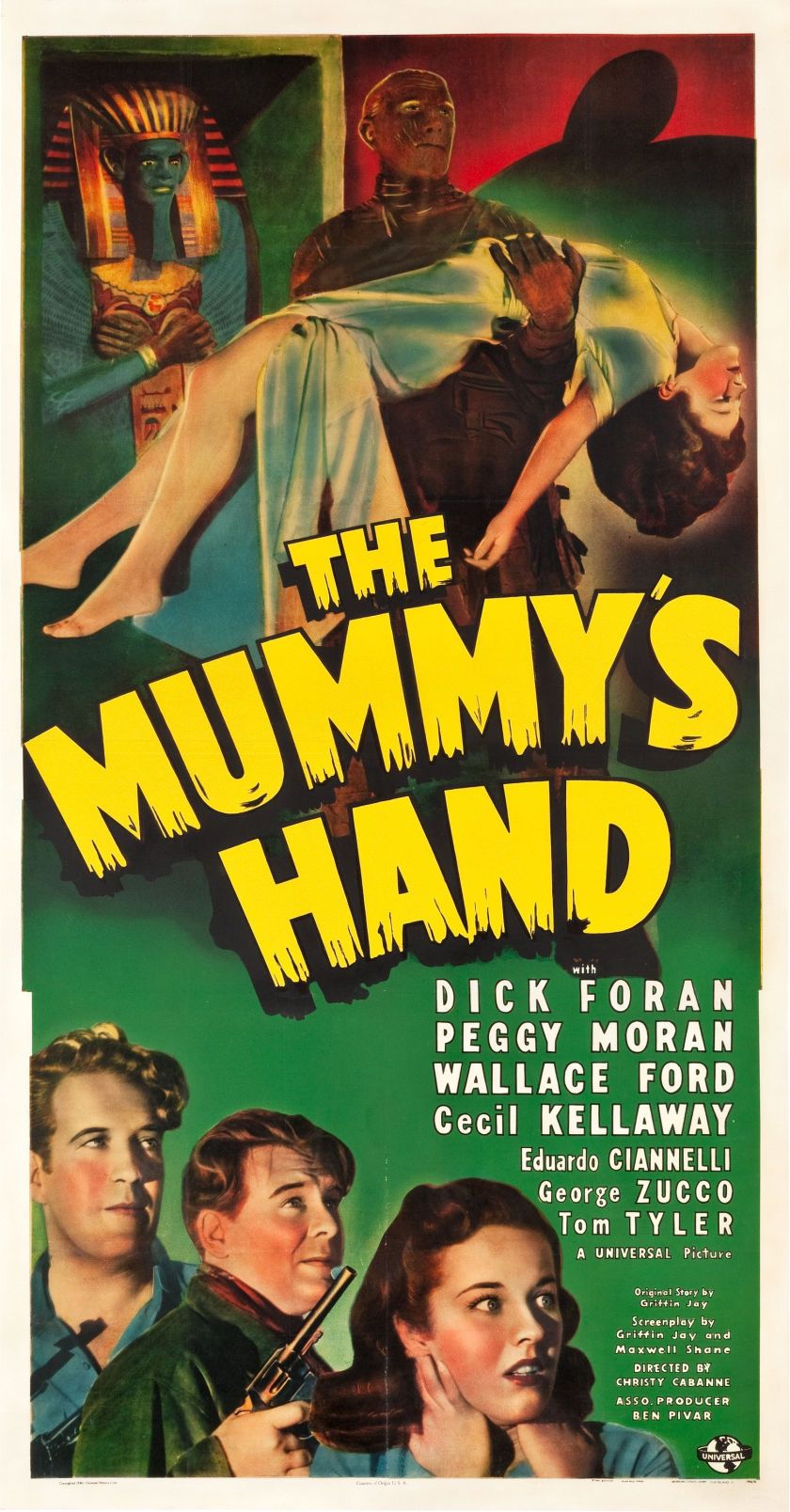
Days O’Horror #4: The Mummy’s Hand (1940)

Back To The Sand!

1932’s The Mummy, starring Boris Karloff as Imhotep/The Mummy, was an immensely popular film. It has remained popular over the years and has been rebooted twice by Universal with the successful Brendan Fraser film trilogy that started in 1999 and the less well-received Tom Cruise vehicle that flopped in 2017. Way back in 1940, however, Universal decided to give the classic Karloff film a slightly soft reboot with 1940’s The Mummy’s Hand.

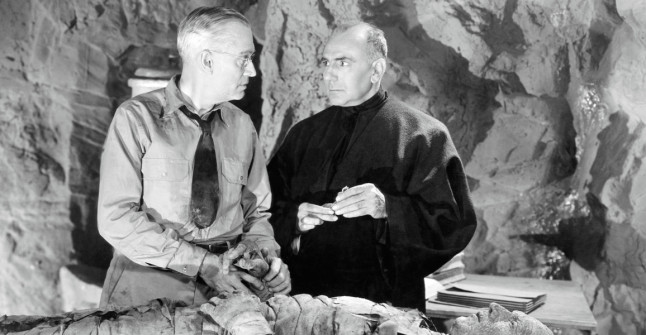
Gone are Imhotep, Ankh-es-en-Amon, and the Scroll of Thoth. Instead we have Kharis (Tom Tyler), Princess Ananka, and sacred tana leaves. The film opens with the dying High Priest of Karnak (Eduardo Ciannelli) telling Professor Andoheb (George Zucco) about Kharis and his love for Princess Ananka. When she dies, he steals tana leaves from beneath the statue of Isis in the hopes that he can revive her. He is captured while stealing the leaves and sentenced to be buried alive. In order to prevent such a crime from happening again, Pharoah Amenophis has the tana leaves buried with Kharis.

After telling the story to Andoheb, the priest tells him that he is now the new protector of Ananka’s hidden grave and that he must use the tana leaves to sustain her protector, Kharis. If anyone discovers Ananka’s tomb, Andoheb is instructed to pour the juice of nine tana leaves into Kharis’ mouth in order to revive him and protect his love.

We are then introduced to our two heroes in the film. Archaeologist Steve Banning (Dick Foran) and his friend, Babe Jenson (Wallace Ford), are a pair of men who’ve just run out of research money and have been instructed to return to the United States because their adventures so far have proven to be fruitless. In a local market, Banning stumbles across a vase that might reveal the location of Princess Ananka’s long lost resting place. Excitedly, and against Babe’s wishes, Banning seeks out the help of Dr. Petrie (Charles Trowbridge) at the Cairo Museum. Professor Andoheb is also there and he dismisses the vase as a fake in order to prevent Banning from discovering Ananka. Still believing the vase to be authentic, Banning begins looking for someone to finance his expedition.

Banning and Babe find financial support for their expedition through a traveling magician from the United States named The Great Solvani (Cecil Kellaway). Solvani agrees to fund the duo as long as they agree to share any profits with him. Andoheb, aware of what’s going on, seeks out Solvani’s daughter, Marta (Peggy Moran), and tells her that a string of false expeditions are asking for financial support in order to steal the funds instead of use them for research.

Wary of Banning and Babe and intent on protecting her father’s investment, Marta tags along with her father on the expedition. Andoheb follows them, unleashes Kharis, and the mummy starts to eliminate members of the expedition one by one in search of tana leaf juice placed throughout the expedition’s campsite by Andoheb. Andoheb also plans to capture Marta and inject her and himself with juice from the tana leaves in order to become immortal.

Banning, Babe, Solvani, and Marta find themselves alone in the desert after Kharis kills or scares away the rest of the expedition. A battle ensues and Banning and Babe end up having to face off with Kharis and Andoheb, all the while attempting to save Marta from immortal misery! Can they do it? You’ll have to watch the film to find out.

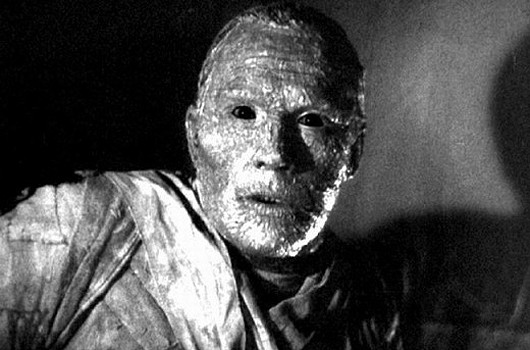
Despite being a mild rip-off of its predecessor (scenes were even used from the original Mummy film), I really enjoyed The Mummy’s Hand. Unlike Boris Karloff’s mummy, who was only viewed in his wraps for a few minutes at the beginning of The Mummy, Tom Tyler spent the entire film under wraps except for a few scenes early on in the movie. Wallace Ford and Cecil Kellaway stole the show with their comedic performances. Dick Foran and Peggy Moran played their characters relatively straight, although Moran did have one very funny scene involving a gun and Babe. George Zucco was excellent as the devious villain of the film.

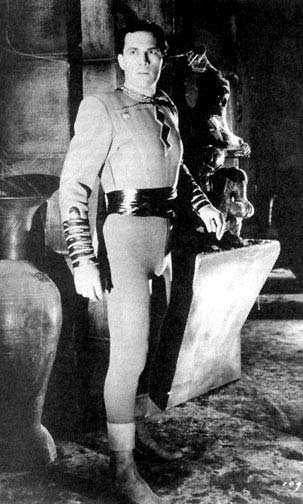
Tom Tyler had no lines in this film, but his shuffling mummy would prove to be popular. Another aspect of his mummy that captivated audiences was his blacked-out eyes and mouth. Despite a convincingly spooky performance, Tyler would not reprise the role of Kharis in any of the sequels that followed. Perhaps best known for his portrayal of Captain Marvel in the classic Republic serial The Adventures of Captain Marvel, Tyler starred in silent and early sound Westerns but never became a popular star. Rheumatoid arthritis would eventually slow his career and he passed away at the young age of fifty.

Thanks for reading my post. Get ready for another exciting entry in my Thirty-One Days O’Horror series tomorrow!

Days O’Horror #3: Frankenstein Meets The Wolf Man (1943)

Before The MCU

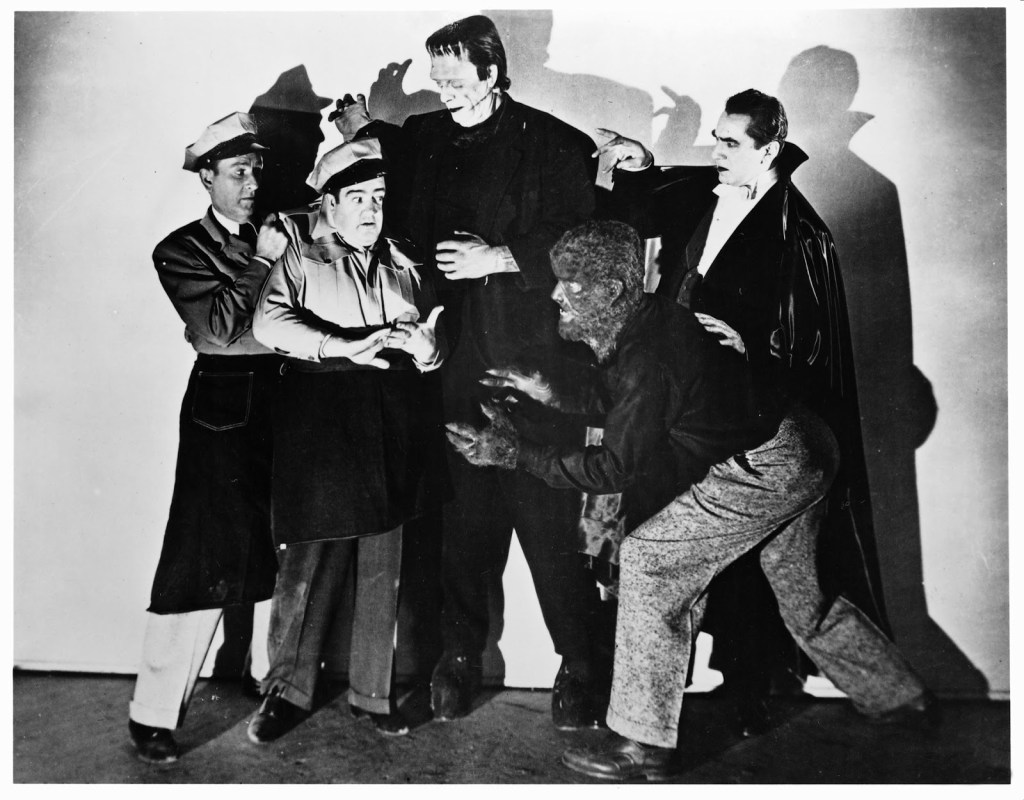
While Marvel and Disney get all of the attention with their cinematic universe, the actual idea of a shared universe can be traced back to Universal’s classic monster films. Specifically, 1943’s Frankenstein Meets The Wolf Man is considered by many to be the very first example of a cinematic universe film. It brings Lon Chaney, Jr.’s Wolf Man and Bela Lugosi’s version of Frankenstein’s Monster together, effectively tying the two characters and their cinematic mythology to one another. I’ll leave the history of Universal’s original cinematic universe to a brilliant article that I found on Den of Geek. Check that article out here.

Frankenstein Meets The Wolf Man may be the first cinematic universe film, but that doesn’t necessarily mean that it is a great movie. It has a number of problems that I’ll get to in just a moment. First, let’s take a look at the film’s plot.

The first half of the film picks up four years after 1941’s The Wolf Man. Lawrence Talbot’s (Lon Chaney, Jr.) corpse, covered in wolfsbane, is disturbed by two grave robbers who unknowingly revive him and his curse. He’s found in Cardiff the next evening and is placed in a hospital. As he begins to realize what has happened, Larry demands to be set free so that he can find a way to end his curse. His attending physician, Dr. Mannering (Patric Knowles), doesn’t believe Larry when he tells him that he’s a werewolf. Eventually Larry escapes and seeks out Maleva (Maria Ouspenskaya, reprising her role from The Wolf Man), who tells him that she would take care of him like she did her son, Bela (Bela Lugosi), whom Larry killed in The Wolf Man, but that she had no cure for him. However, Maleva knew of a Dr. Frankenstein that just might be able to help him.

The second half of the film kicks off with Larry and Maleva heading to Vasaria in order to see if Frankenstein can really help Larry with his curse. They arrive in the village and the townsfolk tell him that Frankenstein has passed and that he brought nothing but pain to their small village. Eventually Larry is chased out of town and he ends up at Castle Frankenstein. There he discovers Frankenstein’s monster encased in ice. He frees the monster in the hopes that it will be able to help him find Dr. Frankenstein’s notes but this proves to be unsuccessful.

Desperate, Talbot poses as a potential buyer of the Frankenstein estate and lures Frankenstein’s daughter, Baroness Elsa Frankenstein (Ilona Massey), back to Vasaria in order to see if she can help him. She initially refuses to help him, but whenever Larry’s doctor from Cardiff, Dr. Mannering, shows up, the trio decide to work together to end Larry’s tumult.

In typical mad scientist fashion, Dr. Mannering becomes captivated by Frankenstein’s monster and decides to return the creature to its full power (you have to watch 1942’s The Ghost of Frankenstein to fully understand what’s going on with the monster). This leads to an all out battle between an angry Wolf Man and a fully powered Frankenstein’s monster……and a massive flood caused by a detonated dam. You’ll have to watch the film to learn why all of this chaos goes down.

The film was enjoyable, but it definitely could have been better. The cast was solid for the most part, especially Lon Chaney, Jr., Maria Ouspenskaya, and Patric Knowles. Ilona Massey was also very excellent in her role but didn’t have much to do in the film. Poor Bela Lugosi was tied down to a terrible version of the monster with a backstory from The Ghost of Frankenstein that’s completely ignored in this film. If you haven’t watched Ghost, Lugosi’s performance is incoherent and sad. If you have watched it, Lugosi’s scenes are edited and presented in a way that contradicts the character’s actions in the previous film.

The film also suffers from being disjointed. There are two very distinguishable stories going on in this film and they just don’t quite tie together. The first half of the movie, the Wolf Man’s story, builds the characters and remains linear throughout. The second half of the story, the Wolf Man/Frankenstein’s monster story, is muddled, poorly edited, and, at times, nonsensical. Plus, the fact that the actual battle between the two monsters is brief and interrupted by a flood leaves a sour taste in the audience’s mouth.

Despite being a little less than amazing, Frankenstein Meets The Wolf Man is still worth watching. As I stated before, there are some great performances in the film that lift it up and over the generally disjointed feel of the film as a whole. It’s also great to see Lon Chaney, Jr. strike terror into the hearts of the innocents once more.

As always, thank you for reading my post. I’ll have another terror-rific post tomorrow! Also be on the lookout for a post this weekend about the Lake Charles Film Festival happening this Friday and Saturday!

Days O’Horror #2: Dracula’s Daughter (1936)

Keeping The Family Tradition Alive

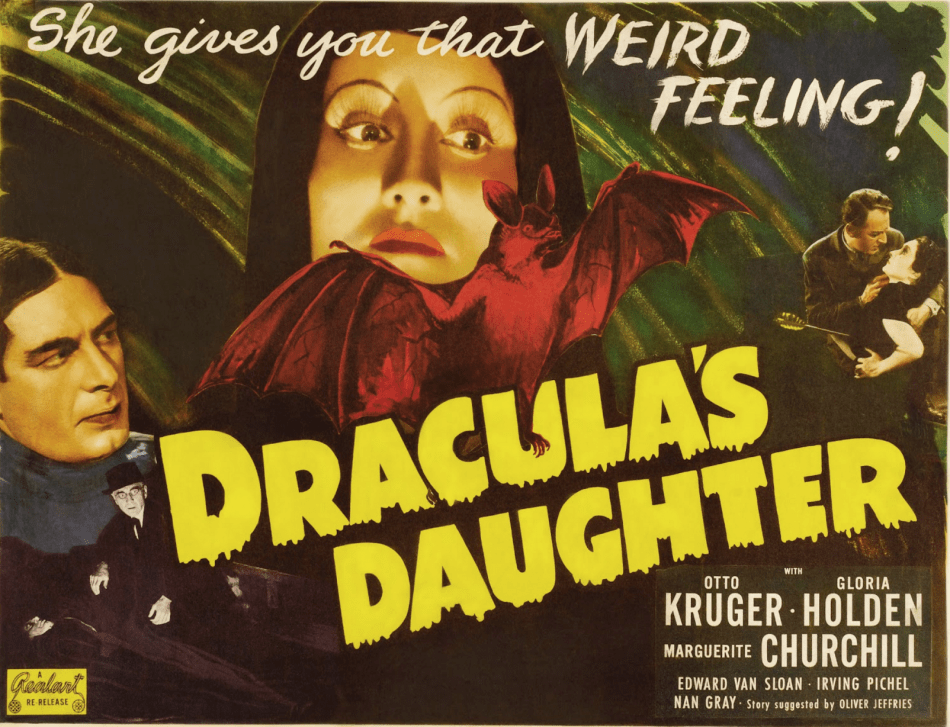
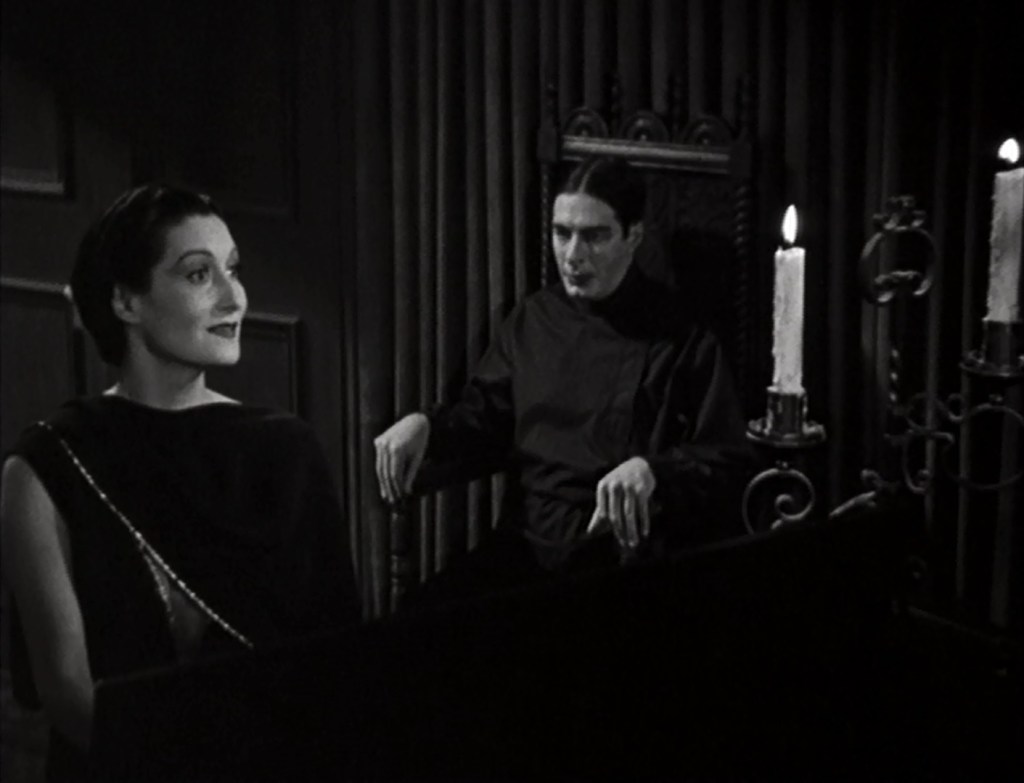
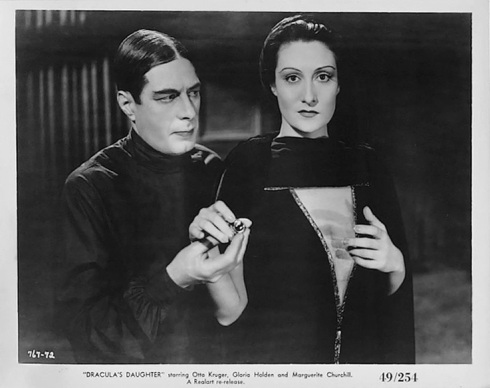
Dracula’s Daughter (1936) is a rather unique film. It doesn’t fit the mold of your standard vampire movie. Instead of a vampire intent on drinking the local citizenry dry, this film features a vampire that wants to break free of its curse (at least in the beginning of the film). Instead of a dashingly handsome male vampire that uses his hypnotic eyes to lure young ladies away from safety, we get a striking female vampire that hunts both men and women with the aid of an assistant who brings the victims to her. She then uses a ring on her wedding ring finger to enchant them before relieving them of their lives. Also, the traditional stake through the heart or exposure to sunlight isn’t the method used to kill the vampire. Both psychology and arrows are used instead.

The film begins just minutes after the end of 1931’s Dracula. Policemen arrive on the scene to find Renfield dead at the bottom of the stairs and Count Dracula staked through the heart. They also find Von Helsing (Edward Van Sloan), who freely admits to murdering Dracula. The bodies are then taken to a local jailhouse and Von Helsing is arrested. Later, Countess Marya Zaleska (Gloria Holden) arrives, asking to see the body of Dracula. When she is denied, she uses a ring on her finger to hypnotize the jailer and proceeds to steal Dracula’s body.

Marya burns Dracula’s body and says a prayer hoping to free herself of being a vampire. Her loyal assistant, Sandor (Irving Pichel), doesn’t believe this will work, and discourages Marya’s hope after the body is burned. Later in the evening, Marya gives in to her longings and murders a random man on the street.

Von Helsing calls on an old student to defend him in his murder trial. The former student, a psychiatrist named Jeffrey Garth (Otto Kruger), arrives on the scene just in time to meet Marya at a party. Marya requests to meet with Dr. Garth in private. He advises her that the best way to defeat her temptations is to face them head on. He tells her how alcoholics have been successfully cured of their alcoholism by placing them alone in a room with a bottle of liquor and suggests that she attempt a similar test on herself.

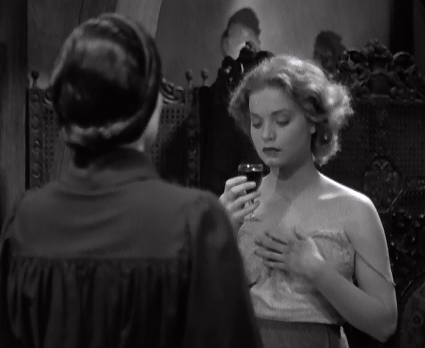
Believing that Dr. Garth’s advice will work, Marya has Sandor collect a young lady walking the streets of the city. Sandor tells the young woman, named Lili (Nan Grey), that Marya wishes to paint her. Once Lili is brought to Marya, the countess asks her to remove her blouse in order to expose her shoulders and neck. Initially Marya fights off the urge to drink the young lady’s blood, but she soon succumbs to temptation.

Lili survives the attack and is treated by Dr. Garth. Soon enough, Garth realizes that Marya is a vampire and he sets out to stop her. Unfortunately for Garth, his assistant, Janet Blake (Marguerite Churchill), becomes a pawn in a sick game between him and Marya. The chase leads back to Transylvania, where Garth confronts Marya and Von Helsing rushes to his aid. You’ll have to watch the film for yourself to find out what happens next.

Edward Van Sloan is the only cast member from the original film to return for this sequel. For some odd reason his character’s name is changed from Van Helsing to Von Helsing. No explanation is given for this change. Otto Kruger, Marguerite Churchill, and the rest of the cast provide solid performances. Churchill is especially funny in her role as Garth’s snappy assistant. Pichel’s Sandor is an odd duck in the film. It almost seems as if he wants Marya to fail in her search for a cure for her vampirism. Another bright spot in the film is the performance of Claud Allister as Sir Aubrey. His brief appearance in the film is wonderful.

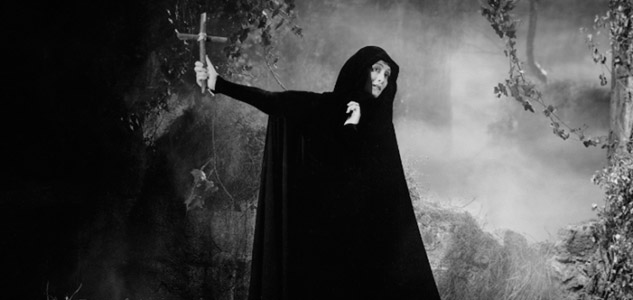
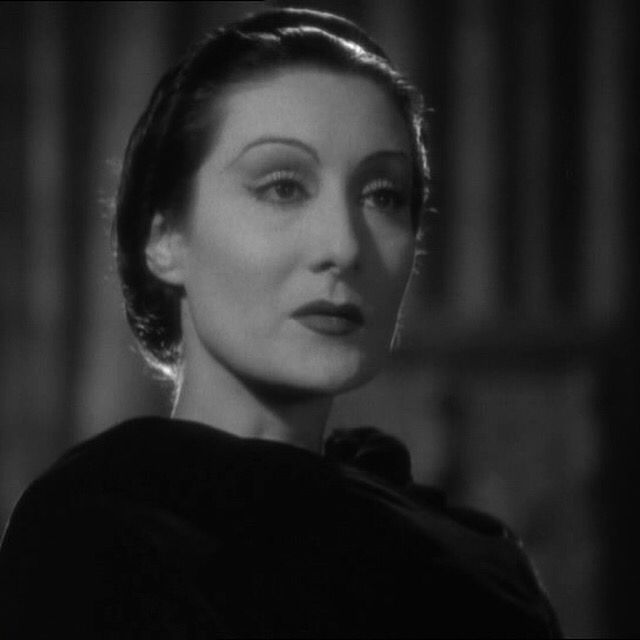
The strongest performance in the film belongs to Gloria Holden as Countess Marya. Her delivery is hard to describe. She looks both stoic and desperate at the same time. As the story moves along, there is a subtle shift from desperation to cold and calculated evil and selfishness. It’s a brilliant switch and was a joy to witness on the screen. Holden was supposedly hesitant to take on the role at first, fearing that she would be typecast like Bela Lugosi and Boris Karloff. She avoided being typecast and managed to have a sold film career that lasted nearly thirty years.

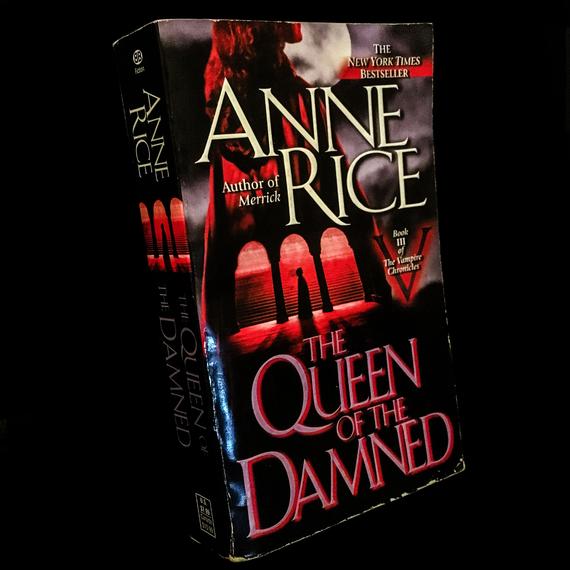
I really liked watching this movie. From the unique “look for a cure” angle to the callbacks to its predecessor (My favorite being Holden recite\ing the line, “I never drink wine.”), this film was quite a treat. While it isn’t exceptionally well known outside of horror circles, the film’s influence is felt to this day. Many writers and filmmakers list the film as an influence. Most notably, author Anne Rice has stated that Holden’s performance directly influenced the vampires in Rice’s Vampire Chronicles series of books.

There have also been a number of historians and others (Anne Rice included) that have pointed out lesbian and/or erotic undertones throughout the film, a major shock for fans of cinema in the 1930’s. Personally, I can see where people would pick up on this, especially in some of the scenes where Marya is fighting temptation, but I can also see these particular scenes in other ways as well. I would love to have a panel at a convention where people from all walks of life discuss this film, especially the lesbian aspects and their influence. It would be great to hear how others view this movie.

That’s all for today. I appreciate you for reading this post. Tomorrow will bring yet another Universal Monsters film to my blog, and I hope that you’ll return to read about it as well.

If you’d be interested in a round table discussion or a panel about Dracula’s Daughter and its lesbian undertones, I’d love to work with you on the project. Just message me and we’ll see if we can make a panel happen!

Days O’Horror #1: The Invisible Man (1933)

Seeing the unseen for the first time!

Being a huge Universal Monsters fanatic, it somewhat pains me to admit that until yesterday I had never viewed any of the films featuring The Invisible Man in their entirety. I have watched films influenced by these movies and read the book by H.G. Wells that started it all, but I never sat down and watched an entire film on its own.

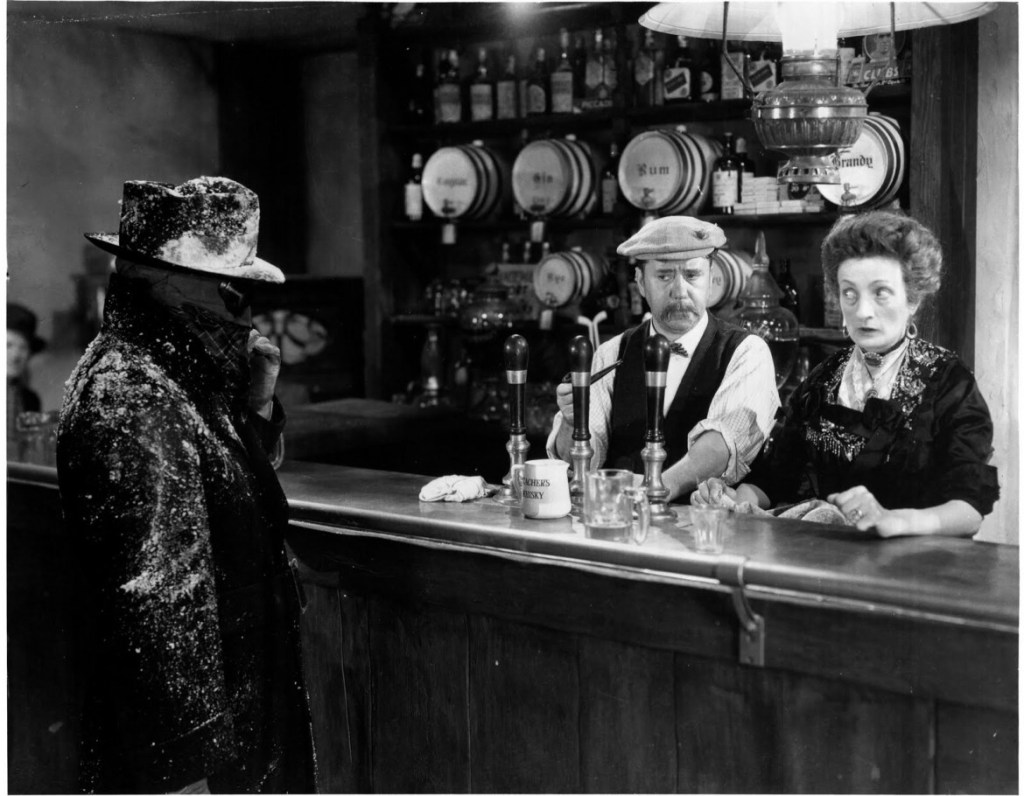
The movie opens with a mysterious man wrapped in bandages entering an inn and demanding a private room. Patrons at the inn begin to discuss why he’s wrapped in bandages. This includes a humorous quip about him bumping his head while escaping prison. As the story moves along, we learn that the man’s name is Dr. Griffin (Claude Rains) and he has gone missing from his friends and fiancee, Flora (Gloria Stuart).

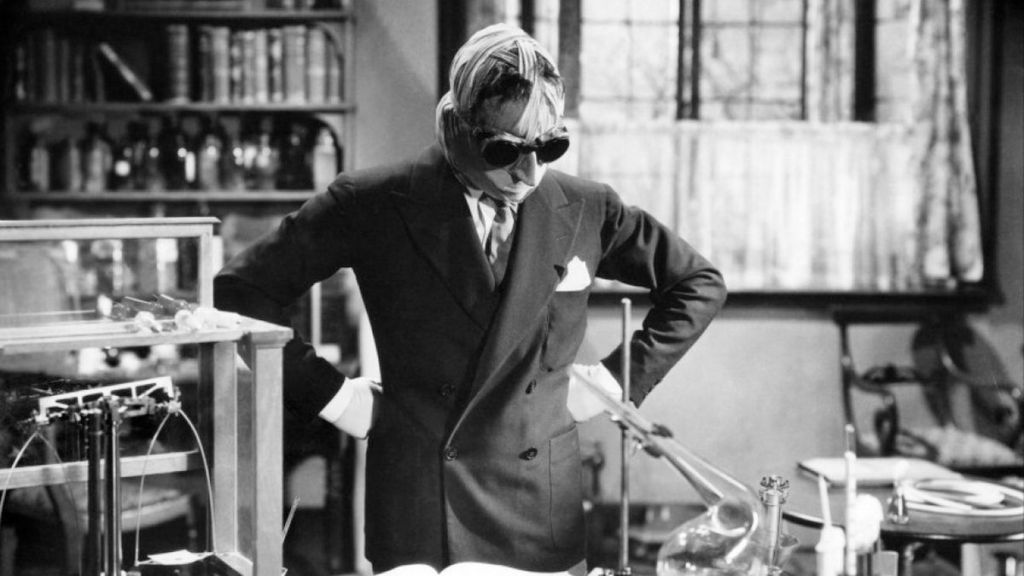
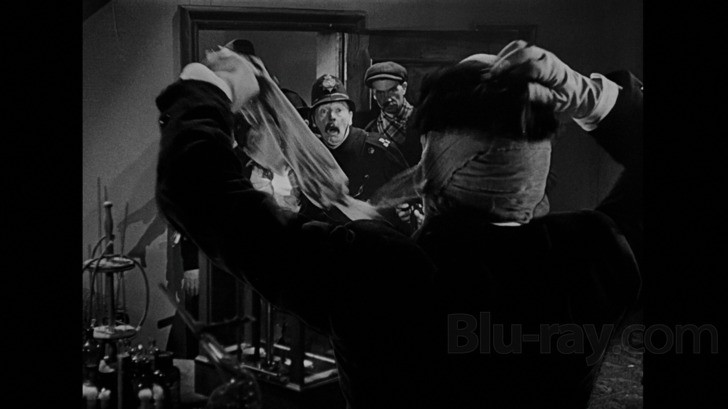
It is soon revealed that Griffin is completely invisible. He has gone into seclusion in order to find a way to return to a visible state. Unknown to Griffin, one of the items that he used in his original experiments is monocane, a drug that slowly draws him into madness. Soon enough, Griffin becomes enraged with the constant interruptions of the innkeeper and his wife (the rather humorous duo of Forrester Harvey and Una O’Connor) and he attacks them. This brings the local police into the picture and Griffin removes his clothing and bandages and rages through the town in order to escape.

Griffin then goes on a killing spree, driven by madness and a wild plan to take over the world. He forces one of his former research partners, Dr. Kemp (William Harrigan), to aid him in his crimes. Chaos ensues and eventually a plan is devised to capture Griffin. You’ll have to watch the film to find out how and if the police actually manage to capture Griffin.

One of the primary reasons that I decided to pursue watching The Invisible Man was the performance of its star, Claude Rains, in other Universal Monster films. Rains had a very commanding screen presence as Sir John Talbot in The Wolf Man (1941) and was brilliantly over the top as Erique Claudin, the man better known as The Phantom of the Opera in 1943. These performances made me seek out more of his work. Rains’ career spanned sixty-five years and included roles in films such as Notorious (1946), Casablanca (1942), and Mr. Smith Goes To Washington (1939). He shared the screen with some of the biggest stars in film history including Bette Davis, Cary Grant, Lana Turner, and Rock Hudson, just to name a few. He won a Tony Award in 1951 and was a four-time Academy Award nominee. Rains passed away in 1967 and is buried in Laconia, New Hampshire.

Much like other Universal Horror films, The Invisible Man is noted for its special effects. The pioneering ways used to make Griffin’s invisible chaos come to life were the result of the work of John P. Fulton, John J. Mescall, and Frank D. Williams. Fulton was a trailblazing effects artist that worked on Frankenstein (1931), Rear Window (1954), The Mummy (1932) and many other major horror films. He was also nominated for eight Academy Awards, winning three of them: Wonder Man (1945), The Bridges At Toko-Ri (1955), and The Ten Commandments (1956). Mescall is best known for his camera work on films such as The Bride Of Frankenstein (1935) and Show Boat (1936). Williams worked with legendary performers such as Buster Keaton, Charlie Chaplin, and Fatty Arbuckle. He is also credited as the developer of the traveling matte shot. This technique opened the door for blue screen work in the 1970’s/80’s, and paved the way to modern CGI.

I really enjoyed this film. Claude Rains’ entire performance was both cocky and sinister. His over-the-top delivery was both scary and funny at times. The supporting cast provided quite a few laughs as well, making this one of the more humorous Universal Monster films in my opinion. When compared to other films of the day, the special effects in The Invisible Man are simply amazing. They still hold up quite well despite being nearly eighty years old, and their success would lead to even more brilliant effects in the future.

I won’t call it my favorite Universal Monsters film, but The Invisible Man is definitely one of the best films in the bunch. It has humor, terror, and an excellent conclusion that makes you feel sad not only for those affected by Dr. Griffin’s insanity, but for the doctor himself.

Thank you for reading my post. I’ll have another for you tomorrow!

The Horror Starts Tomorrow!

Thirty-One Days O’ Horror!

Tomorrow I will be diving into the first of a month-long look at thirty-one of Universal’s classic horror films. Things will begin with a Universal film that I’ve never actually viewed before, 1933’s The Invisible Man, starring Claude Rains and loosely based on the popular H.G. Wells novel of the same name.

I’ll try to keep all of my reviews uniform over the course of the month. I’ll give a synopsis of each film and talk about certain aspects that really appealed to me whether they be a certain actor’s performance, the film score, special effects, or something else. Then I’ll tease the next film that I’ll be reviewing.

I will try my best to have each review written and posted by 3PM the following day. I’ll also be sharing the links to each review on my Facebook page. I’ll be watching The Invisible Man tonight so that my reviews will begin on the first of October and so that I’ll have the entire night of Halloween free to do whatever I want!

There will be spoilers in all of these reviews. The latest film in this batch was released in 1956 and the oldest film was released in 1925. For those of you who don’t want to do the math, that means that you’ve had sixty-three years to watch the newest film in this review series and ninety-four years to watch the oldest! If you don’t want anything to be spoiled about any of these films, skip their specific review!

I really hope that all of you enjoy reading my reviews over the next month. If this series proves to be a success with my readers, I might do a series of reviews for Christmas films in December!

Also be on the lookout for posts in October that are related to Universal Monsters beyond the screen. I’ll be reviewing Ravensburger’s Horrified, an official Universal Monsters board game, Funko’s Mystery Minis Universal Monsters series of collectible figures, and a documentary or two about Universal’s monsters. I might toss in a few other surprises as well.

Thanks for reading my post. I’ll have a few non-Universal posts this month as well, but things will be pretty spooky all month long in Ken’s Alternate Universe!

Outpost: Fouke, Arkansas

Southwestern Arkansas

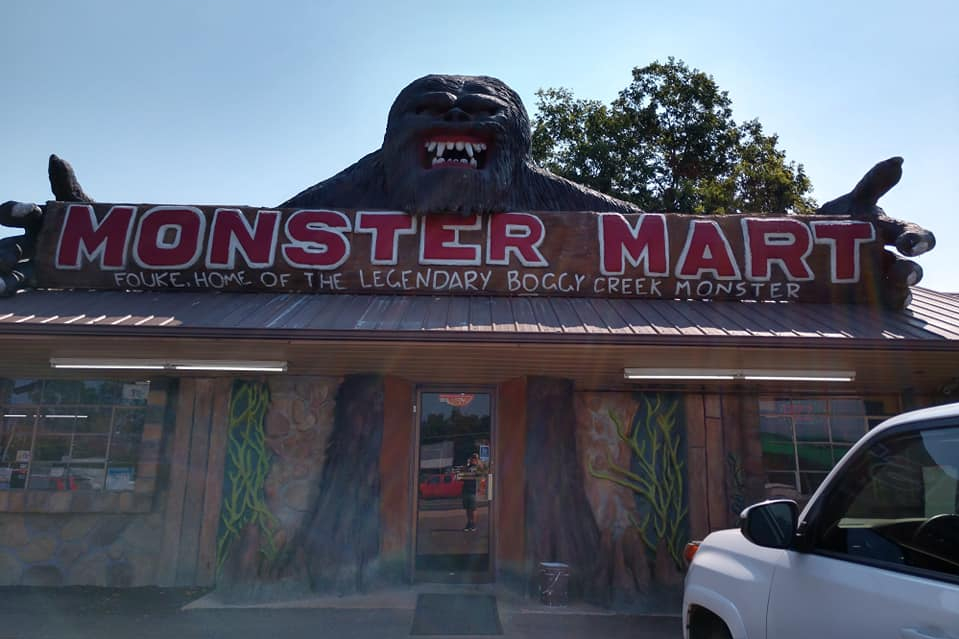
My regular readers know how much I love Bigfoot, Yeti, and all of the other cryptids out there. They might even know that I’ve visited Fouke, AR, in the past and blogged about it here. While own my recent trip to northwestern Louisiana to see KISS with my son, we decided to take a sidequest north to Fouke, Arkansas, home of the Fouke Monster and the film, The Legend of Boggy Creek.

Photo taken by my son.

Sporting my Ghoultown shirt (I’ll get to their connection to Fouke in a bit), my son and I drove into Fouke on Saturday morning. The drive up there was beautiful but we didn’t get to see the Fouke Monster. We stopped at the Monster Mart in town and were blown away by how much the store has changed and yet remained the same since our last visit in 2014.

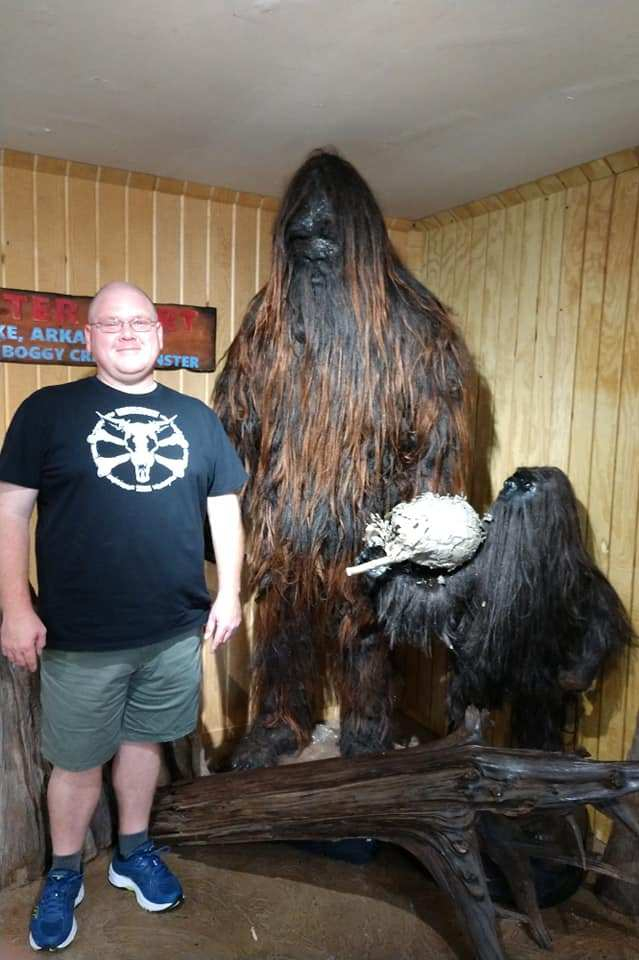
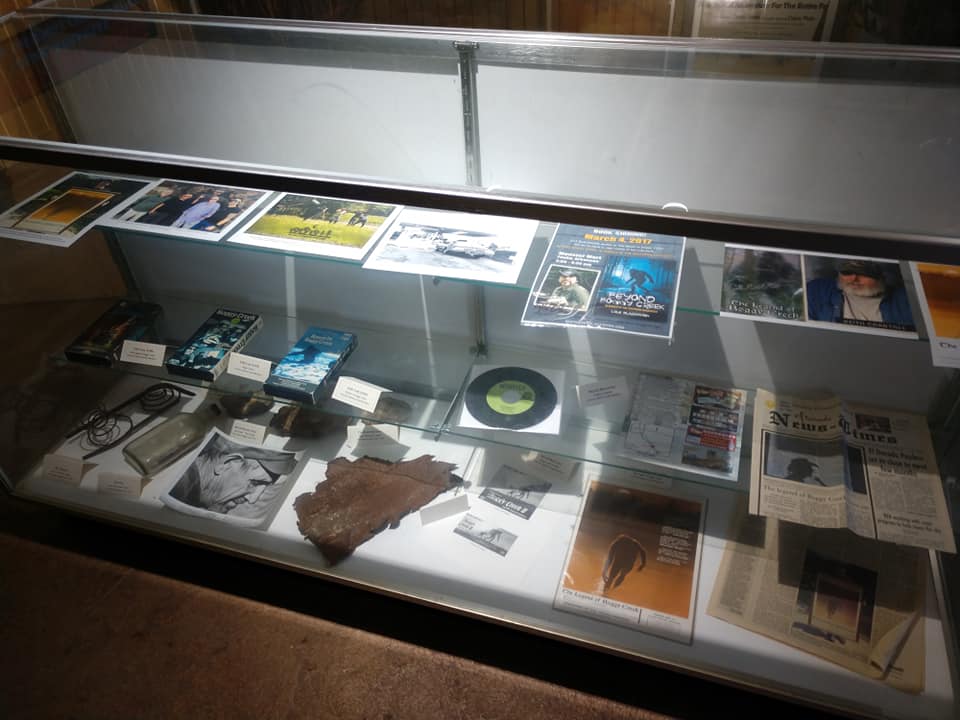
The convenience store itself had changed very little. It’s a standard convenience store with soft drinks, snacks, and a few roadside necessities for purchase. On the museum side, however, things had been expanded upon greatly. A large display that included a Fouke Monster and one of its children had been added to the museum, as well as two display cases full of photos, albums, footprint casts, and more items related to the Fouke Monster and the history of the small town. There were also newspaper articles lining the walls and a gift shop that featured books, t-shirts, caps, postcards, magnets, mugs, and much, much more.

I talked with the lady behind the counter for quite awhile. She told me a little bit about the upgrades on the store and I also learned that Fouke won their high school football game on the prior evening.

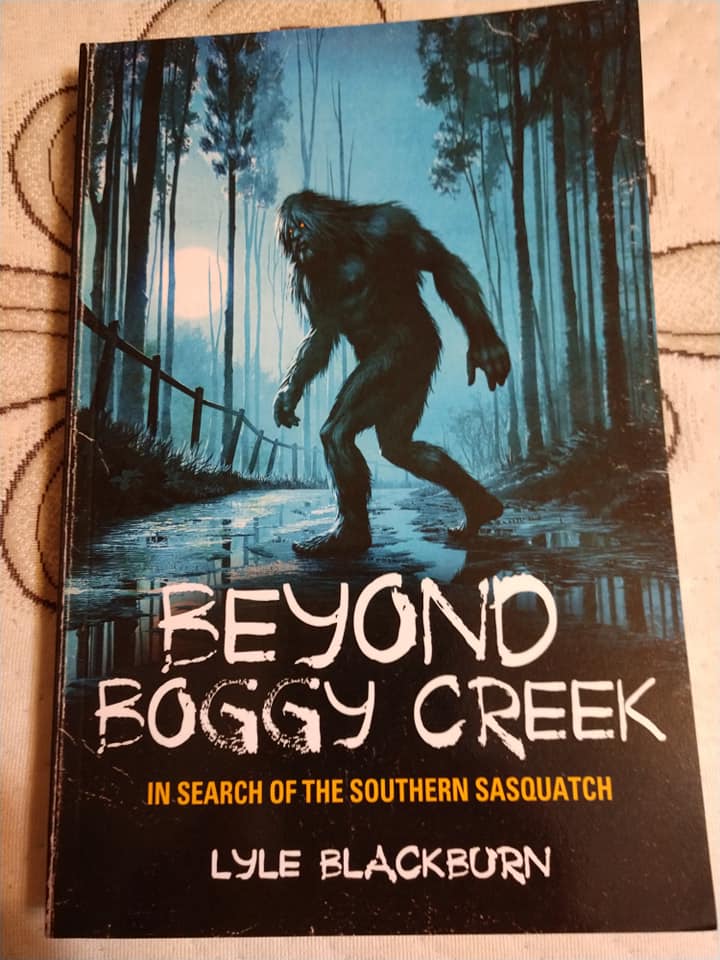
I ended up purchasing a magnet and Lyle Blackburn’s Beyond Boggy Creek book at the Monster Mart. You can read my review of one of Blackburn’s other books, The Legend of Boggy Creek, here. Yes, I could have purchased the book on Amazon or even directly from Lyle’s website, but that would have meant that I couldn’t have purchased the book with the Monster Mart stamp on the inside. I plan to get Mr. Blackburn to sign the book if I ever get the chance to meet him.

Oh, and for anyone still not sure about the connection between Fouke and my Ghoultown band t-shirt, Blackburn is the frontman from the Texas-based gothabilly band. I’ve become quite a fan in recent months. Check out their website here.

After making my purchase, my son and I drove around Fouke for a few minutes before heading on to Texarkana, TX. We had no real destination in mind when we arrived there, we just wanted to kill a little more time before heading to Bossier City, LA to see KISS on Saturday evening.

If you have any interest in cryptozoology and want to visit a key location in Bigfoot history, make a trip to Fouke, AR. You’ll learn about the beast, the movie that made it famous, and the wonderful little town that became the focal point of one of cryptozoology most famous cult films.

Thanks for reading. Check out the links and keep an eye out for my next post.